

Ever look back with nostalgia on the fun childhood games you used to play as a kid? Well, they might be very different from what children might play in Thailand! Thai childhood games come in many variations, and carry deep historical meanings and origins.
From the spirited chase of Wing Lai Jap (wîng lâi jàp, วิ่งไล่จับ) through the streets to the intricate strategy of Takraw (dtà grɔ̂ɔ, ตะกร้อ), Thai childhood games, or geem nai wai dèk (เกมในวัยเด็ก) are truly unique. Not only do they reflect the Thai culture and customs, but also greatly show the things that make people feel happy and relaxed. Want to learn more about it? Read on below!
Table of Contents
What Are Thai Childhood Games?
Childhood games or geem nai wai dèk (เกมในวัยเด็ก) in Thailand have culturally significant origins that dates back centuries to the Sukhothai kingdom. Many of these traditional games have their roots in Thai folklore, mythology, and daily life. For example, games like Saba (lên sà bâa, เล่นสะบ้า) and Khee Ma (kìi máa, ขี่ม้า) are inspired by Thai agricultural heritage, where children mimic the activities of farmers by planting rice or plowing fields in a playful manner. Other games, like Chak Ka Yer (chák gà yə̂ə, ชักเย่อ) (a variation of tug of war) or Kradok Chuak (grà dòot chʉ̂ak, กระโดดเชือก) (jump rope) reflect the close-knit communities in Thai villages, promoting social bonding and unity among children.
Learning Thai is more than memorizing words
Explore more →
The significance of these Thai childhood games goes beyond mere entertainment or kwaam ban təəng (ความบันเทิง). They serve as a means of preserving and passing down Thai cultural values, traditions, and customs from one generation to the next. These games teach children important life lessons such as teamwork, respect for elders, and the value of hard work, all while fostering a sense of belonging within their communities.
Moreover, these games promote physical activity and social interaction, contributing to the overall well-being and happiness of Thai children. As a testament to their enduring importance, these traditional games continue to be cherished and played by Thai youth, ensuring that the cultural heritage of Thailand remains vibrant and celebrated.
Thai Childhood Games
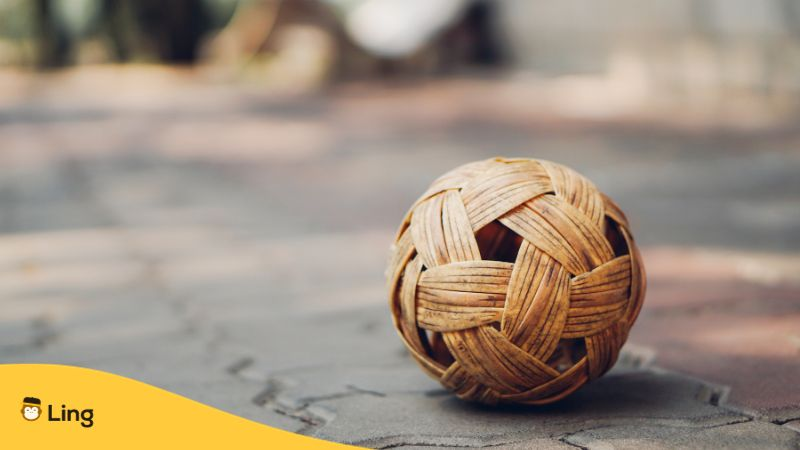
Takraw (ตะกร้อ, Dtà Grɔ̂ɔ)
Children frequently participate in this sport informally in Thailand. Similar to volleyball, but using a rattan ball, it is played with the feet, head, knees, and chest. It is a well-liked sport in Thailand and is frequently played casually by kids. Players use their feet, heads, knees, and chest to knock the ball over a net with a rattan ball, the rules are similar to volleyball.
Wing Lai Jap (วิ่งไล่จับ, Wîng Lâi Jàp)
This type of game of tag is common in Thailand. As “it,” one player tries to tag the other players. When tagged, a player must remain motionless until an untagged player creeps between their legs.
Tang Te (ตั้งเต, Dtâng Dte)
This is the hopscotch game in Thai. Children commonly use chalk to construct a grid on the ground, and then take turns hopping among the squares as they attempt various chores or challenges.
Jap Puu Dam Kha Yam Puu Na (จับปูดำ ขยำปูนา, Jàp Bpuu Dam Kà Yam Bpuu Naa)
Children build an arch with their arms in this Thai version of “London Bridge is Falling Down,” and one child passes underneath as the others sing. The child underneath must make a decision regarding who will join them when the song is finished, and then the arms will descend.
Chak Ka Yer (ชักเย่อ, Chák Gà Yə̂ə)
Children form two teams and play a Thai version of “Tug of War” in which one team tries to make the other team fall or cross a center line by pulling on a rope. Matches are exciting due to there being no time limits or weight restrictions.
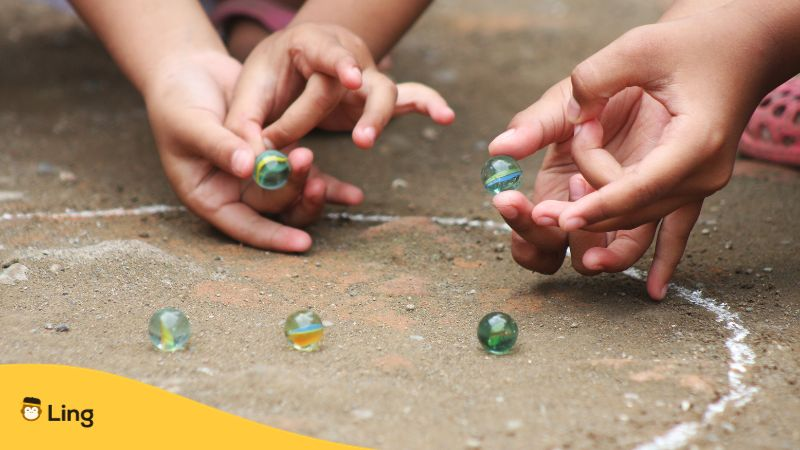
Deed Luk Kaew (ดีดลูกแก้ว, Dìit Lûuk Gɛ̂ɛo)
In Thailand, marbles are known as lûuk gɛ̂ɛo (ลูกแก้ว). Kids take turns using bigger marbles to try to knock marbles out of a circle; whoever removes the most opponent’s marbles from the circle wins.
Seua Kham Hwai (เสือข้ามห้วย, Sʉ̌a Kâam Hûai)
In this game, children split up into two teams, the tigers (sʉ̌a, เสือ) and the creeks (hûai, ห้วย). The tigers attempt to jump over the creeks, whose job it is to stop the tigers from successfully jumping over. Once a tiger is caught, they must then switch teams to the creeks.
Kradok Chuak (กระโดดเชือก, Grà Dòot Chʉ̂ak)
Played either individually or with a group, the objective is to perform tricks or last as long as possible in a jump rope while not being hit or caught in the rope. Basically, this is a Thai variation of the jump rope game.
Mon Son Pha (มอญซ่อนผ้า, Mɔɔn Sɔ̂ɔn Pâa)
This is traditionally played while children are seated in a circle, with one child (called the “Mon”) carrying a doll cloth. The children sing a song while the “Mon” tries to hide the cloth behind them. The objective is to not avoid getting hit by the cloth.
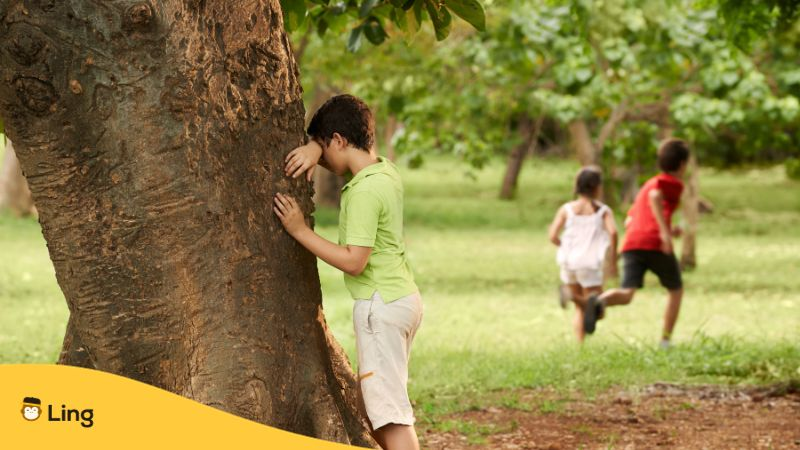
Len Son Ha (เล่นซ่อนหา, Lên Sɔ̂ɔn Hǎa)
A child counts while keeping their eyes closed while the others hide in this Thai adaptation of the popular game “Hide and Seek.” They then check to locate and identify the hid participants.
How Do You Say “Childhood Games” In Thai?
The phrase for “childhood games” in Thai is geem nai wai dèk (เกมในวัยเด็ก) .
Vocabulary Related To Thai Childhood Games
Ready to level up your language-learning journey in the Thai language? Learning these words not only boosts your Thai vocabulary, but also wraps you in the warm nostalgia of Thai youth.
| English | Thai | Pronunciation | Sound |
|---|---|---|---|
| Child | เด็ก | dèk | |
| Fun | สนุก | sà nùk | |
| Games | เกม | geem | |
| Kids | เด็กๆ | dèk dèk | |
| Children’s games | เกมสำหรับเด็ก | geem sǎm ràp dèk | |
| Childhood games | เกมในวัยเด็ก | geem nai wai dèk | |
| Two teams | สองทีม | sɔ̌ɔng tiim | |
| Kite flying | ว่าวกำลังบิน | wâao gam lang bin | |
| Long boat racing | แข่งเรือยาว | kɛ̀ng rʉa yaao | |
| Winning team | ทีมที่ชนะ | tiim tîi chá ná | |
| Traditional | แบบดั้งเดิม | bɛ̀ɛp dâng dəəm | |
| Playful | ขี้เล่น | kîi lên | |
| Community | ชุมชน | chum chon | |
| Unity | ความสามัคคี | kwaam sǎa mák kii | |
| Teamwork | การทำงานเป็นทีม | gaan tam ngaan bpen tiim | |
| Happiness | ความสุข | kwaam sùk | |
| Cultural heritage | มรดกทางวัฒนธรรม | mɔɔ rá dòk taang wát tá ná tam | |
| Social interaction | ปฏิสัมพันธ์ทางสังคม | bpà dtì sǎm pan taang sǎng kom | |
| Bonding | พันธะ | pan tá |
If you’d like to learn more related phrases and vocabulary, don’t hesitate to check out the Ling App!
Frequently Asked Questions About Thai Childhood Games
1. What Games Do Children Play In Thailand?
Traditional Thai childhood games and sports such as Takraw (ตะกร้อ, dtà grɔ̂ɔ) are wildly popular among children in Thailand. Other examples include Deed Luk Kaew (ดีดลูกแก้ว, dìit lûuk gɛ̂ɛo), a marble game, and Wing Lai Jap (วิ่งไล่จับ, wîng lâi jàp), a form of tag.
2. What Is The Thai Version Of Duck Duck Goose?
Duck, Duck, Goose may not have an exact equivalent in Thai culture and is usually played as-is, but there are some variations such as Maa Lai Gaa (หมาไล่กา, mǎa lâi gaa). The rules are generally the same, except that the phrase “Duck, Duck, Goose!” is replaced with Thai children’s rhymes.
3. How Do You Play Mak Kep?
Mak Kep (หมากเก็บ, màak gèp) is a Thai game involving collecting small pebbles or objects. The objective, either as an individual or as a group, is to throw and catch small objects while following specific sequences or rules. It’s deeply technical and requires good hand-eye coordination!
Feeling Nostalgic?
See any similarities between what you might have played versus what Thai children are playing? Hopefully this look into ten Thai childhood games evoked some sense of nostalgia for your own childhood, and gave you a better look into Thai culture as a whole. Many of these games, such as Takraw, have an even bigger following and full-blown professional sports scenes which may interest you if you’re visiting Thailand; those matches are no joke!
When traveling around Thailand and visiting different parks or residential areas, you might see a group of kids playing some of the games we’ve mentioned here. If you ask nicely, they may even let you have a try. It’s a good way to practice your conversational Thai, too!