


Master pronunciation, vocabulary, and real conversations through engaging lessons built by native speakers and game-based challenges.

Start with pronunciation, essential words, and simple greetings. Build confidence with interactive lessons.
Dive into cultural stories, travel guides, and news articles. Learn through context and real Hiligaynon (Ilonggo).
Engage in real dialogues, role-play scenarios, and speak naturally with confidence and accuracy.
Explore regional dialects, literature, professional vocabulary, and become fluent in all contexts.
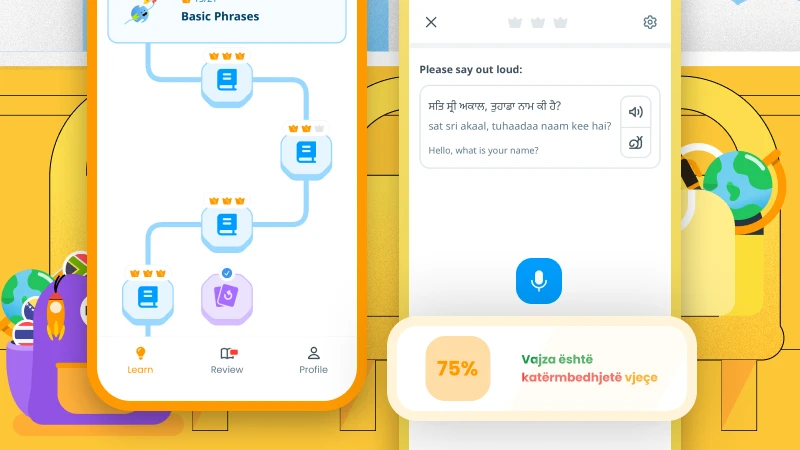

Download the Ling app and unlock interactive lessons, real conversations, and culture-rich content today.
Download Ling for freeThousands of learners are achieving their goals with Ling. See how we’re helping them succeed!


Many English speakers find Ilonggo (also called Hiligaynon) approachable. Why:
• Latin alphabet: No new script.
• Mostly phonetic pronunciation: Words are pronounced close to how they're written.
• Verbs are the main challenge: Ilonggo verbs use affixes and a focus system, which takes practice.
Ilonggo is a Visayan language. It shares some vocabulary with Cebuano but is a separate language, and it differs from Tagalog. Studying 10–15 minutes a day builds confidence in real conversations.
No. Ilonggo (Hiligaynon) is a distinct Visayan language spoken mainly in Iloilo, Guimaras, Negros Occidental, and parts of Soccsksargen. Filipino is the national language of the Philippines and is based on Tagalog, so those two are closely related. Ilonggo is a separate language with its own grammar, vocabulary, and pronunciation.
• Different vocabulary: Many everyday words differ from Tagalog.
• Distinct grammar and pronunciation: Sentence patterns and verb forms are not the same as in Filipino.
• Closer to Cebuano: Both are Visayan languages and share some vocabulary.
Learning Ilonggo helps you connect with local speakers instead of relying only on Filipino.
There's no shortcut, but these habits help most:
• Start with high-frequency phrases: Greetings, questions, and daily expressions first.
• Speak from day one: Use the dialog feature to practice out loud.
• Review often: Flashcards lock in vocabulary.
• Keep it short and daily: 10–15 minutes a day beats long, rare sessions.
Try the first lesson free to see how it fits your routine.
Useful starter phrases:
• Maayong aga: Good morning
• Kumusta ka?: How are you?
• Salamat: Thank you
• Palihog: Please
• Oo / Indi: Yes / No
• Palangga ta ka: I love you
Our course teaches these with native audio and translations, so you can say them confidently.
No. Duolingo doesn't currently offer Ilonggo (Hiligaynon). Ling does. You get native-speaker audio, dialog practice, and flashcards in one mobile app. Try the first lesson free.
Yes. With the Ling app, you download it, choose your native language, and select Ilonggo as your target language. Start with the introduction lesson, practice real conversations with the dialog feature, and use flashcards to build vocabulary. It works for beginners, travelers, and heritage learners.

