Slovenian and Croatian are closely related languages that share many words and features, but despite these similarities, their speakers can’t always understand each other. So, what are the biggest differences when comparing Slovenian vs Croatian?
If you’re thinking about learning either language, this comparison can help you decide which one suits you best! We’ll explore their grammar, pronunciation, vocabulary, and regional dialects. You’ll also find out how the Ling app can help you get started.
I want to learn even more languages with Ling!
Download now!
Slovenian Vs Croatian: How Similar Are They?
Slovenian and Croatian are both South Slavic languages, which means they share common linguistic roots. Both languages have a shared history as part of the former Yugoslavia, although each developed its own separate linguistic identity.
Slovenia and Croatia are also neighboring countries with similar cultures and traditions. Slovenian is spoken by about 2.4 million people, and Croatian by about 6 million.
Here’s a quick comparison of their main language features:
| Feature | Slovenian | Croatian |
|---|---|---|
| Language family | South Slavic | South Slavic |
| Mainly spoken in | Slovenia | Croatia |
| Alphabet | Latin (25 letters) | Latin (30 letters) |
| Grammatical cases | 6 | 7 |
| Grammatical numbers | Singular, dual, plural | Singular, plural |
| Grammatical genders | 3 | 3 |
What Are 5 Key Differences Between Slovenian And Croatian?
At first glance, Slovenian and Croatian can seem quite similar, especially when you see them written down. But listen a little closer, and you’ll start noticing some interesting differences. Let’s look at five things that set them apart.
1. Grammar
Slovenian and Croatian have quite a bit in common when it comes to grammar. Both languages use grammatical genders, cases, and verb conjugations.
However, Slovenian has one interesting feature that Croatian doesn’t: the dual grammatical number. While Croatian uses singular and plural forms, Slovenian has a special form for talking about exactly two people or things.
For example, in Slovenian, midva sva means “we two are”, while mi smo means “we are” when referring to three or more people. Croatian simply uses mi smo in both situations.
There’s also a small difference in grammatical cases: Slovenian has only six of the seven Slavic noun cases, while Croatian also has the vocative case missing from Slovenian.
2. Pronunciation
Slovenian and Croatian share many sounds, but their pronunciation isn’t identical. Both languages have five vowels (a, e, i, o, u), but the difference is that Croatian has only five vowel sounds, while Slovenian has eight! That’s because the e and o in Slovenian can each be pronounced in two different ways: with a more open or a more closed sound.
Word stress is another interesting difference. Take the word prijatelj (friend), which is spelled exactly the same in both languages. In Slovenian, it’s pronounced pri-JA-telj, with stress on the second syllable. In Croatian, it’s PRI-ja-telj, with stress on the first.
Slovenian also allows stress on the last syllable of a word, while standard Croatian generally doesn’t. Neither language normally marks word stress in everyday writing, so you’ll need to listen carefully!
3. Vocabulary: Similar Words And False Friends
Slovenian and Croatian have many similar words. Some are even identical, while others look a little different but still have the same meaning.
However, watch out for false friends! Some words might look familiar but mean completely different things. Here’s a quick vocabulary comparison:
| English | Slovenian | Croatian |
|---|---|---|
| thank you | hvala | hvala |
| water | voda | voda |
| bread | kruh | kruh |
| train | vlak | vlak |
| good afternoon | dober dan | dobar dan |
| tomorrow | jutri | sutra |
| yesterday | včeraj | jučer |
| beautiful | lep | lijep |
| child | otrok | dijete |
| castle | grad | dvorac |
| city | mesto | grad |
| peas | grah | grašak |
| beans | fižol | grah |
4. Dialects
Despite its small size, Slovenia has around 50 dialects, divided into seven dialect groups. Some are so different that even native Slovenian speakers from opposite ends of the country can struggle to understand each other.
Croatian, on the other hand, has three main dialect groups: Štokavian, Kajkavian, and Čakavian. They’re actually named after how people in those regions say “what”: što, kaj, and ča.
Štokavian is the basis of standard Croatian, Kajkavian is common around Zagreb, and Čakavian is spoken along parts of the Adriatic coast and islands.
Since Kajkavian is spoken in areas bordering Slovenia, it shares the most linguistic features with neighboring Slovenian dialects.
5. Linguistic Influences
Slovenian and Croatian have picked up influences from different languages thanks to their location and neighboring countries.
Slovenia has a strong cultural orientation toward Central European and Alpine traditions, which is something you can hear in the way people speak. For example, you’ll hear many German loanwords in colloquial Slovenian, and in the western part, people still call their grandmother nona in the local dialect, just like the Italians, instead of the standard Slovenian word babica.
In Croatia, you’ll also notice a lot of Italian influence along the Dalmatian coast, where people still use words borrowed during centuries of Venetian rule. Croatian has also picked up some Turkish words, like čarapa (sock).
Can Slovenian And Croatian Speakers Understand Each Other?
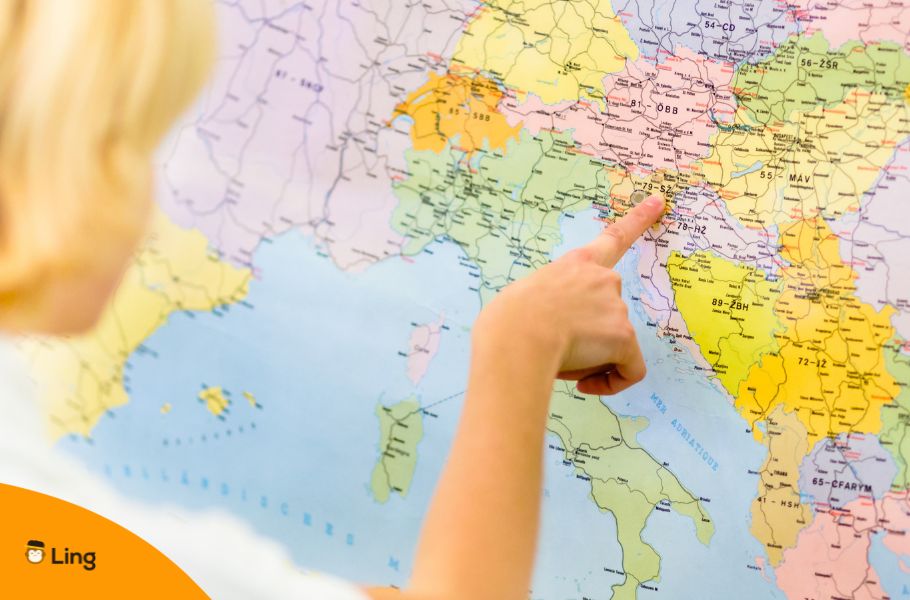
Yes, Slovenian and Croatian are partially mutually intelligible. Croatian speakers can often understand Slovenian, and vice versa, but how much they understand depends on the dialects they speak and how familiar they are with the other language.
As a native Slovenian speaker, I’ve noticed the difference between generations in my own family. My parents and grandparents can easily talk in Croatian, while I can understand quite a bit but struggle to speak it myself. That’s partly because older generations grew up in ex-Yugoslavia, where Serbo-Croatian was much more widely heard and taught.
Which Language Should You Learn?
If you have Slovenian friends or family, plan on visiting Slovenia or simply enjoy discovering unusual linguistic features, Slovenian is a great choice.
Croatian, on the other hand, is especially useful if you want to travel around the Balkans. It’s very closely related to Serbian, Bosnian, and Montenegrin, so learning Croatian can help you communicate with people across several countries. Have a look at our Serbian vs Croatian comparison to get a better idea of the similarities.
You can also discover more reasons to learn Croatian if you’re still undecided. Ultimately, the best language to learn first is the one you’re most excited about!
Tips For Learning Slovenian And Croatian
Thinking about learning either Slovenian or Croatian? Their similarities can actually work in your favor! Here are a few ways to make the most of these similarities:
- Compare everyday words in both languages. Some, like voda (water) and hvala (thank you), are identical, while others have different spellings or meanings.
- Keep a list of false friends, such as grad and grah, so you don’t accidentally confuse their meanings.
- Practice similar grammatical structures side by side. For example, compare how both languages use cases and conjugate verbs.
- Explore regional expressions and compare how people speak in different parts of Slovenia and Croatia. Some Croatian dialects sound surprisingly similar to Slovenian!
- Challenge yourself to recognize familiar words by reading a short Croatian sentence after studying Slovenian, or vice versa.
- Listen to songs or watch short videos in both languages to get used to their different accents and pronunciation patterns.
- Use the Ling app to practice Slovenian and Croatian vocabulary through interactive lessons and quizzes.
FAQs About Slovenian Vs Croatian
Is Slovenian Closer To Croatian Or Slovak?
Slovenian is closer to Croatian. Both belong to the South Slavic language group, while Slovak is a West Slavic language. Despite their similar names, Slovenian and Slovak are less closely related.
Is Slovenian A Dialect Of Croatian?
No, Slovenian is a separate and different language. Although it shares many similarities with Croatian, it’s an official language with its own grammar, vocabulary, pronunciation, and literary tradition.
How Similar Are Slovenian And Croatian?
Slovenian and Croatian are closely related South Slavic and Indo-European languages that share many similarities in vocabulary and grammar. However, they also have some important differences, and speakers can’t always understand each other perfectly.
Slovenian Vs Croatian: Not Quite The Same
Slovenian and Croatian have a lot in common, but each language has its own interesting features. Slovenian is known for its dual grammatical form, while Croatian has an extra grammatical case. They also differ in pronunciation, vocabulary, and regional dialects.
Even though speakers can understand each other to a certain degree, it matters whether they’ve been exposed to the other language or not. Neither one of them is necessarily easier to learn, so it really all comes down to your interests.
And if you’re curious about both, try comparing everyday words and listening to native speakers. You might be surprised by how much learning one helps you understand the other!
Explore Slovenian And Other Slavic Languages With Ling
Now that you’ve seen how Slovenian vs Croatian compare, why not explore these languages for yourself? They have a lot in common, but each has its own interesting features!
If you’re curious about speaking Slovenian, the Ling app is a great place to start. You can learn Slovenian through bite-sized lessons, interactive exercises, and fun challenges that make studying more enjoyable.
And why stop there? Ling also lets you explore other Slavic languages, including Croatian, Serbian, Bulgarian, Macedonian, Slovak, and many more!
Ready to give it a try? Download the Ling app and start your free trial today!