


After the COVID-19 pandemic hit, Japan finally opened its borders. Many things are different now, and new regulations have been established. However, it’s still relatively unusual for Japanese people to speak English with you, especially in the cities outside Tokyo, and that’s one thing that hasn’t changed. So, at least, you should strive to learn the common Japanese words before visiting the country.
Why Do Japanese People Not Speak English?
The widespread lack of English competency is likely attributable to many factors, including a shortage of native-English-speaking language teachers and insufficient experience with the language in everyday situations. This may no longer be the primary cause, though, as many native English speakers are being hired by Japanese schools these days.
Then the major reason Japanese people have trouble speaking English is that the Japanese language has a narrower range of vocalization than English and other languages. In addition, the human ear and brain have difficulty distinguishing the pronunciations and complexities of a foreign language unless they are taught to the kid at a young age. As a result, Japanese folks are not uncommonly too shy to try speaking English.
I want to learn even more languages with Ling!
Download now!
Thus, if you want to do well in Japan, you should study the Japanese language right now. Learning the Japanese language and getting plenty of practice speaking with locals will help you become more fluent whether you’re planning a long or short stay in the country. So, let’s get started with some basic Japanese phrases that will benefit you in your daily life and make it easier to communicate desires and get what you want from anybody you encounter.
Common Japanese Words In Several Situations
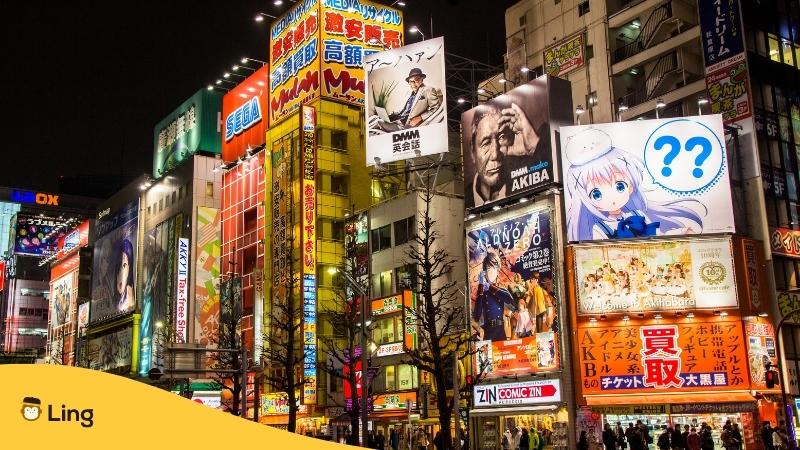
Everyone knows it takes time and effort to speak Japanese fluently, but we can begin with simple language structures. So let’s start this conversation with some basic Japanese phrases and some Japanese questions you might get asked that will come in handy at the airport. Then, pretend you’ve just landed at the airport.
Japanese Words Used At The Airport
Here are basic Japanese words you should remember.
- Departure – 出発 (shuppatsu)
- Arrival – 到着 (touchaku)
- Arrival lobby – 到着ロビー (tōchaku robī)
- Immigration – 入国審査 (nyūkoku shinsa)
- Baggage claim – 手荷物受取所 (tenimotsu uketorisho)
- Customs – 税関 (zeikan)
- Customs declaration – 税関申告 (zeikan shinkoku)
- Suitcase – スーツケース (sūtsukēsu)
- Currency exchange counter – 両替所 (ryōgaejo)
Japanese Phrases Used At The Train Station
Here are basic Japanese words you should remember.
- Train station – 駅 (eki)
- Ticket – 切符 (kippu)
- Platform – のりば (noriba)
- Get off (bus, train, ship) – 降りる(oriru)
- Get on (bus, train, ship) – 乗る(noru)
| English | Japanese Phrases | Romanji | Sound |
| How do I get to ~? | ~にはどう行けばいいですか? | ~ ni wa dou ikeba ii desu ka? | |
| Where can I buy tickets? | 切符売り場はどこですか? | kippu uriba wa doko desu ka? | |
| Which train goes to ~? | ~行きの電車はどれですか? | ~ yuki no densha wa dore desu ka? | |
| Does this train go to ~? | この電車は○○に行きますか? | kono densha wa ~ ni ikimasu ka? | |
| What station is this? | ここは何駅ですか? | koko wa nan eki desu ka? | |
Japanese Words Used At Convenience Store And Supermarkets

Here are basic Japanese words at the supermarket or convenience store.
- Convenience store – コンビニ (konbini)
- Bag – 袋 (fukuro)
- Point card – ポイントカード (pointokādo)
- Spoon – スプーン (Supu-n)
- Fork – フォーク (fo-ku)
- Chopsticks – お箸 (ohashi)
- Straw – ストロー (Sutoro-)
- Receipt – レシート (reshi-to)
| English | Japanese Phrases | Romanji | Sound |
| Next in line, please | お次の方どうぞ | otsugi no kata douzo | |
| Do you have a point card? | ポイントカードはお持ちですか? | pointo ka-do wa omochi desuka | |
| Would you like for your bento box to be warmed? | お弁当温めますか? | obento atatamemasu ka | |
| Thank you for waiting | お待たせいたしました | omatase itashimasita | |
| Would you like a ~? | 〇〇はお使いになりますか? | ~ wa otsukai ni narimasu ka | |
| Would you like a bag? | 袋にお入れしますか? | fukuro ni oireshimasu ka | |
| Do you want your receipt? | レシートは宜しいですか? | reshi-to wa yoroshidesuka | |
| Yes, please (when you want to accept their offers such as chopsticks or plastic bags) | お願いします | onegaishimasu | |
| No, thanks or I’m good. | 大丈夫 | daijoubu | |
Japanese Words Used At The Restaurant
Here are helpful Japanese words when you eat out.
- Restaurant – レストラン (resutoran)
- Café – カフェ (kafe)
- Fast food – ファーストフード (fāsuto fūdo)
- Menu – メニュー (menyū)
- Water – 水 (mizu)
- Drink – 飲む (nomu)
- Dessert – デザート (dezāto)
- Self-service – セルフサービス (serufu sābisu)
- Non-smoking – 禁煙 (kin en)
- Smoking – 喫煙 (kitsuen)
- Order – 注文 (chūmon)
- Cash – 現金 (genkin)
| English | Japanese Phrases | Romanji | Sound |
| The Phrase for the staff saying, “Please come in” or “Welcome to my store.” | いらっしゃいませ | Irrashaimase | |
| Please give me a menu | メニューをください | menyū o kudasai | |
| What is this? | これは何ですか? | kore wa nan desu ka? | |
| What menu item do you recommend? | おすすめのメニュ―はどれですか? | o-susume no menu wa dore desu ka? | |
| I would like (to order) this, please | これをお願いします | kore o onegaishimasu | |
| Please give me some water | 水をお願いします | mizu o onegaishimasu | |
| Check, please | お会計をお願いします | o-kaikei o onegaishimasu | |
Useful Japanese Phrases
Here are Japanese phrases you might often hear in Japan, and you’ll also have a chance to use them.
| English | Japanese Phrases | Romanji | Sound |
| Yes | はい | hai | |
| No | いいえ | iie | |
| Excuse me | すみません | sumimasen | |
| Good morning | おはようございます | ohayou gozaimasu | |
| “Hello” during daytime | こんにちは | konnichiwa | |
| Good evening or saying hello during nighttime | こんばんは | konbanwa | |
| Good night | お休みなさい | oyasuminasai | |
| Thank you | ありがとうございます | arigatou gozaimasu | |
| Sorry | ごめん なさい | gomen nasai | |
| How are you? | おげんき です か? | ogenki desu ka | |
| Good! | いい です よ | ii desu yo | |
| (The phrase said before eating food) | いただきます | itadakimasu | |
| I can‘t speak Japanese | 日本語は話せません | nihongo wa hanasemasen | |
| Can you speak English? | 英語 を はなせます か? | eigo wo hanasemasu ka | |
| Can you please say that again? | もう一度お願いします | mou ichido onegaishimasu | |
| Where is ~? | ~はどこにありますか? | ~ wa doko desu ka | |
| Do you have a map? | 地図はありますか? | chizu wa arimasu ka | |
| How much? | いくらですか? | ikura desu ka | |
| What is this? | これ わ なん です か? | kore wa nan desu ka | |
Useful Japanese Pronouns
There’s a Japanese word that serves as a pronoun, and you can start using it in your Japanese conversation.
- I, me – 私 (watashi)
- I (for male) – 僕 (boku)
- You – あなた (anata)
- He, him – 彼 (kare)
- She, her – 彼女 (kanojyo)
- We, us – 私たち (watashitachi)
- They, them – 彼ら (karera)
Useful Japanese Verbs
- To come – 来る (kuru)
- To go back home – 帰る (kaeru)
- To drink – 飲む (nomu)
- To buy – 買う (kau)
- To eat – 食べる (taberu)
- To understand – 分かる (wakaru)
- To see – 見る (miru)
- To sleep – 寝る (neru)
- To wake – 起きる (okiru)
- To do – する (suru)
- To come out – 出る (deru)
- To enter – 入る (hairu)
- To exist (human or animal) – いる (iru)
- To exist (things or location) – ある (aru)
- To wear – 着る (kiru)
- To speak – 話す (hanasu)
- To ask, to listen – 聞く(kiku)
- To wait – 待つ (matsu)
- To run – 走る (hashiru)
Is It Easier For You To Strike Up A Conversation Now?
If you study and use the above essential and common Japanese words, you should feel comfortable traveling and settling in during your first few months in Japan. In a variety of public settings (airports, restaurants, convenience stores, train stations, etc.), you’ll want to be able to interact with and understand the locals. Having trouble communicating in the middle of a city is a frustrating experience nobody wants to have. So please practice these words and sentences, so you can guarantee you have a wonderful time in Japan!
Learn Japanese With Ling Now!
Getting ready to have conversations with Japanese people, but reading this blog may not be enough. So if you’re looking for an excellent app recommendation, you’ve found it!
The Ling app provides a wealth of Japanese vocabulary that can be studied at your own pace and in your own time. So grab your iOS or Android device immediately and head to Google Play Store and Apple App Store to install it. Mini-games, a puzzle, and intelligent chatbots are just a few entertaining tools to help you learn Japanese words and phrases quickly and easily.
Most Japanese learners chose Ling to help them succeed, so why not join them? Download the Ling App, and prepare to be fluent in Japanese soon!