



Albania has quietly become one of Europe’s newer bases for expats, digital nomads, and remote workers. Low costs, a Mediterranean lifestyle, and flexible residency rules have drawn a growing number of foreign residents. Most are looking for an alternative to pricier Western European cities.
So why are people moving here? Affordability is the main draw. A single expat can live in Albania on roughly €525 to €1,470 a month, depending on the city. Tirana runs about €750 to €1,400, Durrës starts near €525, and Sarandë reaches €1,470 in peak season.
Those costs sit well below most Western European capitals, which is why Albania keeps drawing location-independent workers and early retirees.
Settling in takes more than finding an apartment, though. Daily life means dealing with landlords, shopkeepers, government offices, and neighbors. Most of them speak Albanian first.
This Albania expat guide covers the move, the culture, and the language you need to handle daily life. It’s directed at:
- Expats and diplomats looking to move to Albania
- Digital nomads who want to explore Eastern Europe via Albania
- Travelers looking for long-term stays in Albania
Albania Expat Guide At A Glance
Before diving deeper, here’s a quick overview of what expats should know about living in Albania.
| Category | Details |
|---|---|
| Cost of living | €1,000–€1,500/month |
| Visa-free stay | Up to 90 days |
| Digital nomad visa | Available (Unique Permit) |
| Internet speed | 80–250 Mbps |
| Main expat city | Tirana |
| Language | Albanian |
| Currency | Albanian Lek (ALL) |
Visa rules are looser than almost anywhere else in Europe, and the internet is fast enough for video calls all day. The cost figure is a range across the three main expat cities, so treat it as a starting point rather than a budget.
Can You Move To Albania Easily?
Yes, Albania is one of the easiest countries in Europe to move to, especially for remote workers. There is no lottery, no points system, and no minimum investment.
Most nationalities can:
- Enter visa-free
- Stay for up to 90 days
- Transition into longer-term residency through the Unique Permit (digital nomad visa)
That last step is the one worth planning for. Everything before it happens automatically at the border, which is why so many people underestimate the paperwork that follows.
If you’re planning a move within the next 30 days, Albania is a low-barrier, high-value destination.
What Visa Do You Need To Live In Albania?
Most people need no visa for the first 90 days, then apply for the Unique Permit to stay longer. Rules differ by passport, so check yours before booking. Employer sponsorship exists, but it’s slower, and few expats use it.
Albania had about 21,940 foreign residents holding valid residence permits at the end of 2024, up roughly 6% from the previous year, according to national statistics. That group covers professionals on employer permits, business owners, retirees, and a growing number of digital nomads.
Short-Term Stay: The Tourist Entry
Most expats can stay in Albania for up to 90 days without a visa within a 180-day period. Citizens of the United States, the United Kingdom, and most EU nations can enter Albania without a visa for short stays. Some passports get longer, so confirm the limit that applies to you.
This is ideal if you want to:
- Explore cities
- Test remote work
- Decide where to settle
Rules vary by nationality and have changed in recent years, so check the current requirements for your passport before you book.
Important note: Overstaying can result in fines or entry bans.
Digital Nomad Visa: The Unique Permit
Albania’s Unique Permit allows remote workers to legally live and work in the country. One application covers both residence and work, which is where the name comes from. You apply online through the e-Albania portal, not at a consulate.
Key Requirements:
- Proof of remote work or freelance clients
- Minimum income of around €800/month
- Rental agreement
- Clean criminal record
Key Benefits:
- Valid for 1 year (renewable up to 5 years)
- Path to permanent residency
- Low application cost
Most people apply during their visa-free window and have the permit before it runs out. The rental agreement is the piece that trips people up. You need an address before you can apply, so book short-term first.
Why it matters: This makes Albania one of the most accessible digital nomad destinations in Europe.
Work Permits For Local Employment
If you plan to work for an Albanian company:
- You’ll need employer sponsorship
- More documentation is required
The process runs through your employer, not you. The timeline is out of your hands, and the permit is tied to that job. Change employers, and you start again. That’s why most expats choose the digital nomad route instead, even when local work is available.
What Should You Do Before Moving To Albania? Your 60-Day Checklist
Work backwards from your flight in three blocks. The first month covers decisions you cannot rush, like visa eligibility and which city to live in. The second covers money, insurance, and somewhere to sleep. The last week is small stuff that hurts to sort out once you land.
Things To Do 60–45 Days Before Moving To Albania
Start by organizing the major logistical steps.
Tasks to complete:
- Research Albania’s visa and residency requirements
- Begin learning basic Albanian greetings and phrases
- Research cities such as Tirana, Sarandë, and Durrës
- Research neighborhoods and housing options
- Join online expat communities for advice
- Check passport validity and required documents like income proof
- Check visa eligibility
Note: Learning even a few phrases early, like Albanian greetings or numbers, makes your first days much easier.
Things To Do 45–30 Days Before Moving To Albania
One month before your move, focus on practical arrangements.
- Book temporary accommodation for two to four weeks
- Notify your bank
- Arrange international banking access
- Purchase travel health insurance
- Prepare digital copies of important documents
- Learn basic Albanian phrases for transportation and shopping
These preparations make daily errands easier once you arrive.
Things To Do 30–7 Days Before Moving To Albania
During the final stretch, focus on small but important details.
- Carry cash in Lek or Euros
- Download offline maps
- Download navigation apps and language apps like the Ling app
- Research SIM cards and coworking spaces
- Prepare emergency contacts
- Notify banks about international travel
- Learn phrases for asking directions and ordering food
One extra tip: avoid signing a long-term lease before arriving.
What Should You Do In Your First 30 Days In Albania?
Set up the basics in week one. Find housing in week two. Build a routine in the weeks after. Get a SIM card and cash on day one. View apartments in person, not online. Leave residency paperwork until you have a fixed address.
Week 1: Set Up Essentials
- Buy a SIM card
- Withdraw local currency
- Explore neighborhoods
Week 2: Find Stable Housing
- Visit apartments in person
- Compare areas
- Negotiate rent
Week 3–4: Build Your Routine
- Join coworking spaces
- Identify grocery stores and cafés
- Start residency paperwork if needed
By the end of month one, you should feel functionally independent.
Is Albania Good For Remote Work? Internet, SIM Cards, And Setup
Yes. Fast internet and low costs make Albania a strong base for digital nomads. Fiber is widely available in the cities, and coworking is cheap by European standards. The real limit is not the connection but power cuts in older buildings.
Internet Speed
- Average: 80–250 Mbps
- Fiber: up to 300+ Mbps
SIM Cards
- Cost: €10–€20/month
- Easy to buy at the airport or in stores
- Reliable 4G coverage
Coworking Spaces
- €50–€150/month
- Strong presence in Tirana
In practice, you can be working within 24 hours of arrival.
What Is The Cost Of Living In Albania? Reality Breakdown
How much do you need to live comfortably in Albania? Between €525 and €1,470 a month, depending on which city you pick. Rent is the line that moves most, and it’s why the same salary stretches much further in Durrës than in Tirana.
Monthly Breakdown
Ranges below cover Albania’s three main expat cities.
- Rent: €250–€900
- Food: €200–€400
- Utilities + internet: €50–€120
- Transport, phone, and everyday extras: €25–€80
By city, that works out as:
| City | Monthly total |
|---|---|
| Durrës | €525–€1,100 |
| Tirana | €750–€1,400 |
| Sarandë | €740–€1,470 (peak season at the top) |
Coworking sits on top of those figures at €50 to €150 a month. Most people working from home can skip it entirely.
What Makes Albania Cheap, And What Doesn’t
Albania is:
- Cheaper than Western Europe, though the gap is narrowing. Albania is more affordable than cities like Berlin or London.
- Rent varies depending on location and apartment size. Tirana tends to have the highest prices, while smaller cities are more affordable.
- Local markets offer fresh fruits, vegetables, and dairy products at reasonable prices.
- Public buses and shared taxis are inexpensive. Many residents also use ride-sharing services or personal vehicles.
- Eating out is common in Albania. Cafés and restaurants are often affordable compared with other European destinations.
One caveat worth knowing. Food is the exception to the cheap-country rule. Eurostat data puts Albanian food prices at or slightly above the EU average, so the savings come from rent and services rather than from the supermarket.
How Do You Find Housing In Albania?
Search Facebook groups and local agents. Then view in person before you commit. Online listings are often out of date, so treat them as a starting point. Rent is negotiable, and contracts are basic.
Where To Search For Condos/Houses In Albania
- Facebook groups
- Local agents
- Word of mouth
Tips to remember:
- Always visit before committing
- Negotiate rent (it’s common practice)
- Expect basic contracts
Common Pitfalls To Avoid While Looking To Rent In Albania
- Misleading online listings
- Inconsistent WiFi
- Unclear lease terms
The strategy that works: book short-term, then secure long-term once you are there.
What Are The Best Cities In Albania For Expats?
Tirana suits most expats. Sarandë suits retirees and seasonal residents. Durrës balances cost against the coast, and Shkodër suits anyone who wants a quieter pace.
Each one trades something away. The right answer depends on whether you need work, weather, or a low budget most. Our full Albanian city comparison covers costs and trade-offs in detail.
Tirana
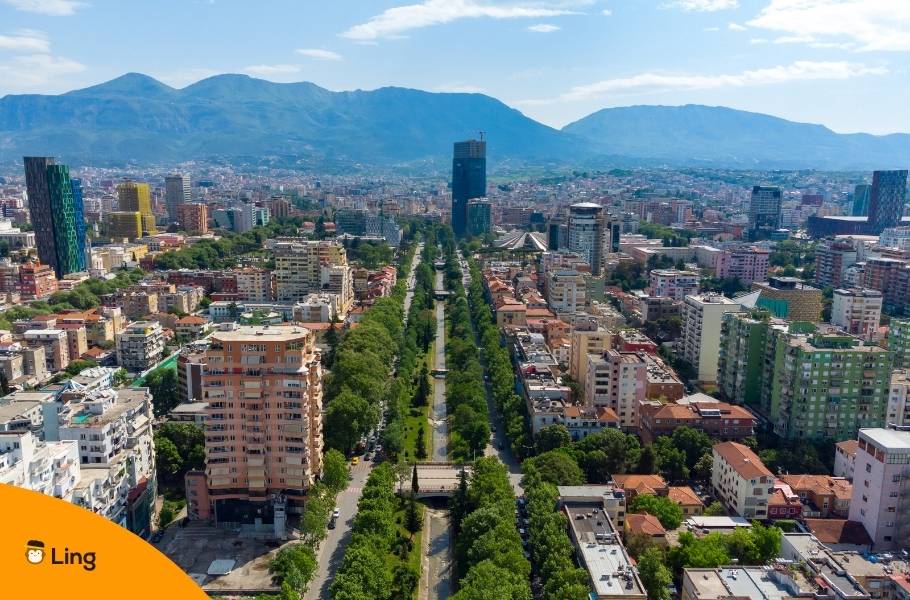
Tirana is Albania’s capital and economic center.
Why expats choose Tirana:
- Best for digital nomads
- International restaurants and cafés
- Coworking spaces
- Active nightlife and cultural events
- Better English availability
Tirana is often the easiest place for foreigners to start their life in Albania.
Sarandë
Sarandë sits along the Ionian Sea and has become a favorite destination for retirees and seasonal expats.
Advantages include:
- Scenic coastline
- Warm climate
- Quieter pace
- Proximity to Greece
The trade-off is the season. Sarandë fills up from June to September and empties from November to March, when many restaurants and services close.
Durrës
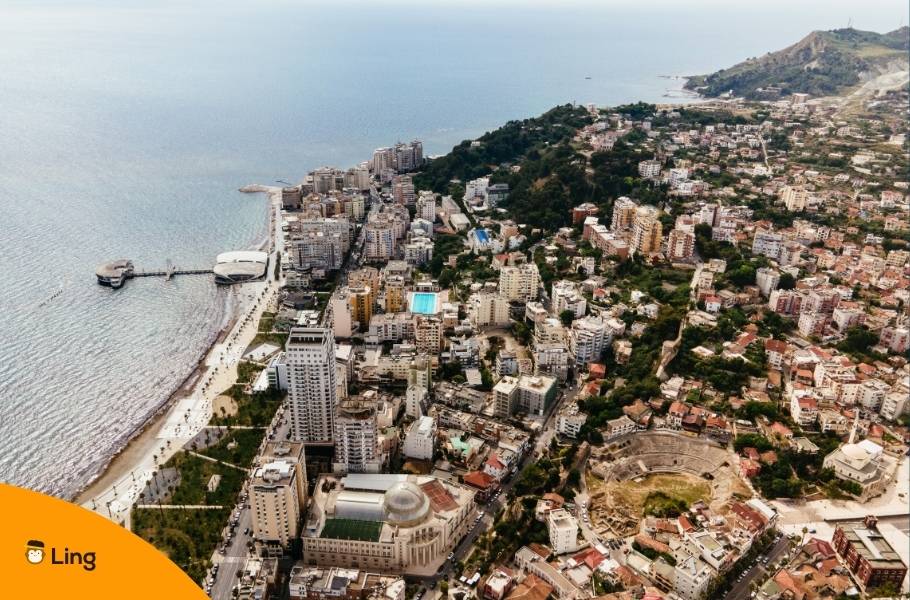
Located along the Adriatic coast, Durrës combines city life with beach access.
Reasons expats like Durrës:
- Coastal lifestyle
- Proximity to Tirana
- Historic sites and seaside cafés
- Affordable + beach access
Shkodër
Shkodër sits near Lake Shkodër in the north, close to the Albanian Alps, and is known for a relaxed pace and cycling culture.
It’s popular among:
- Nature lovers
- Cyclists
- Expats seeking a quieter lifestyle
Ling recommendation: Start with Tirana, then explore the alternatives once you know what you want.
Can You Use Cards In Albania? Banking And Money Tips
Not always. Albania still runs largely on cash. Cards work in city restaurants, hotels, and supermarkets, but small shops, taxis, and rural businesses expect Lek. Keep cash on you and use a multi-currency account for transfers.
What to expect:
- Cards accepted in cities
- Cash required in smaller businesses
Tips to remember:
- Carry Albanian Lek
- Use Wise/Revolut for international transfers
- Make use of the widely available ATMs
ATMs are common but charge per withdrawal, so taking out larger amounts less often works out cheaper.
How Good Is Healthcare In Albania? Public Vs Private
Private healthcare in Albania is reliable and cheap. It is what most expats use. The public system is cheaper but slower, with limited English. A private visit costs a fraction of the Western European price, so many people skip insurance and pay as they go.
Public Healthcare In Albania
- Cheaper
- Limited English
Public facilities may have longer wait times and fewer resources than in Western Europe.
Private Clinics
- Better quality
- English-speaking staff
- Shorter waiting times
- Modern facilities
- Affordable compared to Western countries
Many expats prefer private care because it’s still affordable next to Western prices.
Do You Need To Speak Albanian To Live In Albania?
Not strictly, but it makes daily life much easier. English is common among younger people in Tirana and the coastal resorts. It thins out fast elsewhere. Government offices, landlords, and healthcare are where the gap shows. Those are the moments when getting it wrong costs you time.
English Usage
- Common in Tirana
- Limited in rural areas
Where Albanian Matters
- Government offices
- Landlords
- Healthcare
- Local markets and small shops
Albania sits in the moderate band on the EF English Proficiency Index, and coverage drops off outside the capital and the tourist coast.
Key Insight: Why Learning Albanian Matters For Expats
Even basic Albanian builds trust. It also changes how fast locals treat you as a resident rather than a visitor. Learning basic phrases can help expats:
- Handle administrative tasks
- Communicate with neighbors
- Shop at local markets
- Speak with taxi drivers
Essential Albanian Phrases For Expats
The phrases below cover most first-week situations, plus the ones expats hit repeatedly: landlords, pharmacies, and anything that stops working in a rented flat.
| English | Albanian | Audio |
|---|---|---|
| Hello | Përshëndetje | |
| Good morning | Mirëmëngjes | |
| Thank you | Faleminderit | |
| Please | Ju lutem | |
| Excuse me | Më falni | |
| Yes | Po | |
| No | Jo | |
| How are you? | Si jeni? | |
| Nice to meet you | Gëzohem që ju takoj | |
| I don’t understand | Nuk kuptoj | |
| I don’t speak Albanian well | Nuk flas mirë shqip | |
| Do you speak English? | A flisni anglisht? | |
| Can you repeat that? | A mund ta përsërisni? | |
| Can you help me? | A mund të më ndihmoni? | |
| How much is this? | Sa kushton kjo? | |
| Where is the pharmacy? | Ku është farmacia? | |
| There’s no water | Nuk ka ujë | |
| I need help | Kam nevojë për ndihmë | |
| Goodbye | Mirupafshim |
Cultural Integration Essentials: Tips For Foreigners In Albania
Albanian social life runs on hospitality, coffee, and family and all three shape how people treat a foreigner. Get these right, and you will find doors open faster than you expect.
- Albanians are extremely hospitable
- They have a strong café culture
- For Albanians, family values are central
Hospitality here comes with an expectation. If a host offers coffee or food, take it. Refusing again and again reads as turning down the gesture itself.
Coffee is the other thing to understand. Meeting for coffee is how friendships and business both get built, and those meetings run long. Turning down an invitation reads as a brush-off, and checking your watch reads worse.
A few smaller habits go a long way. Greet the oldest person in a group first. Bring something small when you visit a home. Expect personal questions about family and work early in a friendship, because that is interest rather than nosiness.
And take your shoes off at the door unless your host says otherwise.
Politeness and small efforts with the language go a long way here. Our guide to Albanian culture and etiquette covers all of this in more depth.
What Mistakes Do Expats Make In Albania? 10 To Avoid
Most come down to three habits: assuming Albania works like home, skipping the language, and rushing decisions that deserve a week. Renting without a viewing and relying only on cards are the two that cost real money.
Mistake 1: Not Learning Any Albanian
Fix: Learn simple greetings and phrases early, and keep using them. Even basics change how people respond to you. There are good apps to learn Albanian out there.
Mistake 2: Expecting Western-Style Bureaucracy
Fix: Be patient with administrative procedures and bring more documents than you think you need.
Mistake 3: Only Socializing With Expats
Fix: Join a gym, a language exchange, or a hiking group. Anything with locals in it.
Mistake 4: Ignoring Cultural Norms
Fix: Watch how locals behave in shops, offices, and homes, then follow their lead.
Mistake 5: Relying Only On English
Fix: Use Albanian wherever you can, even badly. It builds goodwill faster than fluent English.
Mistake 6: Ignoring Visa Limits
Fix: Track your days from the date you entered, and start the permit process early.
Mistake 7: Renting Without Viewing
Fix: Always inspect a property in person, and meet the landlord before you sign.
Mistake 8: Relying Only On Cards
Fix: Keep cash on you, always.
Mistake 9: Assuming Internet Quality
Fix: Verify speeds before committing.
Mistake 10: Underestimating Seasonal Slowdowns
Fix: If you’re considering a coastal town, visit in winter before signing anything. Sarandë in January is a different place from Sarandë in August.
3-Month Integration Timeline For Expats & Digital Nomads In Albania
Adjusting to a new country takes time. Month one is logistics, month two is routine, and month three is where the social side starts to catch up. Here’s a realistic timeline for settling into life in Albania.
Month 1: Settling In
Focus on:
- Finding housing
- Getting a SIM card and internet access
- Learning survival Albanian phrases
- Exploring your neighborhood
Month 2: Stabilize
During the second month, you may start to feel more comfortable.
Goals include:
- Speaking simple Albanian phrases
- Handling transportation on your own
- Building local routines
- Finding a coworking space that suits you
Month 3: Integrate
By the third month, many expats begin forming deeper connections.
You might:
- Build friendships with locals
- Participate in community events
- Improve conversational language skills
- Feel settled rather than temporary
Why Learning Albanian Helps Expats Thrive
Is it worth learning Albanian? Yes, learning even basic Albanian improves your daily life and how you experience the country. Benefits include:
- Easier communication in daily life
- Stronger relationships with locals
- Greater independence when dealing with services
- Deeper cultural understanding
Even a few words show respect for the local culture and often lead to warmer interactions. If you’re still deciding whether it’s worth the effort, our guide on whether Albanian is hard to learn breaks down the difficulty by goal.
FAQs: Living In Albania As An Expat & Digital Nomad
Can I Work Remotely From Albania Legally?
Yes. The Unique Permit lets foreign citizens live and work in Albania legally, and you apply for it online through the e-Albania portal. You need a valid travel document, a lawful reason to stay under Albania’s foreigners law, and enough income to cover rent and living costs. You must also pose no risk to public order, national security, or public health.
Is Albania Good For Digital Nomads?
Yes, Albania is one of the more practical bases in Europe for remote work. Living costs run €525 to €1,470 a month depending on the city, fiber internet is widely available, and the Unique Permit covers remote workers explicitly. Tirana has the coworking scene and the largest expat community, so most nomads start there.
How Fast Is Internet In Albania?
Internet in Albania typically runs at 80 to 250 Mbps, with fiber reaching 300 Mbps or more in the cities. Home packages cost roughly €13 to €30 a month. The weak point isn’t bandwidth but power, since older buildings lose electricity often enough to make a phone hotspot worth having.
Can Foreigners Rent Apartments Easily In Albania?
Yes, foreigners can rent apartments in Albania without much trouble, especially in Tirana. Landlords generally ask only for a passport and a deposit, and rent is negotiable. Most listings come through Facebook groups and local agents rather than property portals. View in person before signing, since the lease is also what you’ll need for residency.
How Much Does It Cost To Live In Albania As An Expat?
A single expat can live in Albania on roughly €525 to €1,470 a month, covering rent, food, utilities, transport, and everyday extras. Durrës is the cheapest at €525 to €1,100, Tirana runs €750 to €1,400, and Sarandë reaches €1,470 in peak season. Coworking adds €50 to €150 on top.
Do Albanians Speak English?
Many younger Albanians in Tirana and coastal resorts speak English. Coverage drops sharply in smaller towns and among older people. Albania ranks in the moderate band on the EF English Proficiency Index, so basic Albanian is worth having for offices, landlords, and markets.
Is Albania Expat-Friendly?
Yes. Albania is one of the easiest countries in Europe to move to, with visa-free entry for short stays and the Unique Permit for longer ones. Living costs sit well below Western Europe, the internet is fast, and locals are welcoming. Learning basic Albanian isn’t required, but it makes daily life noticeably easier.
Final Thoughts On Living In Albania As An Expat
Living in Albania offers a unique opportunity to experience a vibrant culture, beautiful landscapes, and a relaxed Mediterranean pace. But adjusting to a new country takes patience, and learning basic Albanian phrases and local customs makes the move much easier.
With the right preparation and an open mind, expats can feel at home in Albania quickly and enjoy what the country has to offer.
Moving to Albania as an expat or digital nomad is:
- Affordable
- Flexible
- Surprisingly easy
But your experience depends on how well you prepare. If you:
- Understand visa options
- Set up essentials quickly
- Make an effort to integrate
Albania can become one of the most rewarding places you’ve lived.
Learn Albanian Faster With Ling
Instead of memorizing random phrases, the Ling app helps you:
- Learn with real-life conversations
- Practice speaking and listening
- Build confidence quickly
For expats, learning Albanian with Ling means faster integration, fewer misunderstandings, and a smoother transition. Lessons take ten to fifteen minutes, so you can start during the planning stage and keep going once you land.


