



What are the most useful Albanian phrases for travel? Start with Përshëndetje, which means “hello”. The short list also includes Faleminderit (thank you), Ju lutem (please), Më falni (excuse me or sorry), and A flisni anglisht? (Do you speak English?).
It’s not that no one speaks English in Albania. But if you want to get beyond the resorts, a few phrases make the trip smoother in places where English runs thin.
Basic phrases help you ask for directions, order food, and be polite with locals. Even a word like “hello” or “thank you” changes how an exchange goes. With that in mind, this guide focuses on survival expressions: greetings, dining, transport, emergencies, and more.
Why Should You Learn Albanian Phrases Before Your Trip?
Because English gets thinner the further you go from Tirana. Many Albanians in the cities speak it, especially younger people. In small towns, rural areas, and local markets, far fewer do. A handful of phrases can help cover the gap.
Here are a few reasons why learning basic Albanian phrases is useful:
- It helps you communicate in restaurants, shops, and taxis
- Locals appreciate visitors who try to speak their language
- It makes asking for directions easier
- It helps in unexpected situations such as medical needs or transportation issues
Even a few words make an exchange friendlier. Travelers who use local phrases often find people more willing to help and share recommendations.
The same holds for anyone staying longer, though the demands are different: our guide to living in Albania as an expat covers the vocabulary you need for landlords, offices, and pharmacies.
What Are The 10 Albanian Phrases To Learn Before Your Flight?
Ten phrases cover most of a short trip. You can start with “hello” – Përshëndetje, “thank you” – Faleminderit, and “please” – Ju lutem.
If you learn nothing else, learn these ten. They cover greetings, politeness, money, directions, and asking for help, which is most of what a short trip demands. All ten repeat constantly, so you will use them daily.
| English | Albanian | Pronunciation |
|---|---|---|
| Hello | Përshëndetje | |
| Thank you | Faleminderit | |
| Please | Ju lutem | |
| Excuse me/Sorry | Më falni | |
| Do you speak English? | A flisni anglisht? | |
| How much does this cost? | Sa kushton kjo? | |
| Where is the bathroom? | Ku është banjoja? | |
| I need help | Kam nevojë për ndihmë | |
| The bill, please | Faturën, ju lutem | |
| Goodbye | Mirupafshim |
These phrases cover the situations travelers hit most.
Which Albanian Phrases Do You Need For Each Situation?
Different moments call for different words. The tables below group phrases by situation: greetings, questions, directions, restaurants, shopping, emergencies, and numbers.
Most travelers need the first three. The rest depend on where you go and how long you stay.
Basic Albanian Greetings
Albanian greetings come up constantly. “Hello” – Përshëndetje works at any hour. “Good morning” – Mirëmëngjes, “good afternoon” – Mirëdita, and “good evening” – Mirëmbrëma cover the rest of the day, and “hi” – Tung is the informal version.
| English | Albanian | Pronunciation |
|---|---|---|
| Hello | Përshëndetje | |
| Hi | Tung | |
| Good morning | Mirëmëngjes | |
| Good afternoon | Mirëdita | |
| Good evening | Mirëmbrëma | |
| Goodbye | Mirupafshim | |
| How are you? | Si jeni? | |
| I’m fine | Jam mirë |
Albanian Phrases For Asking Questions
Five phrases keep a conversation moving when you lose the thread. “I don’t understand” – Nuk kuptoj and “Could you repeat that” – Mund ta përsërisni? buy you time. “Do you speak English?” – A flisni anglisht? can also come in handy.
| English | Albanian | Pronunciation |
|---|---|---|
| Do you speak English? | A flisni anglisht? | |
| Can you help me? | A mund të më ndihmoni? | |
| I don’t understand | Nuk kuptoj | |
| Could you repeat that? | Mund ta përsërisni? | |
| What does this mean? | Çfarë do të thotë kjo? |
Albanian Phrases For Asking Directions
Street signs are inconsistent, and mapping apps get patchy outside the cities, so asking someone is often quicker. Most of these start with “Where is…” – Ku është…?, as in “Where is the bus station?” – Ku është stacioni i autobusit?. “Is it far?” – A është larg? is the follow-up.
| English | Albanian | Pronunciation |
|---|---|---|
| Where is the city center? | Ku është qendra e qytetit? | |
| Where is the bus station? | Ku është stacioni i autobusit? | |
| Where is the train station? | Ku është stacioni i trenit? | |
| Where is the airport? | Ku është aeroporti? | |
| Is it far? | A është larg? | |
| Is it nearby? | A është afër? |
Direction Words In Albanian
Asking the question is half of it. The answer will usually contain “left” – majtas, “right” – djathtas, or “straight” – drejt.
| English | Albanian | Pronunciation |
|---|---|---|
| Left | Majtas | |
| Right | Djathtas | |
| Straight | Drejt | |
| Near | Afër | |
| Far | Larg |
Albanian Phrases For Restaurants And Cafés
These eight take you from sitting down to paying. “Can I see the menu?” – A mund ta shoh menunë?, “What do you recommend?” – Çfarë rekomandoni?, and “The bill, please” – Faturën, ju lutem cover the sequence. Add “please” – ju lutem to any order for politeness.
| English | Albanian | Pronunciation |
|---|---|---|
| A table for two, please | Një tavolinë për dy, ju lutem | |
| Can I see the menu? | A mund ta shoh menunë? | |
| I would like this | Do të doja këtë | |
| What do you recommend? | Çfarë rekomandoni? | |
| Water, please | Ujë, ju lutem | |
| Coffee, please | Kafe, ju lutem | |
| Tea, please | Çaj, ju lutem | |
| The bill, please | Faturën, ju lutem |
Note: Once these feel natural, you can move on to phrases for ordering room service in Albanian.
Albanian Phrases For Shopping
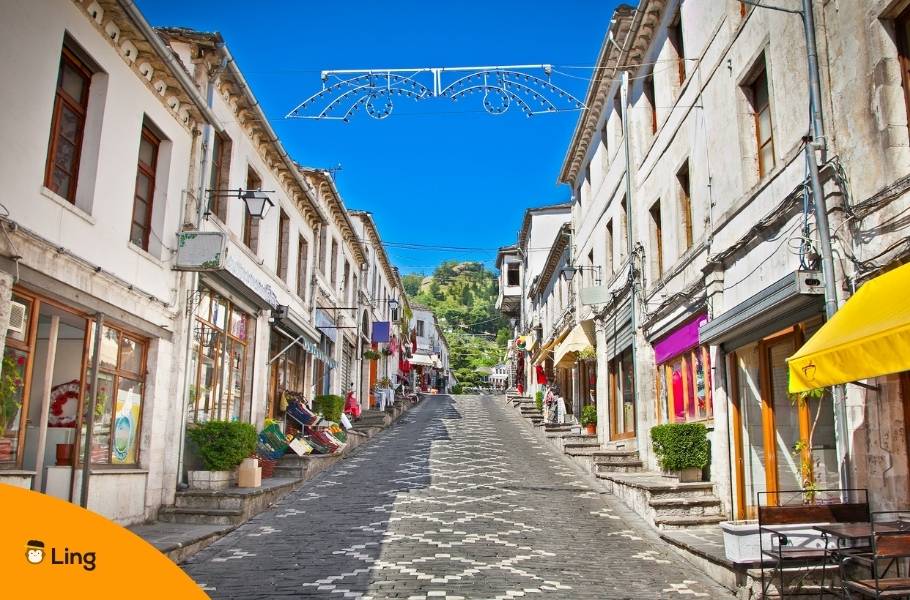
Prices at markets and small shops are often negotiable, and cards aren’t always accepted. “How much does this cost?” – Sa kushton kjo?, “Can you lower the price?” – Mund ta ulni çmimin?, and “Do you accept cards?” – A pranoni kartë? cover all three problems.
| English | Albanian | Pronunciation |
|---|---|---|
| How much does this cost? | Sa kushton kjo? | |
| That is too expensive | Është shumë shtrenjtë | |
| Can you lower the price? | Mund ta ulni çmimin? | |
| I will take it | Do ta marr | |
| Do you accept cards? | A pranoni kartë? |
Emergency Albanian Phrases
Worth learning even though you probably won’t need them, because in an emergency there’s no time to look anything up. “Help” – Ndihmë!, “I need a doctor” – Më duhet një mjek, and “Where is the pharmacy?” – Ku është farmacia? are the three that matter most.
| English | Albanian | Pronunciation |
|---|---|---|
| Help! | Ndihmë! | |
| I need a doctor | Më duhet një mjek | |
| Where is the pharmacy? | Ku është farmacia? | |
| Call the police | Thirr policinë | |
| I feel sick (m) | Ndihem i sëmurë | |
| I feel sick (f) | Ndihem e sëmurë |
Emergency Numbers In Albania
Albania has run the unified 112 service since July 2019, and the older direct lines still work at the same time. For travelers, 112 is usually the easiest option, because the operator can route you to the right service.
Here are the key Albanian emergency numbers you should save in your phone:
- 112 — General Emergency Line (police, ambulance, or fire services)
- 129 — Police
- 127 — Ambulance / Medical Emergency
- 128 — Fire Department
- 126 — Traffic Police
In Tirana and the main tourist areas, operators may be able to help in basic English. Outside them, an Albanian phrase may be the faster route.
Save these numbers before you fly, so you are not searching for them during your trip.
Numbers In Albanian
Numbers come up at markets, bus platforms, and hotel desks. Start with “one” – një, “two” – dy, “three” – tre, “four” – katër, and “five” – pesë, and go up to “ten” – dhjetë.
| English | Albanian | Pronunciation |
|---|---|---|
| Zero | Zero | |
| One | Një | |
| Two | Dy | |
| Three | Tre | |
| Four | Katër | |
| Five | Pesë | |
| Six | Gjashtë | |
| Seven | Shtatë | |
| Eight | Tetë | |
| Nine | Nëntë | |
| Ten | Dhjetë |
What Mistakes Do Travelers Make In Albania? 7 To Avoid
Most trips go wrong in small ways: assuming everyone speaks English, arriving without cash, or turning down a coffee without realizing it reads as rude. None of these ruin a trip, but all of them are easy to avoid once you know about them.
Albania is welcoming and easy to get around, but a few local customs and travel habits can catch visitors by surprise. Here are the seven that come up most.
Mistake #1: Assuming Everyone Speaks English
Many younger Albanians, especially in cities like Tirana, speak English. It is less common in rural areas, small towns, and local markets. Travelers who rely on English alone find everyday tasks harder than they need to be.
English is not the default among other visitors either. Southern Europe accounts for 71.5% of all foreign arrivals, mostly Italians, Greeks, and Kosovars, so the traveler at the next table is often not an English speaker.
Fix: Learn a few basic Albanian phrases before your trip. “Hello” – Përshëndetje, “thank you” – Faleminderit, and “please” – Ju lutem go a long way. Apps like the Ling app help you practice phrases for real situations such as ordering food, asking directions, or greeting people.
Mistake #2: Underestimating Cash Usage
Another common mistake is assuming cards work everywhere. Larger hotels, restaurants, and city stores usually accept them. Smaller businesses, taxis, and local markets often prefer cash.
Fix: Carry Albanian Lek (ALL) for daily spending, especially in smaller towns. ATMs are common in cities, but keep some cash on hand.
Mistake #3: Skipping Local Transportation Research
Travelers sometimes assume Albania runs like Western Europe. In practice, intercity travel depends on buses and shared minibuses called furgons. They are cheap, but schedules are not always published online.
Fix: Ask locals or hotel staff about current schedules. Knowing a few phrases for asking directions helps at bus stations and with drivers.
Mistake #4: Misunderstanding Albanian Hospitality
Albanian culture puts a lot of weight on hospitality. Visitors are often offered coffee, drinks, or food. Turning these down too quickly can come across as rude, even when no offense is meant.
Fix: If someone offers coffee or a small treat, accept it, even briefly. If you cannot stay, thank the host warmly before you go. “Thank you very much” – Faleminderit shumë does the job.
Mistake #5: Rushing Through The Dining Experience
Meals in Albania are slow and social. Travelers used to fast service in large Western cities sometimes get impatient when food takes its time.
Fix: Treat the meal as part of the trip, not a stop on the way to something else. Ask for local recommendations and let it run long.
Mistake #6: Not Researching Cultural Norms Before Visiting Albania
Many travelers arrive without knowing the basics. Greet shopkeepers when you walk in. Dress modestly at religious sites. Show respect to older people. Skipping these creates small awkward moments that are easy to avoid.
Fix: Read up on local customs before you fly. Our guide to Albanian culture and etiquette covers greetings, hospitality, and everything else you need.
Mistake #7: Only Visiting The Most Popular Tourist Spots In Albania
Many visitors stick to Tirana or the Albanian Riviera and miss the rest. Smaller towns, historic centers, and mountain areas get far fewer foreign visitors.
And the crowding is real. Albania took 12.47 million foreign visitors in 2025 against a population of about 2.4 million, roughly five visitors for every resident. Most of them go to the same handful of places.
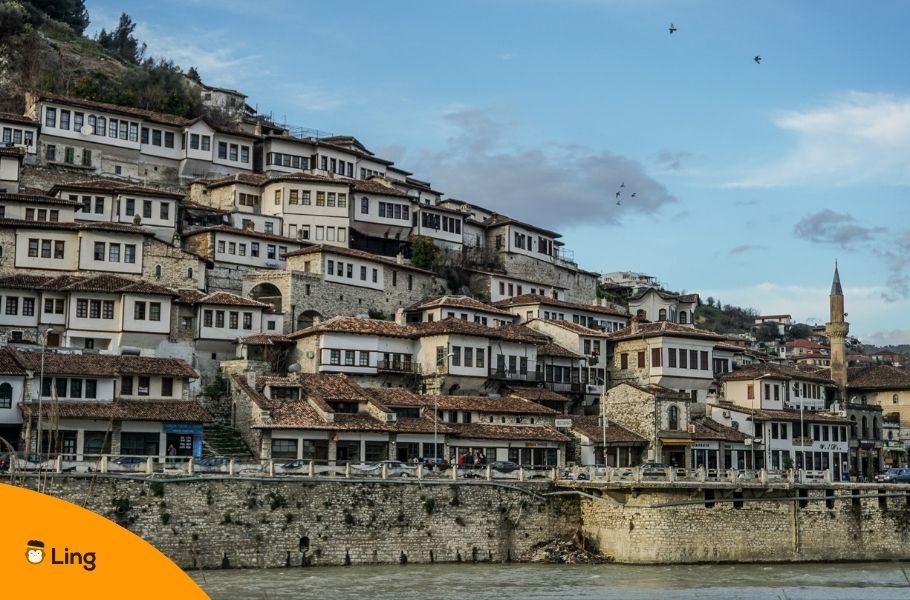
Fix: Go beyond the famous stops. Shkodër, Berat, and Gjirokastër are worth the detour, and the last two are UNESCO World Heritage sites for their Ottoman-era architecture. A few Albanian phrases make these places easier, since English is less common there.
If a trip turns into something longer, our comparison of the best Albanian cities for expats looks at Tirana, Sarandë, and Durrës on cost and daily life.
How To Learn Albanian Phrases In 3 Days
Three days is enough for the basics if you split them by theme. Day one covers greetings and polite words, day two covers directions and transport, and day three covers restaurants and emergencies. Fifteen minutes a day gets you through it.
Day 1: Greetings And Polite Words In Albanian
Focus on:
- Hello and goodbye
- Please and thank you
- Basic introductions
Say them out loud rather than reading them. Albanian is written as it sounds, so pronunciation comes fast. If you want more than three days of prep, our guide for Albanian beginners sets out a longer plan.
Day 2: Directions And Transportation Vocabulary In Albanian
Learn phrases related to:
- Asking for directions
- Transportation locations
- Basic navigation words
These get you around cities and towns without a map.
Day 3: Albanian Phrases For Restaurants And Emergencies
Finally, learn phrases related to:
- Ordering food
- Paying the bill
- Asking for medical help
By the end of day three you will handle most situations a short trip throws at you. Three days won’t make you fluent, and Albanian can be difficult at that level, but travel phrases sit at the easy end of it.
FAQs About Albanian Phrases For Travelers
Do I Need To Learn Albanian Before Visiting Albania?
Not necessarily. Many people in cities speak English, but knowing a few Albanian phrases can make communication easier and help you connect with locals.
What Is The Most Useful Albanian Phrase For Travelers?
“Thank you” – Faleminderit is the single most useful phrase. It works in every setting, formal or casual, and it is the one locals notice.
Is Albanian Difficult To Learn?
Albanian has unfamiliar vocabulary and complex grammar, so full fluency takes work. Basic travel phrases are another matter. The alphabet is Latin and the spelling is phonetic, so words are said as they are written.
What Are Some Common Albanian Phrases?
The phrases travelers use most are greetings, polite expressions, and simple questions. “Hello” – Përshëndetje, “thank you” – Faleminderit, “please” – Ju lutem, and “excuse me” – Më falni cover politeness.
“How are you” – Si jeni?, “I don’t understand” – Nuk kuptoj, and “How much is this” – Sa kushton kjo? handle most short exchanges. These are the ones you will use with shopkeepers, taxi drivers, waiters, and hotel staff during your trip.
How Do You Say “Hi” In Albania?
The most common way to say “hi” in Albanian is Përshëndetje. It is polite and works in formal and casual settings. In casual conversation, people also say Tung (hi), Mirëmëngjes (good morning), Mirëdita (good afternoon), or Mirëmbrëma (good evening). Greeting someone when you enter a shop or café is considered polite in Albania.
What Is The Tourism Slogan Of Albania?
Albania’s official tourism slogan is “Go Your Own Way.” It was introduced to position the country as a destination for independent travelers, and it points at the range on offer: Adriatic and Ionian beaches, mountains, historic towns, and heritage sites.
What Are Common Albanian Travel Phrases?
Five phrases that are essential for a trip: “hello” – Përshëndetje, “thank you” – Faleminderit, “please” – Ju lutem, “sorry or excuse me” – Më falni, and “how are you” – Si jeni?. Add “Do you speak English?” – A flisni anglisht? and “How much is this?” – Sa kushton kjo?, and you can handle greetings, politeness, and prices.
Final Thoughts On Albanian Phrases For Travel
Knowing a few Albanian phrases can make a trip smoother. Greetings and polite expressions help you talk to locals and show respect for the language.
You do not need many. Ten phrases cover most of a short trip, and using them will make you more confident on the ground than any amount of reading beforehand.
The phrases that earn their place are the ones you use repeatedly: Përshëndetje on entering a shop, Faleminderit on leaving, Sa kushton kjo? at the counter. Learn those first and add the rest as you need them.
A small amount of Albanian gets a warm response almost everywhere in the country.
Learn Albanian Faster With Ling
The best way to start learning Albanian is with the Ling app. It teaches a full Albanian course built around real conversations rather than word lists.
That matters for a trip. Learning “hello” – Përshëndetje in isolation is one thing; hearing it inside an exchange at a café, with the reply that follows, is what makes it usable at the right moment. Ling also has native-speaker audio, so you learn the sounds that trip up beginners.
Lessons take ten to fifteen minutes to complete, so you can work through the basics in the weeks before you fly and keep going once you land. Three weeks of that puts you well past the ten phrases on this page.
So download the Ling app and start your Albanian learning journey today.


