



If you’re planning to visit Albania, work with Albanian colleagues, or connect with Albanian friends, knowing Albanian culture and etiquette will make things go more smoothly.
Albania is known for its strong traditions, deep family values, and famous hospitality. Many foreigners are surprised by how warmly locals welcome guests. Like any culture, though, Albania has clear social rules that visitors should know.
From greeting elders to accepting food from a host, small gestures show respect. Knowing these Albanian customs for foreigners helps you avoid awkward moments and build better ties with the locals.
This guide covers the customs, etiquette, and social rules foreigners should know before they visit or work with people from Albania.
Albanian Culture: Who Is This Guide For?
This guide is especially useful for:
- Travelers visiting Albania for the first time
- Expats moving to Albania for work or study
- Foreigners with Albanian friends or partners
- Language learners interested in Albanian culture
- Anyone curious about everyday life in Albania
If you’re in any of those groups, knowing the etiquette will help you speak politely and feel more comfortable around the locals.
What Shapes Albanian Culture And Etiquette?
Albanian society emphasizes hospitality, loyalty, family honor, and respect for elders. These values influence how people greet guests, share meals, and interact in social settings.
To truly understand Albanian culture and etiquette, it helps to recognize the cultural values that shape everyday life.
What Is Besa, The Albanian Code Of Honor?
Besa is a promise of trust, loyalty, and protection. In older Albanian law, a guest had to be protected and respected, whoever they were. It’s one of the most important aspects of Albanian culture.
The idea is written into the Kanun of Lekë Dukagjini, the customary code that governed northern Albania for centuries. Its 1,262 articles set out how a guest should be met: bread, salt, a place by the fire, and a bed if needed. One of its lines states that the house of the Albanian belongs to God and to the guest.
Because of this tradition, foreigners often meet unusually generous hospitality in Albania. Hosts may go out of their way to help visitors, offer food, or make sure guests feel at ease.
When you visit an Albanian home, take what you’re offered, even if it’s only a coffee or a snack. That’s the polite answer.
Albanian Hospitality: Why Are Guests Treated Like Family?
Hospitality sits at the center of Albanian social life. Inviting guests for coffee, meals, or celebrations is common. The Kanun made the host responsible for a guest’s safety and comfort, and something of that obligation survives in how visitors are treated today.
If you visit someone’s home in Albania, you may notice:
- Hosts offering food several times
- Long conversations over coffee
- Family members joining the gathering
Turning food down again and again may feel polite where you come from. In Albania, it reads as refusing hospitality. Take a small portion instead.
How Greeting Etiquette Works In Albania: Handshakes And Respect
Greetings in Albania depend on how well you know someone. Common greeting customs include:
- Firm handshakes when meeting someone new
- Cheek kisses between friends or relatives
- Direct eye contact as a sign of sincerity
Save the cheek kisses for people you already know. With a new acquaintance, a handshake is safer. Use Zoti for Mr. and Zonja for Mrs. until you’re asked to use first names, which usually happens fast.
When greeting a group, greet the oldest person first. Respect for elders runs through Albanian culture.
Learning a few Albanian words like Përshëndetje (hello) or Faleminderit (thank you) also goes down well.
Tips To Remember When Visiting An Albanian Home
Being invited into someone’s home is a meaningful cultural experience. Common etiquette expectations in Albania include:
- Bringing a small gift, such as sweets, flowers, or wine
- Greeting each person one by one
- Taking your shoes off if the host asks
Hosts often hand out slippers and insist on serving food or drinks. Let them. Refusing the ritual is more awkward than accepting it.
Albanian Coffee Culture: Social Life Happens Over Coffee
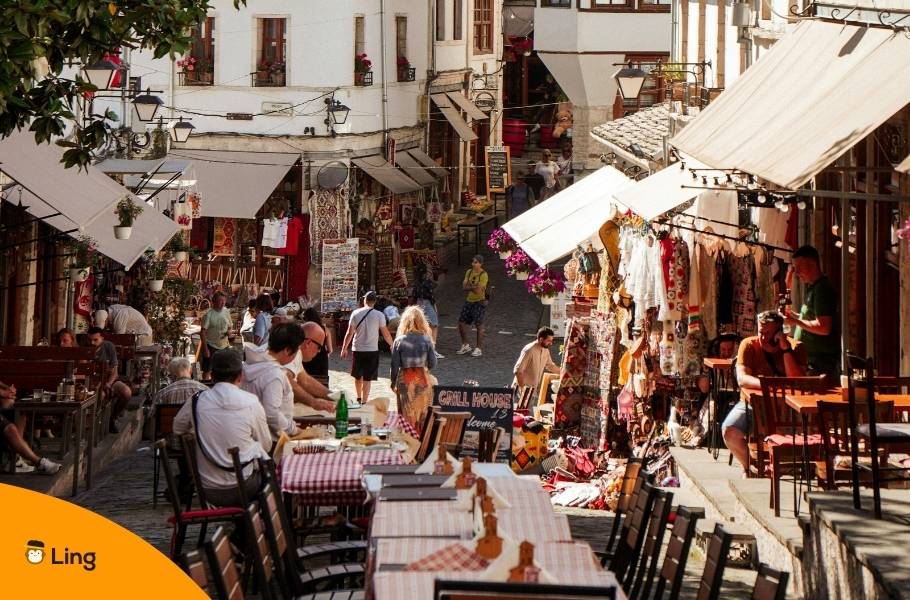
Coffee is deeply woven into Albanian daily life. Friends, family members, and colleagues frequently meet at cafés to talk and relax, and the country has one of the highest counts of cafés and bars per head in Europe, at roughly 547 per 100,000 people.
Coffee meetings can run long, and they’re where friendships and business get built. Saying yes to a coffee invitation reads as friendly and respectful.
Quick Reference: Which Cultural Values Shape Albanian Behavior?
Four values explain most of what you’ll see: family first, respect for elders, loyalty to the group, and generosity to guests. If a custom seems puzzling, one of these four is usually behind it.
- Family First: Family comes before most things in Albania, and family expectations shape many decisions.
- Respect For Elders: Older people are given respect and authority. Listening closely and greeting elders first is expected.
- Community And Loyalty: Albanians value loyalty to friends and neighbors. Friendships build slowly and then last.
- Generosity Toward Guests: Guests are treated well. Hosts may insist on paying for meals or laying on food and drink.
Why Learning Albanian Improves Cultural Connections
Understanding Albanian culture and etiquette becomes much easier when you also learn some of the language. Research has long shown that language and culture are closely connected, and even a few phrases help foreigners handle daily life with more confidence. It also shows effort, which locals notice.
Greet someone with Përshëndetje (hello) or thank a host with Faleminderit (thank you). Small gestures like this get noticed because they show a visitor is trying.
Even a small vocabulary can help you:
- Greet people politely
- Order food or coffee
- Ask simple questions
- Show appreciation for hospitality
These interactions often lead to friendlier conversations and deeper cultural experiences.
If you want to explore Albania beyond typical tourist experiences, learning some Albanian is one of the best ways to connect with locals and understand everyday life more authentically. It allows you to appreciate not only the language itself but also the traditions and values that shape Albanian customs for foreigners and residents alike.
What Albanian Phrases Should Visitors Learn First?
Start with greetings, then directions, then food. Those three cover most of what a short visit demands, and all of them repeat, so you’ll use the same handful of phrases every day.
Here are some helpful expressions for visitors:
Basic Greetings In Albanian
| English | Albanian | Audio |
|---|---|---|
| Hello | Përshëndetje | |
| Hi (informal) | Tung | |
| Good morning | Mirëmëngjes | |
| Good afternoon | Mirëdita | |
| Good evening | Mirëmbrëma | |
| Good night | Natën e mirë | |
| Welcome | Mirë se vini | |
| How are you? | Si jeni? | |
| I’m fine | Jam mirë | |
| Nice to meet you | Gëzohem që ju takoj | |
| See you later | Shihemi më vonë | |
| Goodbye | Mirupafshim |
Navigation Phrases In Albanian
| English | Albanian | Audio |
|---|---|---|
| Where is the city center? | Ku është qendra e qytetit? | |
| Where is the bus station? | Ku është stacioni i autobusit? | |
| Where is the train station? | Ku është stacioni i trenit? | |
| Where is the airport? | Ku është aeroporti? | |
| Is it far? | A është larg? | |
| Is it nearby? | A është afër? | |
| Can you help me? | A mund të më ndihmoni? |
Asking For Directions In Albanian
| English | Albanian | Audio |
|---|---|---|
| Where is the bathroom? | Ku është banjoja? | |
| Where is the hotel? | Ku është hoteli? | |
| Which way should I go? | Nga duhet të shkoj? | |
| Turn left | Kthehu majtas | |
| Turn right | Kthehu djathtas | |
| Go straight | Shko drejt | |
| Is it close to here? | A është afër këtu? | |
| How long does it take to get there? | Sa kohë duhet për të arritur atje? |
Ordering Food & Drinks In Albanian
| English | Albanian | Audio |
|---|---|---|
| Can I see the menu? | A mund ta shoh menunë? | |
| What do you recommend? | Çfarë rekomandoni? | |
| What do you have? | Çfarë keni? | |
| I would like to order something | Do të doja të porosis diçka | |
| A glass of water, please | Një gotë ujë, ju lutem | |
| A cup of coffee, please | Një filxhan kafe, ju lutem | |
| Could I get the bill? | A mund të marr faturën? | |
| Thank you | Faleminderit |
In short, learning basic Albanian phrases can help you have a smoother and more pleasant experience while visiting this beautiful European country.
Why Learning Basic Albanian Helps
Even a handful of phrases helps foreigners speak politely and understand Albanian customs better. Simple greetings, polite expressions, and travel phrases in Albanian make dealings with locals easier and often lead to friendlier conversations.
Using Albanian, even badly, shows respect for local culture and helps visitors connect with people during their stay.
What Mistakes Do Foreigners Make In Albania? 7 To Avoid
The most common mistakes aren’t rudeness. They’re small habits that read differently in Albania than they do at home: turning down food, greeting the wrong person first, or leaving a coffee too early. Each one is easy to fix once you know it.
Mistake #1: Refusing Food Too Quickly
Hosts typically offer food multiple times. Turning it down at once can seem rude.
Tip: Accept at least a small portion.
Mistake #2: Ignoring Elders When Greeting
Greeting younger people before elders can appear disrespectful.
Tip: Always greet the oldest person first.
Mistake #3: Arriving Empty-Handed To Someone’s Home
Bringing a small gift is considered polite.
Tip: Flowers, desserts, or sweets are good options.
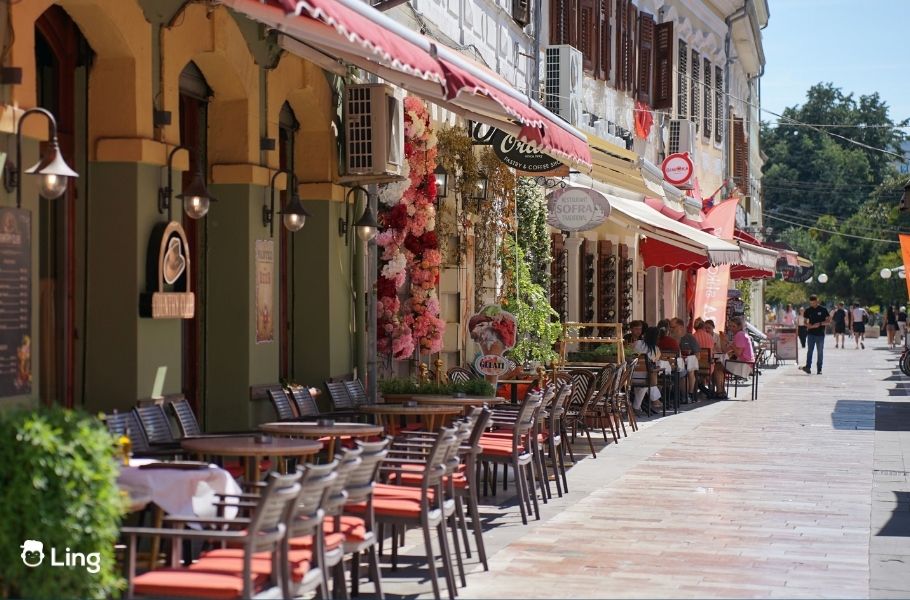
Mistake #4: Leaving Too Quickly After Coffee
Social visits in Albania often last longer than foreigners expect.
Tip: Plan for a slow, unhurried conversation rather than a quick catch-up.
Mistake #5: Speaking Too Loudly About Sensitive Topics
Politics and recent history can be touchy depending on whom you’re with.
Tip: Observe how locals discuss these topics before joining the conversation.
Mistake #6: Misunderstanding Head Gestures
This is the one that catches nearly every first-time visitor. In much of Albania, the head gestures for yes and no are the reverse of the Western ones. A small side-to-side shake often means yes. A short upward flick of the head, sometimes with a click of the tongue, means no.
Tip: Pay attention to how locals use gestures. And when you’re not sure, say it out loud. Po means yes, and jo means no.
Mistake #7: Underestimating Albanian Hospitality
Visitors are sometimes surprised by how generous Albanian hosts can be.
Tip: Accept what is offered and say thank you clearly.
Frequently Asked Questions About Albanian Culture And Etiquette
Is Albanian Culture Difficult For Foreigners To Understand?
Albanian culture is not hard for foreigners to understand. Most of it rests on values you probably already know: respect, hospitality, and close family ties.
Visitors notice quickly that Albanians care about welcoming guests, greeting elders first, and keeping social ties close. Learn a few basics, such as taking the coffee a host offers, and you’ll get through most social moments without trouble.
What Is Unique About Albanian Culture?
The clearest example is Besa, an old code that means keeping your word, protecting guests, and staying loyal to your people. Family, hospitality, and respect for elders sit alongside it.
Albania is also one of the few places where a host may insist on paying for a meal with someone they met an hour ago.
Do Albanians Expect Foreigners To Speak Albanian?
No, Albanians do not expect foreigners to speak Albanian. In cities and tourist areas, many people speak English, especially younger Albanians. Still, a few phrases such as Përshëndetje (hello) or Faleminderit (thank you) go down well and show respect for local culture. English also thins out in smaller towns and among older people.
Is Albania Friendly To Visitors?
Yes, Albania is known for being friendly to visitors. Hospitality sits at the heart of Albanian culture and etiquette, and guests are treated with warmth. Locals often offer visitors coffee, food, or help with directions. That comes straight from the old value of welcoming guests, and it’s offered freely rather than for show.
Are Albanians Formal Or Relaxed Socially?
Both. Albanians are warm and easy to talk to, but old etiquette still shapes how people behave.
Greet elders first, take what a host offers, and keep your manners in company. The mood may feel relaxed, but respect still matters.
What Is Basic Albanian Etiquette?
Greet Albanian locals with Përshëndetje (hello). Always say Faleminderit (thank you) to show respect and cultural awareness. Be respectful of Albanian values: family first, respect for elders, and gratitude for hospitality.
Why Effort Speaks Louder Than Fluency For Learning Albanian
Albanian culture and etiquette is less about memorizing rules and more about showing respect, curiosity, and interest in local traditions.
Foreigners who greet elders politely, take the hospitality they’re offered, and show interest in Albanian customs get a warm welcome.
Whether you’re traveling, studying, or building friendships with Albanians, these Albanian customs for foreigners will help you see the culture up close.
Learn Albanian While Exploring Its Culture
Albanian customs make more sense once you learn some of the language. Even simple phrases help you speak politely with locals and show respect for their culture.
With the Ling app, you can learn Albanian vocabulary, pronunciation, and cultural expressions through short, interactive lessons built for beginners.


