


Have you ever seen a 먹방 (Muk-bang)? If so, you probably know some vocabulary about food in Korean. However, we’ll explain briefly if you don’t know what it is. A Muk-bang is a show recorded or broadcast on the internet where people eat large portions of food while interacting with their audience. These shows have become so popular that they have spread to other cultures.
With the popularity of K-pop and K-dramas, South Korea has caught the attention of the whole world. At the same time, Korean has become one of the most popular languages among the young generation. Furthermore, with the explosion of Korean culture, more and more people are interested in trying Korean dishes to experience the feeling their favorite actors and idols portray when eating 한식 (Hansik).
Given these reasons, we thought this would be an excellent opportunity to share a little about Korean cuisine and food and drink vocabulary. So, if you’re ready to work up your appetite, let’s get started!
I want to learn even more languages with Ling!
Download now!
Korean Cuisine
Korean cuisine has become significantly popular in recent years; its gastronomy is mainly based on rice, vegetables, and meat. Traditional Korean meals are known for the wide variety of side dishes (반찬; banchan) that are regularly served with steamed rice. Another fundamental element of Korean cuisine is Kimchi. It is a staple, and most Koreans eat it with almost every meal.
Kimchi is made with fermented vegetables. Usually, napa cabbage, Korean radish, or cucumber are commonly fermented in a brine of ginger, garlic, scallions, and hot peppers. There are many variations of Kimchi, and its preparation differs from region to region. As we mentioned, it is served as a side dish or prepared in soups and other dishes. Koreans generally make enough Kimchi to last through the winter, as fermented food can last quite a long time. Kimchi is not only delicious, but it has many nutritional properties.
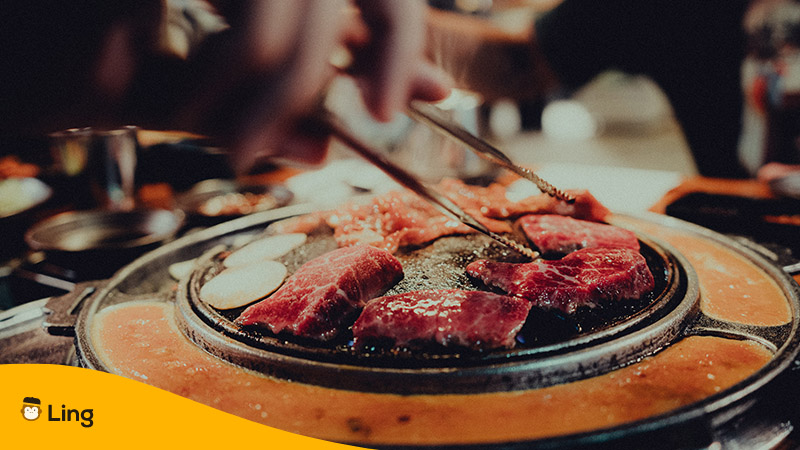
Korean BBQ
Korean barbecue is such an essential part of Korean gastronomy that it deserves its own section. The 고기구이 (gogigu-i, grilled meat) is a set of Korean dishes made from grilled meats of different types: beef, pork, and chicken. Usually, these dishes are prepared on tabletop grills built from gas or charcoal. Some Korean restaurants have built-in grill tables, but the ones that don’t provide customers with portable stoves to be used at the tables. If you want to learn more about Korean BBQ, we have a post dedicated specifically to this topic. Check it out!
Korean Words For Food And Drinks
Now, let’s take a look at the vocabulary related to food and drinks in Korea. Check out all the words you have learned from watching Korean dramas and Muk-bangs.
| English | Korean | Transcription | Sound |
| Potato | 감자 | Gamja | |
| Chili Powder | 고춧가루 | Gochutgaru | |
| Green Onion | 파 | Pa | |
| Carrot | 당근 | Danggeun | |
| Water | 물 | Mul | |
| Beer | 맥주 | Maekju | |
| Juice | 주스 | Juseu | |
| Tomato | 토마토 | Tomato | |
| Peach | 복숭아 | Boksunga | |
| Soda | 탄산음료 | Tansaneumnyo | |
| Soju | 소주 | Soju | |
| Plum | 자두 | Jadu | |
| Sweet Potato | 고구마 | Goguma | |
| Garlic | 마늘 | Maneul | |
| Honey | 꿀 | Kkul | |
| Butter | 버터 | Beoteo | |
| Ketchup | 케첩 | Kecheop | |
| Cauliflower | 꽃양배추 | Kkonnyangbaechu | |
| Tea | 차 | Cha | |
| Vinegar | 식초 | Sikcho | |
| Pasta | 파스타 | Paseuta | |
| Sugar | 설탕 | Seoltang | |
| Red Pepper | 고추 | Gochu | |
| Corn | 콘 | Kon | |
| Bread | 빵 | Ppang | |
| Grape | 포도 | Podo | |
| Parsley | 파슬리 | Paseulli | |
| Chili Pepper Paste | 고추장 | Gochujang | |
| Ginger | 생강 | Saenggang | |
| Eggplant | 가지 | Gaji | |
| Lettuce | 상추 | Sangchu | |
| Rice Wine | 막걸리 | Makgeolli | |
| Flour | 밀가루 | Milgaru | |
| Banana | 바나나 | Banana | |
| Papaya | 파파야 | Papaya | |
| Hot Sauce | 핫 소스 | Hat soseu | |
| Baking Soda | 중조 | Jungjo | |
| Bell Pepper | 피망 | Pimang | |
| Asparagus | 아스파라거스 | Aseuparageoseu | |
| Bok Choy | 청경채 | Cheonggyeongchae | |
| (Chinese) Cabbage | 양배추 | Yangbaechu | |
| Rice | 밥 | Bap | |
| Pumpkin | 호박 | Hobak | |
| Zucchini | 애호박 | Aehobak | |
| Black Pepper | 후추 | Huchu | |
| Mango | 망고 | Manggo | |
| Milk | 우유 | Uyu | |
| Apple | 사과 | Sagwa | |
| Cinnamon | 시나몬 | Sinamon | |
| Spinach | 시금치 | Sigeumchi | |
| Beans | 콩 | Kong | |
| Ginseng | 인삼 | Insam | |
| Scallion | 봄양파 | Bomyangpa | |
| Mayonnaise | 마요네즈 | Mayonejeu | |
| Orange | 오렌지 | Orenji | |
| Persimmon | 감 | Gam | |
| Coca Cola | 콜라 | Kolla | |
| Radish | 무 | Mu | |
| Mushroom | 버섯 | Beoseot | |
| Beetroot | 비트 | Biteu | |
| Strawberry | 딸기 | Ttalgi | |
| Celery | 셀러리 | Selleori | |
| Salt | 소금 | Sogeum | |
| Melon | 멜론 | Mellon | |
| Watermelon | 수박 | Subak | |
| Pea | 완두콩 | Wandukong | |
| Pomegranate | 석류 | Seongnyu | |
| Broccoli | 브로콜리 | Beurokolli | |
| Coffee | 커피 | Keopi | |
| Oil | 기름 | Gireum | |
| Onion | 양파 | Yangpa | |
| Sesame Oil | 참기름 | Chamgireum | |
| Bean Sprouts | 콩나물 | Kongnamul | |
| Mandarin, Tangerine | 귤 | Gyul | |
| Lotus Root | 연근 | Yeongeun | |
| Soy Sauce | 간장 | Ganjang | |
| Cucumber | 오이 | Oi | |
| Seaweed | 해초 | Haecho | |
After talking so much about food, you must be hungry. Maybe you are considering visiting a Korean restaurant and trying various Korean dishes. If that’s the case, it would be good for you to look at this article we have on how to order food in Korean; you will be able to learn all the words and phrases you need to succeed on your next visit to a 한식당.
Speak Korean Confidently With Ling

Have you ever felt that even though you have the vocabulary, you are not confident enough to speak Korean? Perhaps you can understand what Korean speakers say, but you find it difficult to respond. To achieve fluency, it is necessary to exercise conversational skills. If you don’t have the opportunity to practice with Korean speakers, the Ling app will be a game changer.
With the Ling app, you can take your Korean learning experience to the next level with several lessons designed to fulfill your language learning needs. On top of that, you can download it for free from the App Store or Play Store. So get it now to immerse yourself in the world of the Korean language! 다음에 만나요!