Since the rise of the Korean wave, Korean has become one of the most popular languages to learn around the world. What started with K-dramas and K-pop quickly grew into global interest in Korean food, beauty, travel, cinema, and culture as a whole. Beginners quickly learned that Korean is quite approachable and much easier to learn than they expected.
So, if you are still wondering why learn Korean in 2026, these are the biggest reasons people are starting today.
Why Learn Korean?: What You Need To Know
- Korean has become one of the fastest-growing languages to learn worldwide thanks to the Korean Wave.
- Hangul is one of the easiest writing systems to learn, and many beginners start reading Korean within days.
- Learning Korean makes traveling in South Korea much easier, especially outside major tourist areas where English is less common.
- Korean language skills can create career opportunities in teaching, business, technology, and entertainment industries.
- A lot of cultural meaning in Korean dramas and conversations gets lost in translation, especially politeness levels and social dynamics.
I want to learn even more languages with Ling!
Download now!
1. Korean Culture Makes Learning Deeply Engaging
Korean culture has become a worldwide phenomenon in recent years. Even if you’re not a die-hard fan, you must’ve heard about at least one K-drama or K-pop song.
This is precisely the reason why so many people start to pick it up. Learning Korean allows you to understand K-pop lyrics and cultural nuances without relying on translations, making you enjoy the music and dramas even more.
Remember Squid Game? That show was huge, and yet, when it came out, many people were complaining about how many nuances disappeared in the dubbed versions. For example, in Korean, the way people speak to each other immediately reveals power dynamics and relationships, and a lot of that was not clear in the English version.
Not to mention, K-dramas and movies are super useful learning tools. There are many different genres to choose from and then naturally improve listening and comprehension skills while hearing how Korean is actually spoken in real conversations.
2. Hangul Is One Of The Easiest Writing Systems To Learn
A lot of people assume Korean must be impossible to read; it actually has one of the easiest writing systems in the world.
Korean is not a tonal language like some other Asian languages, and unlike Chinese, you don’t need to memorize thousands of separate characters. The Korean writing system, Hangul, consists of 24 letters and is designed to be easy to learn, which allows beginners to master it in a matter of hours.
Hangul kind of works like building blocks. For example, the Korean word 한 (han) is simply made up of letters ㅎ (h), ㅏ (a), and ㄴ (n). Once you know the sounds, you can usually read Korean words correctly even if you have no idea what they mean yet. Hangul is phonetic and consistent, so pronunciation usually matches the spelling.
Most learners can pick up the writing system quickly. You will not master it overnight, obviously, but being able to suddenly read menus, subtitles, or K-pop titles early on can feel very rewarding.

3. Korean Can Open Real Career Opportunities
Many people start learning Korean for the culture, but what many don’t realize is how much of a professional advantage this can give them. Korean language skills create opportunities in international business, translation, tourism, and the technology sectors.
The thing that is becoming the most popular, though, is being an English teacher in South Korea. In most cases, you only need a bachelor’s degree, a TEFL certificate, and citizenship from an English-speaking country. Many teaching jobs include free housing and salaries big enough that they make saving money surprisingly realistic.
You don’t need to speak Korean for this at first, but this is a great reason to start learning even beforehand—so you can more easily communicate with your students, for example. And many people end up learning naturally over time anyway, because they’re exposed to the language in their everyday life.
4. Traveling In Korea Feels More Rewarding
Top destinations like Seoul, Jeju Island, and Busan are likely on the very top of many travel bucket lists. These places don’t necessarily require you to be fluent in Korean, but the experience can be a lot better if you can communicate with the locals in their native language.
Just imagine being able to read the menu, understand basic signs, or ask for directions in Korean without depending on your phone all the time.
This is especially relevant outside the usual tourist areas. In smaller towns and local markets, English isn’t as common, and Korean translation apps will only get you so far. Anyone who has tried translating an entire conversation through a phone knows how awkward and exhausting it gets after a while.
Koreans also genuinely appreciate it when a foreigner can speak Korean. Even a simple 안녕하세요 –annyeonghaseyo– “hello” or 감사합니다 –gamsahamnida– “thank you” can get you better service and a friendlier experience overall.
5. Learning Korean Gives You A Sense Of Personal Fulfillment
Learning a new language that’s completely different from your own actually has very positive effects on your brain. It can improve your memory, problem-solving skills, and pattern recognition.
Many learners find that after studying Korean, picking up other languages becomes easier as well. You develop discipline, attention to detail, and the ability to recognize linguistic patterns more quickly.
But with Korean, it goes even beyond that. For many people, learning Korean gives them something consistent and enjoyable to focus on outside of stressful daily routines.
There was actual research on studying Korean that showed surprising results. The study found that the people learning Korean felt more confident, socially connected, and happier. Some even described learning Korean as therapeutic and healing, because it gave them structure and a sense of progress. Others said understanding Korean films, music, and dramas helped them feel calmer and more emotionally connected to the world around them. How’s that for motivation?
Practical Tips For Beginner Korean Language Learners
As a beginner, it’s easy to feel overwhelmed once starting a new language, especially if you’re still wondering why learn Korean. Here are some basic tips that can make it easier:
- Learn Hangul before anything else. The letters in the Korean alphabet are spelled phonetically, which means that the words are usually pronounced exactly as they are written. For example, 바나나 (banana) sounds almost exactly like the English word.
- Get comfortable with Korean word order early. Korean sentences usually place the verb at the end. The phrase 저는 사과를 먹어요 (jeoneun sagwareul meogeoyo) means “I eat apples” but literally translated it becomes “I apples eat”.
- Notice how Korean forms plurals. For example, the word “student” (학 생 – haksaeng) becomes 학생들 – haksaengdeul, meaning “students”. But it doesn’t always work this way. Some meaning is already clear from contexts, so words like 사람 – salam can mean both “person” and “people”.
- Expect Korean adjectives to act like verbs in sentences. Instead of saying “the food is delicious”, Koreans simply say 음식이 맛있어요 (eumsigi masisseoyo), literally meaning “food delicious”.
- Korean grammar is straightforward. It does not require verb conjugations, which makes it easier for learners compared to many other languages. This means that Korean verbs do not change depending on who is speaking. 먹어요 (meogeoyo) works for “I eat”, “you eat”, and “they eat”.
- Don’t worry about noun genders. Unlike some languages where every noun is masculine or feminine, Korean uses the same word forms regardless of gender, which removes one big thing beginners usually have to memorize.
- Take Korean politeness levels seriously. Korean changes depending on who you are speaking to. There’s a huge difference between saying “hi” (안녕 – annyeong) to a close friend versus “hello” (안녕하세요 annyeonghaseyo) to a stranger or older person. Beginners learn casual expressions from K-dramas, then accidentally sound rude in real conversations without realizing it.
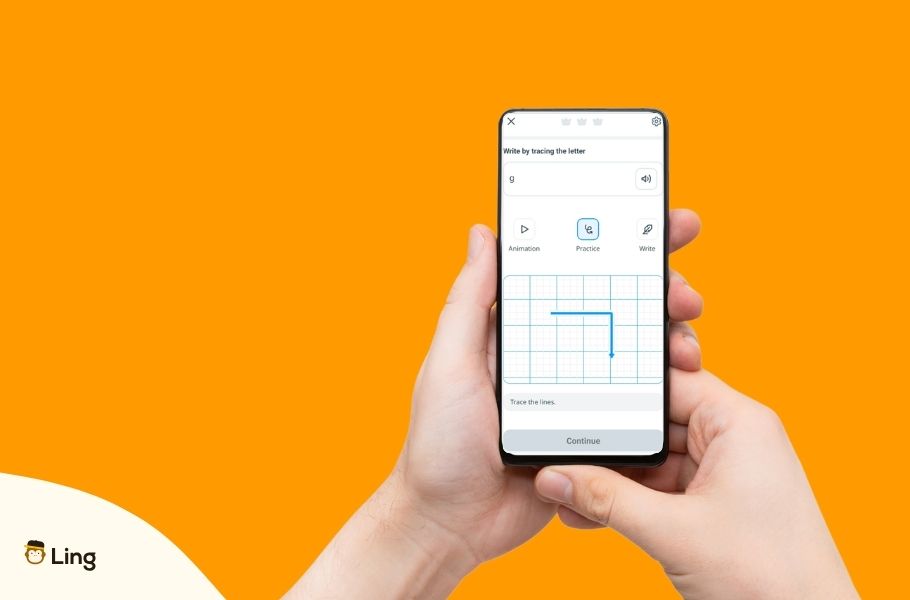
- Use a structured language learning app: Ling teaches Korean step by step with beginner-friendly lessons with useful Korean vocabulary, grammar explanations, cultural notes, native-speaker audio, and even a feature to practice Hangul with finger tracing!
FAQs: Why Learn Korean?
Which Is Harder, Chinese Or Korean?
For most learners, Chinese is usually harder than Korean. Korean has a phonetic alphabet that is much easier to learn, while Chinese requires memorizing characters and tones. Korean still has different linguistic structures from English, but most beginners find it more approachable overall.
Can I Learn Korean On My Own?
Yes, many people successfully learn the Korean language on their own. With structured resources, daily practice, and native-speaker audio, beginners can progress fast, especially once they learn Hangul. The Ling app can be a useful self-learning tool.
Do I Need To Learn Hangul First?
Yes, learning Hangul first makes learning Korean much easier. It helps you read and pronounce words correctly from the beginning, and most beginners can learn the basics in just a few days.
Why Should I Learn Korean?
Korean is worth learning because it gives you direct access to Korean culture. From K-dramas and listening to music to food, traveling, and everyday conversations, knowing even basic Korean helps you understand expressions, social dynamics, and cultural details that often get lost in translation. It also helps that Hangul, the Korean writing system, is surprisingly easy to learn, so you can start reading much faster than most people expect.
Why So Many People Are Learning Korean Right Now
There are honestly so many compelling reasons to learn Korean right now. Some people start because they want to travel, others because they want better career opportunities, and a lot of people simply fall into it after watching one K-drama and wanting more.
Korean culture is rich in customs and traditions, with a unique cultural mindset based on respect, honor, and pride, which can only be fully appreciated by understanding the language.
What I think surprises most people is how quickly Korean starts feeling rewarding. The moment you can finally watch K-dramas and catch expressions without constantly reading subtitles, everything suddenly feels more immersive. You notice jokes, emotions, and little cultural details you missed before, which gives you a much deeper appreciation for both the language and Korean culture overall.
Learn The Korean Language With Ling
If you want to learn Korean online with structured lessons, real-life dialogs, native speaker audio, and clear progression, Ling is one of the best apps out there for beginners.
Instead of jumping between random resources, Ling helps you build Korean step by step, from Hangul and basic phrases to practical everyday conversations.
Download Ling and start your Korean language journey today!