


If you’re planning your first trip to Thailand, chances are you’re excited about the vibrant food scene. However, not everyone is ready for the bold spice levels that Thai cuisine is known for.
At a street food stall or a local restaurant, learning to say no spicy in Thai will help you avoid uncomfortable surprises and show respect for the local culture. In this guide, we’ll share three simple ways to say it, from “not spicy” to “I can’t eat spicy food.”
3 Simple Ways To Say No Spicy In Thai
Here are the three phrases you will use most, from the simplest to the most specific.
Learning Thai is more than memorizing words
Explore more →
1. ไม่เผ็ด (Mâi Phèt) – No Spicy
When you’re in Thailand, navigating the flavorful but fiery world of Thai cuisine can be a bit intimidating, especially if you’re not used to Thai spices. To keep things simple, one of the most direct ways to avoid a spicy dish is by saying mâi phèt (ไม่เผ็ด), which means no spicy in Thai.
This easy-to-remember phrase works wonders when you’re ordering food and want to ensure your dish stays mild. Here’s a polite way to request no spice:
“No spicy, please” khǎw mâi phèt kâ (ขอไม่เผ็ดค่ะ)
- khǎw (ขอ) = “I would like to request” or “Please” (polite)
- mâi (ไม่) = “Not”
- phèt (เผ็ด) = “Spicy”
- kâ (ค่ะ) = Polite particle (used by women)
Using mâi phèt (ไม่เผ็ด) helps you communicate your preference for a milder dish, especially when you’re uncertain about the spice level.
2. ไม่ใส่พริก (Mâi Sài Phrík) – Don’t Add Chili
If you’re someone who likes to avoid chili altogether, mâi sài phrík (ไม่ใส่พริก) is a great phrase to keep in your back pocket. It directly translates to “don’t add chili,” which is perfect for when you want to ensure no chili peppers sneak into your dish, either during the cooking process or as a garnish.
In Thailand, chili is a central ingredient in many dishes, often used for its heat and flavor, so asking for “no chili” at a restaurant or food stall is a clear and effective way to keep your meal chili-free from the start. When you’re ordering from a local food stall vendor, you can say:
“Please don’t add chili, dear vendor” mâi sài phrík ná kráp phîi (ไม่ใส่พริกนะครับพี่)
- mâi (ไม่) = “Not”
- sài (ใส่) = “Add”
- phrík (พริก) = “Chili”
- ná (นะ) = A softener or casual particle (similar to “okay?” or “please” in English)
- kráp (ครับ) = Polite particle (used by men)
- phîi (พี่) = A term of respect or endearment for an older person or someone close in age, often used to address people in a polite and friendly manner
The ná kráp (นะครับ) is a friendly, polite softener used in everyday conversation, and phîi (พี่) is a term of respect for an older person or someone you’re close with, making your request even more approachable.
3. กินเผ็ดไม่เป็น (Kin Phèt Mâi Bpen) – I Can’t Eat Spicy Food
Sometimes, you might need to be honest and say that you can’t handle spicy food at all, and that’s where kin phèt mâi bpen (กินเผ็ดไม่เป็น) comes in. This phrase translates to “I can’t eat spicy food” and is a perfect way to explain that the heat is too much for you.
It’s beneficial when the spiciness might be overwhelming, or when you’re dining with locals who might want to challenge your spice tolerance! For example:
“I can’t eat spicy food.” phǒm kin phèt mâi bpen kráp (ผมกินเผ็ดไม่เป็นครับ)
- phǒm (ผม) = “I” (polite pronoun used by men)
- kin (กิน) = “Eat”
- phèt (เผ็ด) = “Spicy”
- mâi (ไม่) = “Not”
- bpen (เป็น) = “Can” (in this context, it means “able to”)
- kráp (ครับ) = Polite particle (used by men)
While many popular Thai dishes are known for their fiery punch, most locals are understanding and will happily accommodate your preferences once you say kin phèt mâi bpen (กินเผ็ดไม่เป็น).
Other Related Vocabulary That You Can Use For No Spicy In Thai
Want to personalize your meal to match your spice tolerance? If you’re feeling adventurous and want some heat, but not too much, the table below covers the different levels of spiciness, along with popular spicy dishes and non-spicy options:
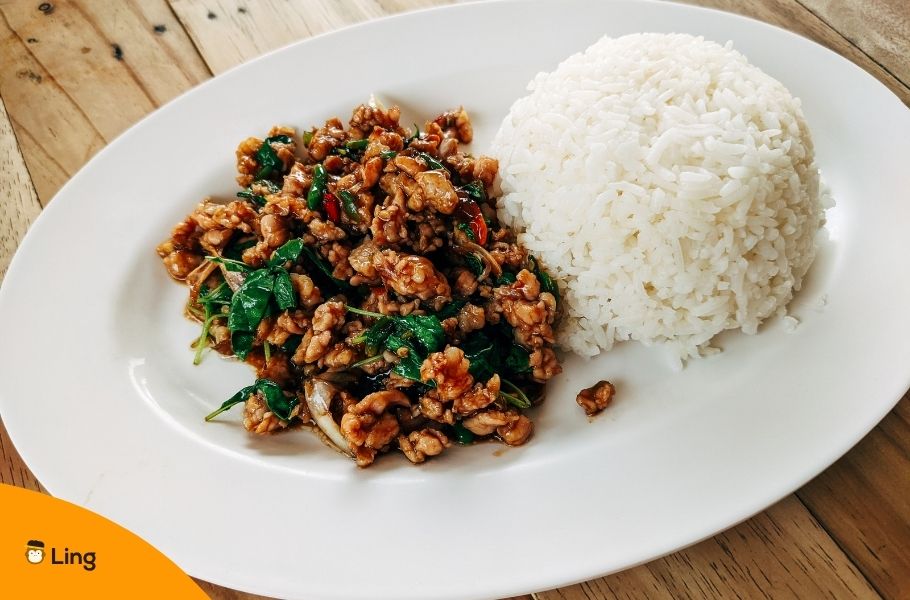
- Usually spicy: dtôm yam gûng (ต้มยำกุ้ง), sôm dtam (ส้มตำ) and pàt gà prao (ผัดกะเพรา)
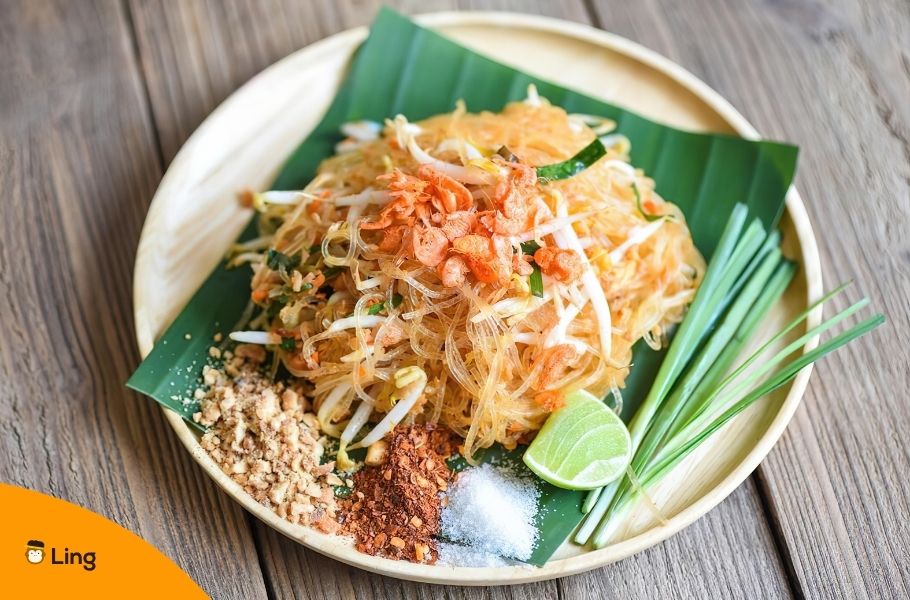
- Usually not spicy: pàt tai (ผัดไท) and gǔai dtǐao (ก๋วยเตี๋ยว)
If you don’t want to give up the heat completely, ask for phèt nít nɔ̀ɔi (เผ็ดนิดหน่อย), “a little spicy,” or phèt bpaan glaang (เผ็ดปานกลาง), “medium spicy.” These are the phrases to use when you want your dish less spicy rather than not spicy at all.
You’ll even be able to use these words to discover which Thai noodles, Thai salads and regional dishes tend to be spicy. And remember, always add kâ (ค่ะ) (for women) or kráp (ครับ) (for men) at the end of your sentences to sound polite and respectful to the locals!
| English | Thai | Pronunciation | Sound |
|---|---|---|---|
| Spicy | เผ็ด | pèt | |
| No spicy | ไม่เผ็ด | mâi pèt | |
| Don’t add chili | ไม่ใส่พริก | mâi sài prík | |
| I can’t eat spicy food | กินเผ็ดไม่เป็น | kin phèt mâi bpen | |
| Add only one chili | ใส่พริกเม็ดเดียว | sài prík mét diao | |
| Mild spicy | เผ็ดนิดหน่อย | pèt nít nɔ̀ɔi | |
| Medium spicy | เผ็ดปานกลาง | pèt bpaan glaang | |
| Is this spicy? | อันนี้เผ็ดมั้ย? | an níi pèt mái | |
| Tom yum goong | ต้มยำกุ้ง | dtôm yam gûng | |
| Papaya salad | ส้มตำ | sôm dtam | |
| Stir-fried Thai basil | ผัดกะเพรา | pàt gà prao | |
| Pad Thai | ผัดไท | pàt tai | |
| Thai Rice Noodles | ก๋วยเตี๋ยว | gǔai dtǐao | |
| Stir-fried Chinese Broccoli | บรอกโคลีจีนผัดกุ้ง | bɔɔn òk koo lîi jiin pàt gûng |
Stay Cool: 5 Tips To Manage Spicy Thai Food On Your First Visit
If you’re new to Thai cuisine, it can be tricky to know which dishes are spicy and which aren’t. Luckily, there are simple and respectful ways to navigate the spice levels while showing appreciation for the local culture. Here are five actionable tips to help you avoid accidentally eating Thai spicy food:
1. Learn The Rule Of Thumb
Most Thai curries, soups, or Thai salads tend to be spicy, while stir-fried dishes are typically milder.
For instance, dishes like dtôm yam gûng (ต้มยำกุ้ง) or sôm dtam (ส้มตำ) are usually hot, while pàt taai (ผัดไทย) or gǔai dtǐao (ก๋วยเตี๋ยว) are safer options for those avoiding heat.
2. Understand Regional Spiciness
Southern and Northeastern Thai food is often the spiciest, while Central Thai food tends to be milder, though this can vary.
For example, in northeastern Thailand (Isaan), dishes like sôm dtam bplaa ráa (ส้มตำปลาร้า), a papaya salad made with fermented fish sauce, are known for their intense spiciness.
In the Southern region, a popular dish is gæng phèt má prâo (แกงเผ็ดมะพร้าว), a spicy coconut curry made with a variety of meats and often extra chili.
These dishes are packed with flavor and heat, so be cautious if you’re sensitive to spice!
3. Ask Politely To Double Confirm
Don’t be afraid to inquire about the spice level! Simply ask “Is this spicy?” an níi phèt mái kráp/kâ? (อันนี้เผ็ดมั้ยครับ/ค่ะ?)
The vendor will usually respond with mâi phèt (ไม่เผ็ด) for no spicy in Thai, phèt nít nɔ̀ɔi (เผ็ดนิดหน่อย) for “a little spicy,” or phèt mâak (เผ็ดมาก) for “very spicy.” This helps you decide whether to order or not.
4. Order Coconut Water Or Thai Milk Tea To Bring Down The Heat
Two drinks are easy to order when a dish turns out to be too spicy:
- Coconut water, nám má prâo (น้ำมะพร้าว): naturally hydrating and rich in electrolytes, such as potassium
- Thai milk tea, chaa yen (ชาเย็น): it contains milk and sugar, and the fat in the milk helps dissolve capsaicin, the compound that makes chili hot, so it brings quick relief
5. Alleviate Stomach Discomfort With Local Medicines
If you end up eating something too spicy, visit a local pharmacy and ask for remedies commonly used by the locals:
- yâa tân (ยาถ่าน), charcoal pills: the most common pill for treating diarrhea
- yâa gâe gràd lái yón (ยาแก้กรดไหลย้อน): for acid reflux
- yâa lót gràd (ยาลดกรด): an acid reducer
- yâa lom (ยาลม): for flatulence or bloating
- yâa klêuap grà-páw (ยาเคลือบกระเพาะ): a protective pill for the stomach lining
- yâa tông ùt (ยาท้องอืด): commonly used to relieve bloating and gassiness
These remedies are readily available in most Thai pharmacies and can help alleviate your discomfort after consuming spicy food.
How Do You Say No Spicy In Thai?
When you’re traveling in Thailand and want to avoid spicy food, there are a few ways to ask for a non-spicy dish politely:
- No spicy: mâi phèt (ไม่เผ็ด)
- Don’t add chili: mâi sài phrík (ไม่ใส่พริก)
- I can’t eat spicy food: gin phèt mâi bpen (กินเผ็ดไม่เป็น)
These phrases are respectful yet straightforward and show your effort to adapt to the local culture.
Frequently Asked Questions About No Spicy In Thai
How Do You Say “A Little Spicy” In Thai?
If you’re looking to enjoy a dish with just a touch of spice, you can say เผ็ดนิดหน่อย (phèt nít nàwy), which means “a little spicy.” This is perfect when you want a mild level of heat without overpowering the flavors.
Another helpful phrase is ใส่พริกเม็ดเดียว (sài phrík mét diao), which translates to “add only one chili.” This expression is particularly helpful when fresh chilis are used in dishes like ส้มตำ (sôm dtam, papaya salad), where the chilis are pounded into the salad instead of being sprinkled as powder or flakes.
Which Thai Food Is Not Spicy?
Avoiding painful tongue and mouth burns is easy with Thai fried rice, ข้าวผัด (kâo pàt), but that’s not your only option. Some of the best Thai cuisine you’ve ever tasted that won’t make you anxious about the spiciness are: Pad Thai – ผัดไทย (Pàt Taai), Thai rice noodles – ก๋วยเตี๋ยว (Gǔai Dtǐao), and stir-fried Chinese broccoli – บรอกโคลีจีนผัดกุ้ง (Bɔɔn Òk Koo Lîi Jiin Pàt Gûng).
What Are Thai Chilis Called?
In Thailand, the small, fiery peppers commonly used in cooking are called พริก (phrík). These Thai chilis are known for their intense heat and are a staple ingredient in many dishes, from the famous ต้มยำกุ้ง (dtôm yam gûng) to ส้มตำ (sôm dtam, papaya salad).
Which Phrase Should You Use To Say No Spicy In Thai?
As you prepare for your first trip to Thailand, knowing how to express your spice preferences will make your dining experience much more enjoyable. Here is when to use each phrase:
- mâi phèt (ไม่เผ็ด), “no spicy”: the quickest way to keep a dish mild
- mâi sài phrík (ไม่ใส่พริก), “don’t add chili”: when you want no chili in the dish at all
- kin phèt mâi bpen (กินเผ็ดไม่เป็น), “I can’t eat spicy food”: when you need to explain that any heat is too much
Do you remember the name of the Thai chili that is too spicy for some people? It’s the bird’s eye chili, so add it to your vocabulary when you speak to a Thai local! By embracing the language, you not only show respect for Thai culture but also open the door to authentic connections with the locals.
Unlock Authentic Thai Experiences: Start Learning Thai Today!
Well done, you now know how to say no spicy in Thai and can enjoy Thailand’s delicious dishes without the discomfort of unexpected heat! Why not keep going and learn the words for the dishes themselves?
With flashcards, native speaker audio and Dialog for real conversation practice, Ling keeps learning simple and fun. Start learning Thai today and make your Thailand adventure unforgettable!