



Having access to real, native speaker audio when learning a language can make a big difference. It not only impacts your pronunciation, but it also allows you to pick up intonation patterns, develop your listening comprehension, and even catch cultural nuances you might otherwise miss.
That’s why, while many apps use artificial audio that can often sound robotic, Ling uses real audio by native speakers in all of its lessons.
In this post, we’ll go behind the scenes and learn where that audio comes from. We’ll find out how the process works, what’s taken into consideration when choosing the voices, and the impact local audio can have on language learning.
I want to learn even more languages with Ling!
Download now!
Why Ling Uses Real Audio By Native Speakers In All Its Lessons
Since many language-learning apps rely on AI and other technologies to generate audio for their lessons, quality native speaker audio can sometimes be hard to find.
The fact that Ling uses real audio by native speakers for all its lessons is one of its greatest assets. And it can be a game-changer when learning a language, especially when you take into account that Ling teaches several rare languages that other language learning apps don’t.
As we’ll see in a minute, native speaker audio in language lessons can have many benefits. Evidently, it’s the best way to ensure correct pronunciation. It can also help users get the intonation right, improve their listening comprehension, and even pick up on some cultural nuances.
What’s more, it can show real-world vocabulary in use, and lets learners hear natural speech patterns, helping them perfect their speaking skills.
So, let’s learn how Ling uses real audio by native speakers.
Behind The Scenes: Ling’s Audio Recording Process
First things first, you’re probably wondering, where does Ling’s native speaker audio come from?
The language team goes about this in two ways. When there’s internal talent available, that is, someone who’s already part of the Ling team, audio is recorded at the company’s office studio in Thailand. On the other hand, if external talent is needed, they will provide the raw audio files. These are then edited and adjusted to Ling’s quality standards before being added to the Ling app.
Another thing to consider is who is recording the audio. An essential requirement for choosing native speakers for voice-overs is that they have clear pronunciation and no vocal fry (that is, when the voice is low, creaky, or raspy). Additionally, they are required to use standard pronunciation, as the aim is for users to learn the most conventional variety of the language.
Something else that’s taken into account when recording the audio is that it’s as natural as a daily conversation would be, with a moderate speed and tone. After all, one of Ling’s goals is to get its users to develop everyday conversational skills; to be able to talk to the locals in everyday situations.
As to what is being said and recorded, you might already know that the Ling app has the same base course for all languages. That’s not to say it isn’t adjusted based on the particularities of each language, of course, but it follows the same standard course.
So, when it comes to recording Ling’s real native speaker audio, it all comes down to following the predetermined one-course design.
And when all of this is done, it’s time for quality assurance. That’s when the language team goes through all the recordings and makes sure there are no mismatches and that the audio quality meets Ling’s standards.
After that, it’s finally time to add the audio to the lessons in the Ling app!
How Accurate And Trustworthy Is Ling’s Native Speaker Audio?
Now that you know a bit more about how Ling uses real audio by native speakers in its lessons, you probably realize the importance of choosing native speakers with clear voices and correct pronunciation. You also know there’s a QA process at the end, in which everything is reviewed to make sure it adheres to the company’s standards.
So, for one, you can be sure that Ling’s audio is real. That it’s not AI, nor computer-generated. Everything is recorded by real native speakers of the language you’re learning. And of course, the whole process is also supervised by real experts on the Ling team.
This gives the Ling app’s lessons authenticity as well as trustworthiness, as you can be sure you’ll be hearing the language as it’s used by real people in their daily lives.

Why Native Speaker Audio Matters So Much In Language Learning
Listening to native speakers is essential when learning a language. We already mentioned some of the benefits, such as the impact on pronunciation, intonation, and listening comprehension, but let’s go over them in more detail:
1. Pronunciation
One of the main reasons a language learner seeks native speaker audio is to improve their pronunciation. As mentioned, several apps use artificial audio. And while this can give you a general idea of how words sound, it usually sounds robotic or unnatural, and often has pronunciation mistakes or inconsistencies.
On the other hand, if you only have access to written materials like textbooks and grammar guides, it’s really hard to figure out how words are supposed to sound, even when they have phonetic transcriptions.
That’s why native speaker audio can have such an impact. It makes a difference right from the start, ensuring that the first time you hear a word, you hear it correctly.
2. Intonation
Closely linked to pronunciation is intonation. This refers to the way voices rise and fall when speaking (also known as pitch), and can convey meaning, emotion, emphasis, and more nuances. It’s essential when learning any language, but even more so when dealing with tonal languages.
The fact that Ling uses real audio by native speakers means you can listen to the correct intonation of words and phrases and avoid common mistakes. And this can have an impact on how other speakers perceive you and understand you, so it’s not something to take lightly.
It’s true, artificial voices are getting better each day, but one of the main reasons they sound so unnatural is that they can’t quite mimic the natural and correct intonation of a native speaker.
3. Natural Speech Patterns
Along the same line, artificial audio can’t flawlessly imitate natural speech patterns yet. Rhythm, speed, tone, and pauses are essential aspects of language and can make a huge difference when aiming for true fluency.
By using native speaker audio in its lessons, Ling gives learners access to real language and how real people use it.
4. Real-World Vocabulary
It’s true that you can have real-world vocabulary without real native speaker audio, but is it as effective? If the aim is for learners to have everyday conversations, the best thing a language app can do is give them access to how the locals actually pronounce words.
This not only helps avoid mistakes when learning a new language, but it can also give learners a much-needed confidence boost, something essential for getting out there and having real conversations.
5. Cultural Nuances
The link between language and culture is undeniable. After all, language is the main way to transmit culture, and it can shape and reflect a people’s worldview.
Some noticeable ways in which language can reflect a culture are informal and formal language, honorifics, politeness particles, indirectness, concepts of time, and more.
For example, it’s well known that Japanese culture highly values respect and social hierarchy, and you can glimpse that right away when learning the language when you get to know about its honorifics.
Of course, you’ll need to research and experience a culture to truly comprehend it. But having audio by real speakers, real people, can bring you a little bit closer, as you’ll notice nuances here and there that a machine certainly can’t replicate.
6. Listening Comprehension
What use is it to learn a language if you can’t understand native speakers when they speak to you? And even if you’re only learning the language to watch movies and shows without subtitles, you need to develop good listening skills.
Native speaker audio has an impact here, too. Because it’s one thing to understand the slow, clear speech of computer audio, but it’s something totally different to talk with a Thai street food vendor on a trip, or to figure out what two characters are saying when arguing in an Urdu movie.
So even when Ling’s native speaker audio is, of course, clear and not too fast, it will still help you get used to the way a regular person speaks the language you’re learning. And that can make a big difference when you venture out there and start talking to people.
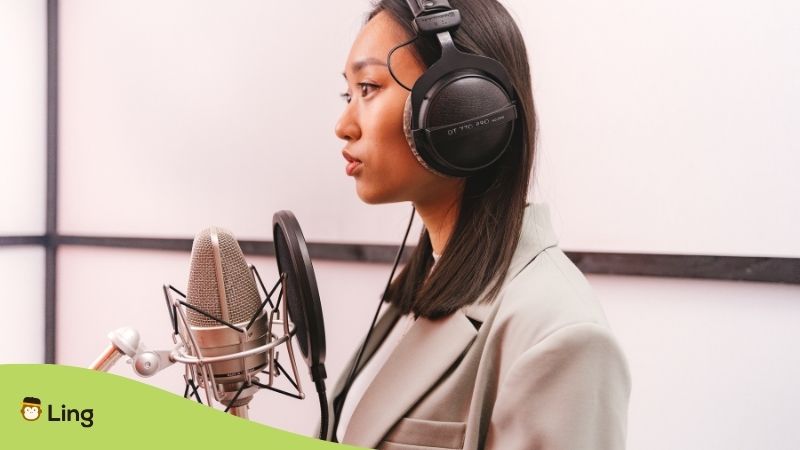
FAQs About Native Speaker Audio In Language Learning
How Important Is Native Audio When Learning A Foreign Language?
Native speaker audio is essential when learning a new language. It not only makes a difference when it comes to pronouncing words and phrases correctly, but also lets learners listen to natural intonation and speech patterns, helping them develop a more natural accent. It can also have a considerable impact when developing good listening comprehension skills.
Why Do Native Speakers Speak So Fast?
One of the reasons native speakers speak so fast is that they're truly fluent in the language, so they can process and connect ideas much more quickly than someone who's still learning. They can also rely on context and shared cultural knowledge, which means they need fewer words to communicate. Other reasons native speakers talk so fast are that they process the language subconsciously, they tend to blend words and drop certain sounds, and they're just more confident with the language.
Can You Learn A Language Just By Listening To People Speak?
You can learn a language by listening to people speak, but only partially. While listening helps with pronunciation, vocabulary, rhythm, and more, language learners still need grammar explanations, active learning (such as reading, writing, and even thinking in the language), feedback, and more to truly become fluent in a language.
Want To Learn From Real Native Speakers? Try The Ling App!
So, you now know a bit more about how Ling uses real audio by native speakers in all its lessons. We saw where the audio comes from, and we also went over how that can help your pronunciation, intonation, listening comprehension, vocabulary, and even cultural understanding of a language.
But while native speaker audio is evidently one of the Ling app’s greatest assets, it’s far from the only one. That’s because Ling is an all-in-one language learning platform that focuses on all your language skills, not only listening and speaking.
So here are some of the Ling app’s main features:
- Short, interactive lessons to keep users engaged and motivated throughout their language learning journey.
- Speech recognition technology with instant feedback for pronunciation practice.
- Several languages to choose from, with a special focus on Southeast Asian and Eastern European languages.
- Interactive exercises that aim to teach learners practical vocabulary for everyday situations, with example sentences and dialogs.
- A statistics section to keep track of your progress so you can work toward your language learning goals.
- Writing practice for languages with non-Latin scripts.
- Grammar notes in some languages to make grammar rules easier to understand.
- The app can be used in several different languages, so users can learn from their native language, even if it’s not English.
- A dialog feature so you can practice conversations in a safe environment and learn new vocabulary in context.
- Several review options, such as exams, flashcards, and a personal vocabulary bank.
- Points, achievements, and leaderboards to keep you motivated throughout the learning process.
- And, of course, real native speaker audio!
Not sure yet? No problem. Ling offers a 7-day free trial so you can test out the app before making a final decision. We’re confident you’re gonna love it!
So go ahead, download the Ling app today, and start learning your target language with the help of real native speakers!

















































































