


You may feel hesitant to learn Japanese numerals at first, and that was what I thought as well while I was learning Japanese since they seem complicated, but trust me, they are actually quite easy to learn! In the Japanese numerals system, there is an order that everyone can easily understand.
But before we get started, I must say that there are two ways of reading Japanese numerals: Sino-Japanese numbers (On reading) and native Japanese numbers (Kun reading). So, there are two different ways to read the same kanji in numbers from only 1 to 10.
In this blog post, we are going to learn the Japanese number system and Japanese counting system with their writing and reading.
I want to learn even more languages with Ling!
Download now!
Table of Contents
What Are The Native Japanese Numbers?
For many people, memorizing numbers is the easiest. Native Japanese numbers are only used from 1 to 10. You can use these to count everything except money, time, and people.
So, if you don’t know the correct counter (I will explain it right after), use these numbers! Native Japanese numbers end with tsu (つ) except for 10, tou (とう). These numbers’ pronunciation is also known as “kun reading” in Japanese learning books.
- 1 一 ひとつ hito(tsu)
- 2 二 ふたつ futa(tsu)
- 3 三 みっつ mit(tsu)
- 4 四 よっつ yon(tsu)
- 5 五 いつつ itsu(tsu)
- 6 六 むっつ mut(tsu)
- 7 七 ななつ nana(tsu)
- 8 八 やっつ yat(tsu)
- 9 九 ここのつ kokono(tsu)
- 10 十 とう tou
What Are The Sino-Japanese Numbers?
Sino-Japanese numbers are more commonly used in the Japanese language. It is also known as the “on reading.” The thing you have to know about Sino-Japanese reading is that they need to be combined with counters in order to count objects or nouns in Japanese. As for zero, the Japanese reading is rei (零), but saying zero (ゼロ), as in the English language, is more often used.
- 0 零/〇 れい/ゼロ rei/zero
- 1 一 いち ichi
- 2 二 に ni
- 3 三 さん san
- 4 四 し shi
- 5 五 ご go
- 6 六 ろく roku
- 7 七 しち shichi
- 8 八 はち hachi
- 9 九 きゅう kyu
- 10 十 じゅう juu
Fun Fact: For the numbers 4 and 7, it is more common to say yon (よん) and nana (なな) rather than shi and shichi. Because shi is also the pronunciation of the Japanese word death (死), which makes it an unlucky reading for Japanese people.
Similarly, kyu (きゅう) is also considered unlucky because in Japanese pronunciation, it sounds like ku, a homophone for suffering (苦).
How To Count In Japanese?
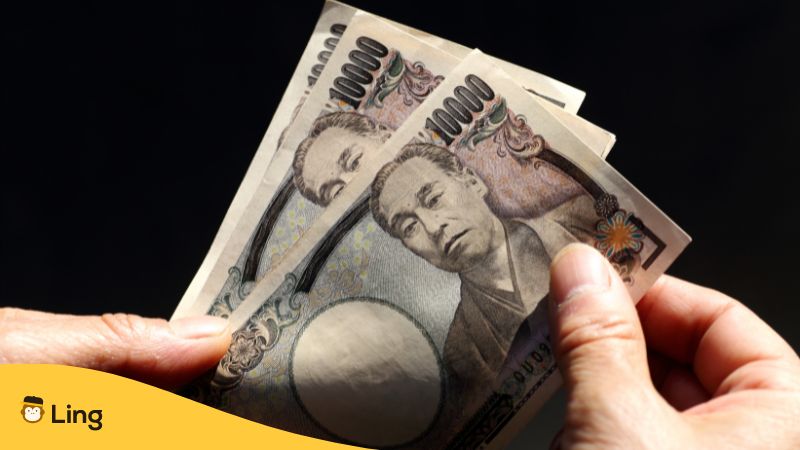
Once you learn the first ten numbers in Japanese, it is a piece of cake to count to 100. Because it has a system like you are putting the numbers between 0-10 in order to form the numbers until 100.
Example:
11 is juuichi (十一), so put ten juu (十) first and then bring one ichi (一).
15 is juugo (十五). Again, put ten juu (十) first and then bring five go (五).
When you get to twenty, it is the same system, but first, start by counting the 10s in that number.
Example:
20 is nijuu (二十). There are two 10s in twenty.
26 is nijuu roku (二十六). Put 2 and 10 first (because there are two 10s in twenty), and then bring six roku (六).
And it goes on like this up to 99. 100 gets a new word: hyaku (百).
Cheatsheet For Japanese Numerals
You can have a look at this quick and helpful list in case you don’t remember some Japanese numerals, especially the big Japanese numbers. Remember to apply the rule we have just mentioned above!
| Number | Kanji | Hiragana | Romaji |
|---|---|---|---|
| 0 | 零 / 〇 | れい / ゼロ | rei / zero |
| 1 | 一 | いち | ichi |
| 2 | 二 | に | ni |
| 3 | 三 | さん | san |
| 4 | 四 | よん | yon |
| 5 | 五 | ご | go |
| 6 | 六 | ろく | roku |
| 7 | 七 | なな | nana |
| 8 | 八 | はち | hachi |
| 9 | 九 | きゅう | kyu |
| 10 | 十 | じゅう | juu |
| 20 | 二十 | にじゅう | nijuu |
| 30 | 三十 | さんじゅう | sanjuu |
| 40 | 四十 | よんじゅう | yonjuu |
| 50 | 五十 | ごじゅう | gojuu |
| 60 | 六十 | ろくじゅう | rokujuu |
| 70 | 七十 | ななじゅう | nanajuu |
| 80 | 八十 | はちじゅう | hachijuu |
| 90 | 九十 | きゅうじゅう | kyujuu |
| 100 | 百 | ひ ゃ く | hyaku |
| 1,000 | 千 | せん | sen |
| 10,000 | 万 | まん | man |
| 100,000 | 十万 | じゅうまん | juuman |
| 1,000,000 | 百万 | ひゃくまん | hyakuman |
| 10,000,000 | 千万 | せんまん | senman |
| 100,000,000 | 一億 | いちおく | ichioku |
| 1,000,000,000 | 十億 | じゅうおく | juuoku |
| 1,000,000,000,000 | 一兆 | いっちょう | icchou |
Most Common Japanese Counters
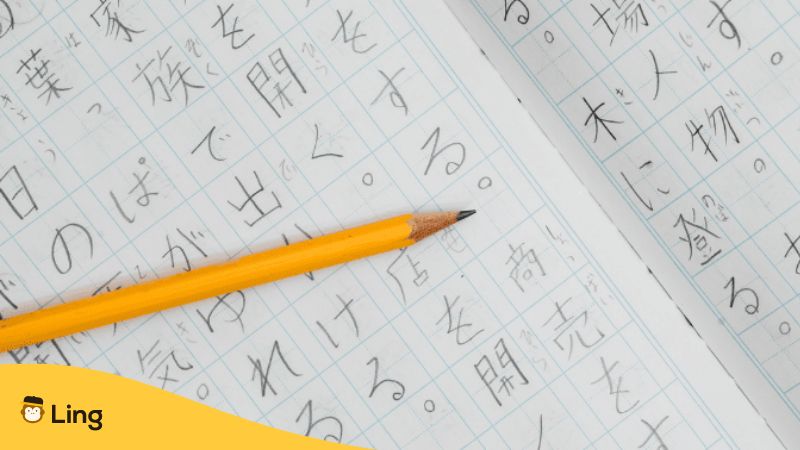
Counters specify what kind of object you are counting in Japanese. There are many forms of Japanese counters, literally for everything.
Do you really have to learn them? Yes, you do. But don’t worry; there are some tips to help you learn your way around it!
Let’s say you don’t know the counter for an object; then you can use hitotsu (一つ) or futatsu (二つ) to count your objects up to 10. This will save you a lot of trouble if you memorize the native Japanese numbers.
There is another thing you need to pay attention to is that some numbers conjugate differently with certain counters.
3 (三) changes the first letter of any counter word from the “h” kana to “b” or “p” like in sanpun (三分), which means three minutes.
6 (六) changes the “h” kana to “pp” like roppiki (六匹), which means six animals.
8 (八) changes “h” counters the same as 6, most of the time. This is not really a rule, but it is common enough to help you when you are learning.
Sometimes, the less common readings of 4, 7, and 9 are used with certain counters, like shichiji (七時), which means 7 o’clock.
Now, if that’s clear, here are the most common counters you should definitely know:
| English | Japanese | Romaji |
|---|---|---|
| People | 人 | jin / nin |
| Large animals | 頭 | tō |
| Birds and rabbits | 羽 | wa |
| Small animals (cats, dogs, fish, insects, etc.) | 匹 | hiki |
| Fine and flat objects (stamps, sheets, etc.) | 枚 | mai |
| Technological objects (cars, television, etc.) | 台 | dai |
| Long and cylindrical objects (pencils, fingers, trees, umbrellas, etc.) | 本 | hon |
| Very small objects | 個 | ko |
| Clothes | 着 | chaku |
| Related objects (books, dictionaries, magazines) | 冊 | satsu |
| Objects worn on the feet (socks, shoes, etc.) | 足 | soku |
| Slices (of cake, bread, ham, etc.) | 切れ | kire |
| Liquids contained in containers | 杯 | hai |
| Pills, capsules, round drugs | 錠 | jō |
| Buildings | 軒 | ken |
| Floors | 階 | kai |
| Numbered objects (station platforms, buses) | 番 | ban |
| Ranking (1st, 2nd, etc.) | 番目 | ban + me |
| Frequency (once, twice, etc.) | 回 | kai |
| Years | 年 | nen |
| Month | か月 | kagetsu |
| Weeks | 週間 | shūkan |
| Days | 日 | ka / nichi |
| Hours | 時間 | jikan |
| Minutes | 分 | fun / pun |
| Seconds | 秒 | byō |
| Age | 歳 | sai |
Japanese Counters For People
For one person, you say hitori (ひとり), and for two people, you say futari (ふたり). But usually, when counting people in Japanese, you use the counter nin (人). If there are three or more people, any number after that is the Sino-Japanese number system followed by 人; for example, tannin (三人) means three people.
Japanese Counters For Long Objects
For long, thin objects, such as pencils, chopsticks, or bottles, the counter you should use is hon (本). For example, yon hon no pen (四本のペン) means “four pens.” Also, don’t forget to put no (の) right before the object.
Hon (本) is also the counter for things like roads, rivers, and train tracks, anything that travels that is very long and thin. It can also be used for long-distance phone calls and travel routes.
Yes, normally hon (本) means book in Japanese, yet it isn’t the counter for books (that would be satsu (冊), which is the counter word for bound objects, such as mangas and books).
Japanese Counters For Small Objects
When counting small objects, you should use the cıunter ko (個) together with the number. It can also be used for round objects, like apples. For example, ringo niko (リンゴ二個) means two apples.
Japanese Counters For Animals
When counting small animals like birds, cats, and dogs, you should use hiki (匹). On the other hand, for larger animals, such as horses and elephants, you should use tou (頭). Also, don’t forget to put no (の) right before the object.
For example, santou no uma (三頭の馬) means three horses. Sanbiki no inu (三匹の犬) means three dogs. Also, remember the change from ‘h’ to ‘b’ in hiki.
Japanese Counters For Mechanical Objects
Any kind of technological or mechanical devices can be listed under this category, such as cars, bikes, washers, and dryers, and your video game console has a counter word in Japanese.
You should use dai (台) for these objects. Also, don’t forget to put no (の) right before the object. For example, nidai no kuruma (二台の車) means two cars.
Japanese Counters For Units of Time
To express time in Japanese, yes, you have to use counters! You should express seconds with byou (秒), minutes with fun or pun (分), hours with ji (時), and the length of time with jikan (時間). When it comes to months, you can use getsu (月), and for years you use nen (年).
Other Japanese Counter Words
Some other Japanese counters you can come across often are mai (枚), kai (回), and gai (階).
Mai is used to count flat objects, like paper. Kai is used to express the number of times, like the number of times in a week you go out. Gai is used to count the number of floors in a building.
Just keep them in mind, just in case!
Japanese Ordinal Numbers
Japanese ordinal numbers express order or sequence, such as the first, second, and third. In Japanese, you should add dai (第) right before the number.
- First – 第一 (dai ichi)
- Second – 第二 (dai ni)
- Third, and so on – 第三 (dai san)
For numbers followed by a counter word that means a sequence, you can add me (目). So, “for the first time” would be ikkai me (一回目). And, sannin me (三人目) means third person.
What Are The Days Of The Month In Japanese
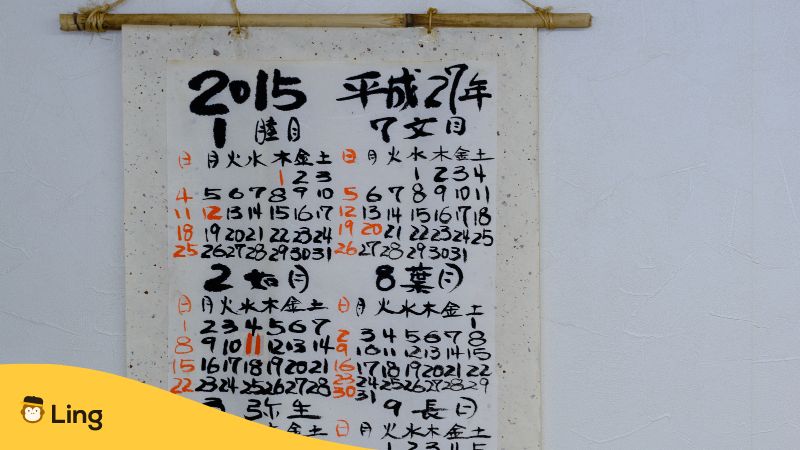
After counters, this may be the second difficult aspect of the Japanese numbers. The days of the month in Japanese can be pretty inconsistent, specifically the first ten days.
The first ten days are more like the native Japanese counting system, and the good news is they are written in hiragana.
The Days Of The Month In Japanese
- 1st – ついたち (tsuitachi)
- 2nd – ふつか (futsuka)
- 3rd – みっか (mikka)
- 4th – よっか (yokka)
- 5th – いつか (itsuka)
- 6th – むいか (muika)
- 7th – なのか (nanoka)
- 8th – ようか (youka)
- 9th – ここのか (kokonoka)
- 10th – とおか (tooka)
- 14th – じゅうよっか (juuyokka)
- 20th – はつか (hatsuka)
- 24th – にじゅうよっか (nijuuyokka)
The rest of the month just follows the regular number stacking system and plus nichi (日), for example, nijusan nichi (二十三日) means 23rd of the month.
How Do You Say “Japanese Numerals” In Japanese?
Japanese numerals in Japanese can be said as nihon no suji (日本の数字) or wasuji (和数字). Nihon no suji is a general way to say “Japanese numbers,” while wasuji specifically refers to traditional Japanese numerals instead of Arabic numerals.
Frequently Asked Questions About Japanese Numerals
1. How Do You Say 1, 2, 3, 4, 5, 6, 7, 8, 9, 10 In Japanese?
1 – いち (ichi)
2 – に (ni)
3 – さん (san)
4 – し / よん (shi/yon)
5 – ご (go)
6 – ろく (roku)
7 – しち / なな (shichi/nana)
8 – はち (hachi)
9 – く / きゅう (ku/kyū)
10 – じゅう (jū)
2. Is 7 Shichi Or Nana?
Both shichi (しち) and nana (なな) mean seven. However, nana is more commonly used in everyday conversation because shichi sounds similar to death – shi (死) in Japanese.
3. Is 4 Shi Or Yon?
Both shi (し) and yon (よん) mean four. But yon is preferred because shi sounds like death – shi (死), which people try to avoid.
4. What Is 100,000,000 In Japanese?
100,000,000 (one hundred million) is ichi oku (一億 (いちおく) in Japanese.
Conclusion
Japanese numerals may seem complicated at first, but they follow a simple system. There are two ways to read numbers: native Japanese numbers (used only for 1-10) and Sino-Japanese numbers (more commonly used and paired with counters).
Counting in Japanese follows an easy pattern, and once you learn the first ten numbers, forming larger numbers is straightforward.
Also, Japanese has special counters for different objects, such as people, animals, and long or small items. Learning these counters is important for speaking correctly, but if unsure, you can use native numbers up to ten.
Want To Learn More Japanese?
Language is more than just words; it’s a connection to your heritage, your traditions, and your loved ones. Imagine talking to your grandparents in their native language, Japanese, and understanding the stories they’ve passed down for generations. With Ling, you’ll do more than study vocabulary. You’ll embrace your cultural identity and keep your family’s legacy alive.
Start learning Japanese today and honor your roots with Ling!