As in many cultures around the world, greetings hold great significance in Igbo culture.
So, knowing how to greet your interlocutors when you start a conversation in Igbo, especially if you’re traveling in Igbo-speaking areas, will earn you a lot of respect and help you connect with locals!
This guide is right for you then! In this article, you’ll learn some essential Igbo greetings! Let’s start!
I want to learn even more languages with Ling!
Download now!
What Are The Most Common Igbo Greetings?
The most common Igbo greetings are ndeewo, which means hello, and nnọọ, meaning welcome.
In Igbo, it is also possible to greet people by asking them how they are, with the greeting word kedụ.
Depending on the time of day, you can also use other phrases like ụtụtụ ọma, which means good morning, and ka chi foo at night.
In the table below, you’ll find the most essential greetings in Igbo and how to answer when you’re greeted:
| English | Igbo |
|---|---|
| Hello | Ndeewo |
| Welcome | Nnọọ |
| Good morning | Ụtụtụ ọma |
| Good afternoon | Ehihie ọma |
| Good night | Ka chi foo |
| How are you? | Kedụ? |
| I’m fine | Ọ dị mma |
| Thank you | Daalụ |
| Goodbye | Ka emesịa |
| Sorry | Ndo |
As you can see, greetings in Igbo are quite short and easy to remember. Some expressions like Daalụ (thank you) ka emesịa (goodbye), and ndo (sorry) are also very important, as they allow you to express common courtesy. So keep them in mind as well.
How Do You Say ‘Good Morning’ In Igbo?
To say good morning in Igbo, you can use the phrase ụtụtụ ọma.
Unlike in some languages, where greetings may vary depending on the person you’re speaking to, this expression works with anyone, at any age.
Then, to greet someone in the afternoon in Igbo, you can switch to the expression ehihie ọma, while in the evening you can say uhuruchi ọma.
The Igbo language is so rich and deeply rooted in an ancestral culture that there is even a traditional dawn greeting, which is ị bọọla chi, which can be translated as “How did you wake?” However, keep in mind that it is not commonly used today.
How Do You Say ‘Good Night’ In Igbo?
To wish your new friends or hosts a good night in Igbo, you can use the sentence ka chi foo, to which they will usually answer ka ọ bọọ.
One interesting thing to note is that ka chi foo doesn’t really mean a “good night” as we’d say in English. It rather means “let/may the morning come.”
Hence, the phrase carries a wish and implies that “the person saluting wishes the saluted person’s life, not death, during the night rest or sleep”, as noted in an interesting study published in the African Studies journal Ogirisi, in the article Salutation And Health In Nigerian Traditional Society (2015).
How Do You Say ‘How Are You’ In Igbo?
As we saw at the beginning of the article, it is also possible to greet in Igbo by enquiring about someone.
Hence, to say “how are you” in Igbo, you can use the easy Igbo word, kedụ, or its longer version, kedụ ka ị mere.
To a group of people, you can also say kedụnụ, to which they can answer ọ dị mma, meaning “it is good”, or anyị dị mma (“we are fine”).
Note that, as in many cultures, it is common to show positivity by saying that everything is fine in Igbo culture, even if they are not.
How Do You Say ‘Thank You’ In Igbo?
If you want to thank someone in Igbo, especially if you’re grateful for their kind greetings and careful inquiries about you and your health, you can show your gratitude with the words daalụ and ị meela.
And if you add nụ, you’ll be able to convey an even deeper gratitude.
How Do Igbo Greetings Work Culturally?
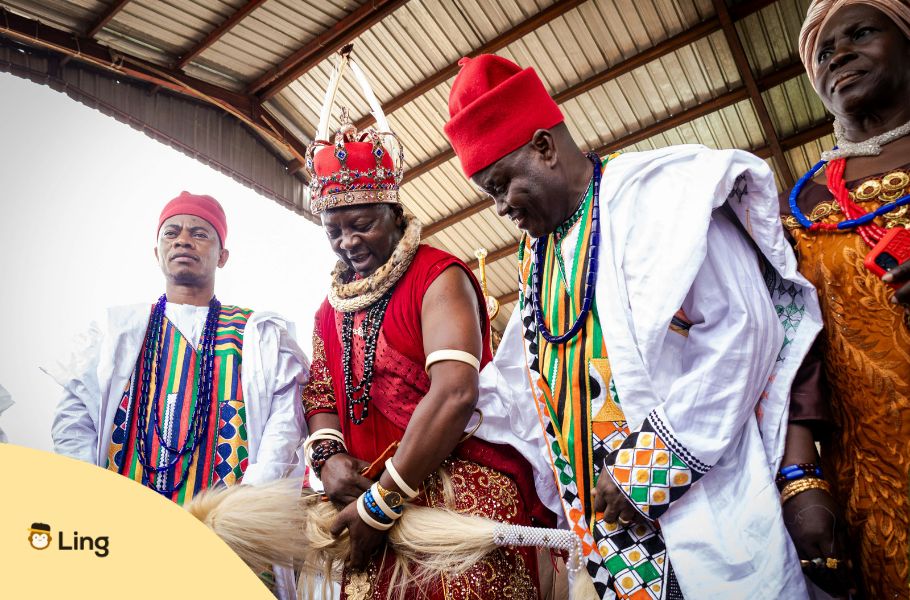
Greeting is a social duty in Igbo-speaking communities. It is expected to greet neighbors and elders at any time of day, and failing to do so can be a sign of deep disrespect.
Who To Greet First In Igbo Culture?
Following a highly hierarchical culture, elders hold a high place in Igbo tradition.
As such, younger people normally are expected to greet their elders first. It is also common to use traditional gestures of respect, bowing for young men and kneeling halfway for women.
However, these practices vary by family and place, so you won’t be expected to follow rigid rules while greeting people.
Common Mistakes To Avoid When Greeting In Igbo
If you’re visiting Nigeria for the first time, you might experience some awkward moments if you don’t know some important things :
- Avoid word-for-word translation: you might think that your Google-translated greeting expression is right when it’s only awkward. So, stick to the basic expressions that you learn from native speakers themselves.
- Pay attention to tones: Igbo is a tonal language, so the tone of your voice in some syllables can change the whole meaning of a word or sentence
- Expect regional varieties; Igbo has many dialects and regional varieties. So, depending on where you’re traveling, you might hear some different types of greetings
To sum up, paying attention to how the language works, even if you’re only a beginner, will help you a lot when you interact with people in real life.
Tips To Learn Igbo Greetings Faster
Whether you are only planning a road trip, meeting your in-laws, or reconnecting with your heritage, these small but efficient learning habits can help you master the most essential Igbo greetings faster;
- Listen first: Listen to each word and phrase you learn several times and try to copy the tone to avoid being misunderstood when you speak.
- Practice and repeat: Shadow native speakers and repeat greeting phrases again and again until you memorize them.
- Rehearse with the Ling app: With its native-speaker audio and fun exercises, you get to master Igbo tones very quickly and start speaking the language (that you won’t find on Duolingo) from the very first day!
- Speak with friends: Don’t let the vocabulary you learned fade from your memory! Try to use every word and sentence as much as you can by speaking to friends as regularly as you can!
You’ve understood! The key to mastering Igbo greetings is practice and regularity!
FAQs – Igbo Greetings
What Are The Most Common Igbo Greetings?
The most common Igbo greetings are ndeewo – hello, ụtụtụ ọma – good morning, ehihie ọma – good afternoon, kedụ – how are you?, daalụ – thank you, and ka chi foo– good night.
What Does Ndeewo Mean In Igbo?
Ndeewo means hello in the Igbo language. It is a common greeting expression used everywhere to greet people. In some places, it is also used as a thank you.
How Do You Reply To Kedụ In Igbo?
You can reply to the question Kedụ – how are you with ọ dị mma, which means “it is good” or “everything is fine”.
Do I Need Tone Marks To Write Igbo?
No, everyday Igbo is usually written without tone marks. However, the dots under the vowels ụ, ọ, and ị still matter because they indicate how the sounds are pronounced with a different tongue position.
Is It Rude Not To Greet Someone In Igbo Culture?
It can be. Greeting people in general is expected in Igbo culture. Hence, withholding a greeting can be a sign of a quarrel or disrespect.
What to Remember About Igbo Greetings
Learning basic Igbo greetings like ndeewo – hello, ụtụtụ ọma – good morning, and kedụ – how are you? is a great way to start communicating with Igbo speakers. You’ve also learned how to say good night, thank you, goodbye, and sorry.
Remember, greetings in Igbo are an important way to show respect and build connections, especially with elders. Want to make these phrases part of your everyday vocabulary? Listen to native speakers, pay attention to pronunciation, and practice regularly. The more you use them, the more natural they’ll feel!
Want To Speak More Igbo? Use Ling!
Igbo greetings are the best first step you’ll take in the language!
But there is so much more to learn! If you’re planning your next trip to Nigeria, you should learn basic vocabulary and other essential sentences to communicate with people with minimal language barriers!
Ready to learn more Igbo in 2026! Download the Ling app to access our newest Igbo courses and 70+ other languages, including underrated ones that Duolingo and Babbel forgot to cover!
Join the Ling Igbo learning community today!