Want to talk with your grandparents in Telugu, or finally follow the jokes at a family wedding? The answer to how to learn Telugu is simpler than it looks: learn the script, build a small core of everyday words and speak from your first week.
This guide covers how hard Telugu really is, how long it takes, an eight step roadmap and a weekly plan. The Ling app fits right into that plan, with short daily Telugu lessons created by native speakers.
How To Learn Telugu: The Short Answer
Start with the Telugu script, learn about 300 high frequency words and use them in short spoken sentences every day. Grammar comes in around that core, not before it.
Learning Telugu is more than memorizing words
Explore more →
| Question | Answer |
|---|---|
| Is Telugu hard to learn? | Moderately hard for English speakers. Spelling follows sound closely, so reading gets easier fast. |
| Writing system | Telugu script, a rounded abugida with 52 letters: 16 vowels and 36 consonants |
| Study time for short conversations | About 90 to 130 hours |
| Best learning method | A daily app habit plus speaking practice with a relative, friend or tutor |
| Daily study recommendation | 30 minutes a day |
| Realistic first goal | CEFR A2: introductions, everyday questions, simple plans |
In one line: script first, words fast and speaking from day one is what makes the rest of it stick.
Why Should You Learn Telugu?
Telugu is the language of two Indian states, a deep literary tradition and a family network that now spans the globe. It is one of the 22 languages in the Eighth Schedule of the Indian Constitution listed by the Department of Official Language, and the main language of Andhra Pradesh and Telangana.
It also carries official classical language status. The Government of India conferred classical status on Telugu on October 31, 2008, in recognition of its long recorded history.
- Heritage: understand the stories your parents tell in Telugu instead of the shortened English version.
- Relationships: talk to a partner’s family in the language they relax in.
- Travel: Hyderabad, Visakhapatnam, Tirupati and the Godavari delta open up when you can read a sign and ask a question.
- Work: Hyderabad is one of India’s big technology hubs, and Telugu builds trust with colleagues there.
- Culture: Telugu cinema, Carnatic music and festivals like Sankranti make far more sense in the original language.
If travel is your reason, these tips for traveling in Telugu regions cover Andhra Pradesh, the sights in Telangana and getting around once you arrive.
Is Telugu Hard To Learn?
Telugu is moderately hard for English speakers, and most of the difficulty is in grammar rather than in the script. Once you know the letters, you can read almost any word aloud, because Telugu spelling follows pronunciation very closely.
Telugu is a Dravidian language, so it shares little with English. Words grow by adding endings, verbs come last, and verbs change to show who is acting and when.
| Skill | Difficulty | Why |
|---|---|---|
| Script | Moderate | 52 letters plus vowel signs and joined consonants, but the shapes are consistent |
| Pronunciation | Moderate | Long and short vowels change meaning, and retroflex sounds have no English match |
| Vocabulary | Moderate | Mostly unfamiliar words, with many Sanskrit loans and some English ones in daily speech |
| Word order | Moderate | Subject, object, verb: the verb always waits until the end |
| Grammar | Hard | Endings stack onto words, and verbs change for person, number, gender and tense |
| Listening | Moderate | Everyday speech shortens many words compared with the written form |
The takeaway: nothing on that list is a wall, but verb endings are where you should expect to slow down.
For a clear overview of nouns, pronouns, verbs and how gender works, the guide to Telugu grammar is worth reading once you have a few weeks of vocabulary behind you.
How Long Does It Take To Learn Telugu?
At 30 minutes a day, expect about 90 to 130 hours of study before you can hold a short everyday conversation in Telugu. Greetings and polite phrases come much sooner.
Telugu is not on the published list of the Foreign Service Institute’s language training categories, which the State Department notes is not exhaustive. Its Category III group, which includes Hindi, Bengali, Nepali and Thai, takes about 44 weeks or 1,012 class hours of full time training, and that is the benchmark these estimates follow.
| Goal | Estimated Hours | Estimated Timeline |
|---|---|---|
| Read the script and use greetings and polite phrases | About 25 to 35 hours | About 7 to 10 weeks |
| Short everyday conversations, CEFR A1 to A2 | About 90 to 130 hours | About 6 to 9 months |
| Comfortable family conversation, CEFR B1 | About 250 to 350 hours | About 17 to 23 months |
All three rows assume 30 minutes a day with no long breaks. A few things move the numbers a lot:
- Growing up hearing Telugu at home: much faster, because the sounds and rhythm are already familiar.
- Knowing Kannada or Tamil: faster, thanks to shared Dravidian grammar and many related words.
- Skipping the script: slower overall, because transliteration hides vowel length and locks you out of real text.
- Speaking from week one: faster, because recalling a word out loud is a different skill from recognizing it.
Your 8 Step Telugu Learning Roadmap
Work through these eight steps in order. Each one takes a few weeks of steady practice and builds on the one before it.
Step 1: Learn The Telugu Script
Give the script your first two or three weeks. The Telugu alphabet has 16 vowels and 36 consonants, and each consonant takes a small vowel sign that changes its sound, so learning the letters also teaches you how syllables are built.
Learn four or five letters a day, trace them by hand and read them back aloud. The full Telugu alphabet guide lists every vowel and consonant with example words.
Step 2: Build A Core Of 300 Telugu Words
About 300 well chosen words carry most of an ordinary day. Start with greetings, family, food, numbers and the verbs you use constantly: go, come, eat, want, know.
| English | Telugu | Transliteration |
|---|---|---|
| Hello | నమస్కారం | namaskāraṁ |
| How are you? | మీరు ఎలా ఉన్నారు? | mīru elā unnāru? |
| I’m fine. | నేను బాగున్నాను. | nēnu bāgunnānu. |
| Thank you | ధన్యవాదాలు | dhanyavādālu |
| Yes | అవును | avunu |
| No | లేదు | lēdu |
| I don’t know. | నాకు తెలియదు. | nāku teliyadu. |
| No problem. | ఏమి ఇబ్బంది లేదు. | ēmi ibbaṁdi lēdu. |
| I speak English. | నేను ఇంగ్లీష్ మాట్లాడతాను. | nēnu iṁglīṣ māṭlāḍatānu. |
| Goodbye! | వీడ్కోలు! | vīḍkōlu! |
Once those feel easy, move on to these conversational Telugu phrases for daily life, the office and time with friends.
Step 3: Learn The Phrases For Meeting People
First conversations follow a script of their own: a polite opener, names and a question or two. Telugu marks politeness clearly, so the respectful mīru (మీరు) for “you” is the safe default with anyone older than you or anyone you have just met.
Here is a short exchange from the Introduction unit of the Telugu course in the Ling app, recorded with native speaker audio. Two people get each other’s attention and swap names.
The rest of the conversation, and the rest of the unit, are in the lessons. For a fuller self introduction, see how to introduce yourself in Telugu.
Step 4: Learn The Telugu Sentence Pattern
Telugu puts the verb at the end. “I speak English” comes out as “I English speak”: nēnu iṁglīṣ māṭlāḍatānu. (నేను ఇంగ్లీష్ మాట్లాడతాను.)
The verb ending already tells you who is speaking, so the pronoun at the front often drops away in casual speech. Learn the pattern from real sentences first, then read how Telugu sentence structure works for the subject, object and verb rules in detail.
Step 5: Train Your Ear Every Day
Listening lags behind every other skill, so give it a daily slot of its own. Telugu news, film songs and family phone calls all count, even when you only catch one word in five.
When a line goes by too fast, the Ling app plays native speaker audio at a slower speed and breaks phrases down word by word. For real world listening, this introduction to Telugu media and its history covers how Telugu news and entertainment grew and why they still matter.
Step 6: Say Something Out Loud Daily
Recognizing a word and producing it are separate skills, and only one gets you through a conversation. Say your new words aloud each day, then build one short sentence with each.
If a relative speaks Telugu, ask them one question a day in it. Start with the people around the table using these Telugu words for family members, which cover close family, extended family and other relatives.
Step 7: Read Short Real Text
Once the letters feel automatic, read something written for Telugu speakers rather than for learners. Shop signs, film posters, wedding cards and family WhatsApp messages are all short enough to finish.
Read slowly and aloud. Every word you sound out correctly is proof that the script work is paying off.
Step 8: Build A Telugu Habit You Can Keep
Thirty minutes every day beats three hours every other Sunday. Tie the session to something you already do, such as the commute or your morning coffee.
Protect the streak rather than the length. A five minute day still counts, and the chain is what carries you through the weeks when motivation dips.
What Is The Best Way To Learn Telugu?
For most beginners, the best way is one structured daily method plus one way to speak with real people. Here is how the main options compare.
| Method | Best For | Pros | Limitations |
|---|---|---|---|
| Language apps | Daily structure and vocabulary | Short sessions, native audio, visible progress | Few apps carry Telugu at all |
| Private tutors | Pronunciation and correction | Instant feedback, lessons built around you | The most expensive option per hour |
| Textbooks | Grammar explanations | Systematic and good for verb tables | Formal written style, no speaking practice |
| Films and songs | Listening and culture | Enjoyable and full of natural speech | Too fast for a true beginner |
| Family practice | Heritage learners | Real context and instant correction | Relatives often switch back to English |
| A trip to Andhra Pradesh or Telangana | Rapid progress | Constant exposure and strong motivation | Needs a base before it pays off |
Pick one method for daily structure and one for speaking, and leave the rest until those two are habits.
What Are The Best Apps To Learn Telugu?
Only a handful of apps teach Telugu, which makes the choice easier. These are the options worth knowing.
| App | Platforms | Best For |
|---|---|---|
| Ling | iOS and Android | A full Telugu course with native speaker audio, games and conversation practice |
| Mango Languages | iOS and Android, web | Conversation based lessons, often available through public libraries |
| italki | iOS and Android, web | Booking one to one lessons with a Telugu tutor |
The first two are structured courses and the third adds a human tutor. For a longer comparison, see our pick of the best Telugu learning apps.
Inside the Ling app, Dialog lets you rehearse a conversation in watch mode first and then fill in the blanks yourself, which is good practice before you try it with family.
What If Your Preferred App Doesn’t Offer Telugu?
This is the first wall many Telugu learners hit. Duolingo’s public course list carries 44 learning languages and Telugu is not one of them, with Hindi the only Indian language on it.
Ling teaches 70+ languages with a focus on Asian and Eastern European languages that mainstream apps like Duolingo skip, and Telugu is one of them. One learner put it simply:
- “it’s help me to learn telugu” A Telugu learner on Google Play, 5 stars.
The Ling app’s Telugu course covers everyday vocabulary and conversation, with flashcards, mini-games and a romanization toggle you can switch off as the script gets easier. There is more on the gap in why Duolingo has no Telugu course.
Your Sample Weekly Telugu Study Plan
Here is what 30 minutes a day looks like across a week. Follow it as written for your first month, then adjust it to your goals.
| Day | Focus | What You Do |
|---|---|---|
| Monday | New letters | Four or five new letters, traced by hand and read aloud |
| Tuesday | New words | Ten new words, then one spoken sentence with each |
| Wednesday | Listening | One short audio clip twice, the second time without reading along |
| Thursday | Speaking | A five minute conversation with a relative, friend or tutor |
| Friday | Review | Everything from the week, with extra passes on the words you got wrong |
| Saturday | Reading | One short real text: a sign, a poster, a message thread |
| Sunday | Light and fun | A Telugu song or a film scene, no notebook needed |
Friday is the day most people skip, and it is the one doing the most work.
Common Mistakes Telugu Beginners Make
Most beginner problems come from habits carried over from English, not from the language itself.
| Mistake | Better Approach |
|---|---|
| Translating word for word from English | Learn whole phrases. A Telugu sentence often needs a different number of words than its English version |
| Using the casual “you” with everyone | Default to the respectful form with elders and strangers, and save the casual one for friends |
| Expecting speech to match the textbook | Listen for the shortened everyday forms people actually use, alongside the written ones |
| Staying in transliteration forever | Switch the romanization off once you can sound out the letters |
| Ignoring long and short vowels | Say each vowel pair aloud until you can hear the difference, since it changes meaning |
| Waiting until you feel ready to speak | Speak badly in week one. Family is far more forgiving than you expect |
If you fix only one, fix politeness: the respectful form is never wrong with someone you have just met.
The casual “you” is nuvvu (నువ్వు) and the respectful one is mīru (మీరు). Everyday speech also shortens a lot of words, so ēmiṭi (ఏమిటి), “what”, often comes out as ēṁṭi (ఏంటి) in conversation.
Tips To Learn Telugu Faster
Faster progress comes from better practice, not longer sessions. These five habits do most of the work.
- Use active recall: cover the Telugu column, say the word, then check it.
- Shadow native audio: play a sentence and repeat it straight away at the same speed and rhythm.
- Review at the end of every session: run through today’s words once more before you stop.
- Work your weak spots. The Ling app keeps track of the words you miss so you can practice them again.
- Label your home: sticky notes on the fridge, door and mirror turn your space into a word list.
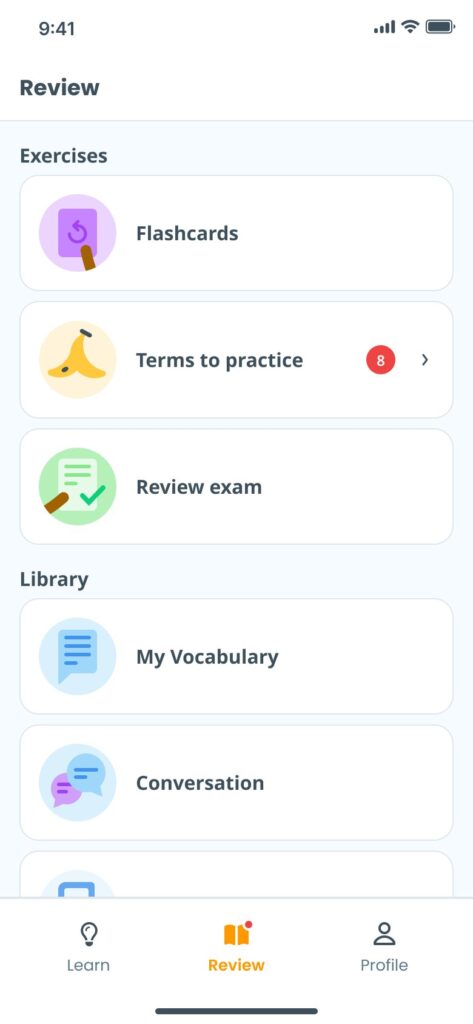
Short, frequent review beats one long cram session, especially for vowel length and verb endings.
Which Telugu Learning Path Is Right For You?
Your reason for learning should decide what you study first. Find your row and start there.
| Your Goal | Recommended Approach |
|---|---|
| Reconnect with family and roots | Greetings, family words and food vocabulary first, with one relative as your practice partner |
| Talk to a partner’s parents | Respectful forms, small talk and compliments, with plenty of listening before you speak |
| Travel in Andhra Pradesh or Telangana | Survival phrases, numbers and directions, plus enough script to read signs |
| Work with Telugu colleagues | Introductions, polite requests and the vocabulary of your own field |
| Enjoy the language for its own sake | Script and grammar from the start, then proverbs, songs and film |
Whichever row fits, the daily half hour stays the same. Only the word lists change.
Frequently Asked Questions About How To Learn Telugu
Can I Learn Telugu On Duolingo?
No. Duolingo’s public course list carries 44 learning languages, and Telugu is not among them; Hindi is the only Indian language it teaches. If you want an app that teaches Telugu, you need one that covers less widely taught languages, ideally with native speaker audio and practice for the Telugu script.
Is Telugu Hard To Learn For English Speakers?
It is moderately hard. The script looks complex but follows sound closely, so reading becomes predictable within a few weeks. The harder parts are verb endings, word order with the verb at the end, and long and short vowels that change meaning. Steady daily practice handles all three.
How Long Does It Take To Learn Telugu?
At 30 minutes a day, greetings and polite phrases take about 7 to 10 weeks, and short everyday conversations take about 6 to 9 months. Comfortable family conversation is closer to 17 to 23 months. Heritage learners who grew up hearing Telugu usually move much faster.
Can I Learn Telugu By Myself?
Yes. Many people reach conversational Telugu without a classroom, using an app for daily structure and a relative or tutor for speaking. What self study cannot give you is correction, so build in one regular conversation with a Telugu speaker who will tell you when something comes out wrong.
Is Telugu Similar To Kannada Or Tamil?
All three are Dravidian languages, so they share grammar patterns and a good number of related words. Telugu and Kannada scripts are especially close in shape. They are still separate languages, and knowing one will not let a beginner follow a conversation in another, though it does speed up learning.
Do I Need To Learn The Telugu Script?
If you want to go beyond a few phrases, yes. Transliteration helps for the first weeks, but it hides vowel length and some consonant differences that change meaning, and it shuts you out of signs, messages and books. Most learners can read the letters after two or three weeks of steady practice.
Can An App Make Me Fluent In Telugu?
No app makes anyone fluent on its own. A good app handles the daily work of the beginner and intermediate stages: the script, vocabulary, listening and conversation patterns. Fluency needs real conversations on top of that, which is why any plan for how to learn Telugu should include a speaking partner.
Where Should You Start With Telugu?
Start with the script, because it gives way faster than it looks. A few weeks of four or five letters a day and you will be reading shop signs and wedding cards, which is a very satisfying milestone.
After that, it is steady work: a core of everyday words, the verb at the end of the sentence and one real conversation at a time. Consistency will do more for you than talent.
- Learn the 52 letters before anything else.
- Aim for 300 high frequency words, not a dictionary.
- Keep the daily half hour and speak out loud in every session.
Start Speaking Telugu With Your Family
You have the roadmap, so the only step left is the first one, and it can be a small one today. Picture that first easy conversation with your grandparents and work back from there.
With flashcards, native speaker audio you can slow down, Dialog for conversation practice and a romanization toggle for the early weeks, Ling keeps learning simple and fun. Open the app, pick your half hour and start learning Telugu today!