

Happy Diwali to everyone! But have you ever wondered what this greeting really means, why Diwali is called the Festival of Lights, and how it’s celebrated worldwide?
So, grab a cup of chai, and let me recount how this Festival of Lights is celebrated within India and beyond its borders. On our way forward, we will also learn the meaning behind Diwali and its cultural significance.
Diwali: More Than Just A Festival
Diwali – that time of the year when the air is filled with the scent of homemade sweets and the night sky is a canvas of colors with fireworks glittering all across! Every street, every nook and corner of the diverse Indian land is decked with fresh flowers and dazzle with glittering lights. Even strangers wish you a Happy Diwali as you cross paths in the streets.
I want to learn even more languages with Ling!
Download now!
For someone who grew up in the vibrant lanes of Delhi, Diwali is much more than a religious festival. It is a perfect hotpot of childhood memories – five days of nonstop fun with cousins and friends, new clothes, exchanging gifts, firework displays, countless card parties, homes decorated with endless strings of fresh marigolds and colorful lights, the scrumptious line-up of fried goodies and homemade sweets and so much more!
Diwali & Its Cultural Significance
India is a land of diverse cultures and religions – as you will realize when traveling in India. So, it doesn’t seem surprising that the Indian holiday calendar keeps ticking with at least a handful of religious and cultural festivals every month. However, Diwali, or Deepavali, stands tall and stands out as the quintessential symbol of Indian culture across the globe with its glittering array of lights.
Originating from the Sanskrit word Dipavali, which means a row of lamps, the Diwali festival is celebrated by Hindus, Sikhs, and Jains (religions tracing their birth to ancient India) with an enthusiasm that’s contagious. Primarily, it is a Hindu festival marking the triumph of “good over evil”.
This Indian festival of lights is celebrated usually in the month of October-November in the Gregorian calendar. As per the Hindu lunar calendar, it falls on the Full Moon day of Kartik Maas (month of Kartik). It is celebrated as the day Lord Rama – one of the most revered gods in the Hindu pantheon and the hero of the Hindu epic saga Ramayana – returned to his kingdom after 14 years in exile where he triumphed over the evil king Ravana and established Dharma or righteousness in the society.
How India Celebrates A Happy Diwali: Diverse Yet United
Alright, let’s take a mini tour of India. While in Northern India, people honor the return of Lord Rama and worship Goddess Lakshmi (the deity of abundance and prosperity), South India has a unique twist with Goddess Kali (the ferocious avatar of sacred feminine) taking center stage.
In the Gujarat state of India, the day is celebrated as the Lunar New Year. The Gujarati people are known and hailed for their business acumen and entrepreneurial sense. Therefore, the Gujarati Hindus celebrate Diwali as the first day of their New Year and start it by worshipping their account books. The greetings of Saal mubaarak can be heard across the state.
However, despite these differences, the underlying theme of good triumphing over evil remains constant when we think of a Happy Diwali.
The Heart Of Diwali: Rituals And Traditions
The five-day celebration is a rollercoaster of excitement. The first day is called Dhanteras (dhan means wealth and teras is the Hindi word for the 13th day of the month) where people worship abundance and purchase gold, silver, kitchenware, or a gadget. The next day is Choti Diwali or Naraka Chaturdashi (chaturdashi means the 14th day of the month) where people wake up before daybreak, take a holy bath, and put on fresh clothing to perform religious rituals. They also clean their houses thoroughly to drive away evil spirits in order to welcome abundance and prosperity.
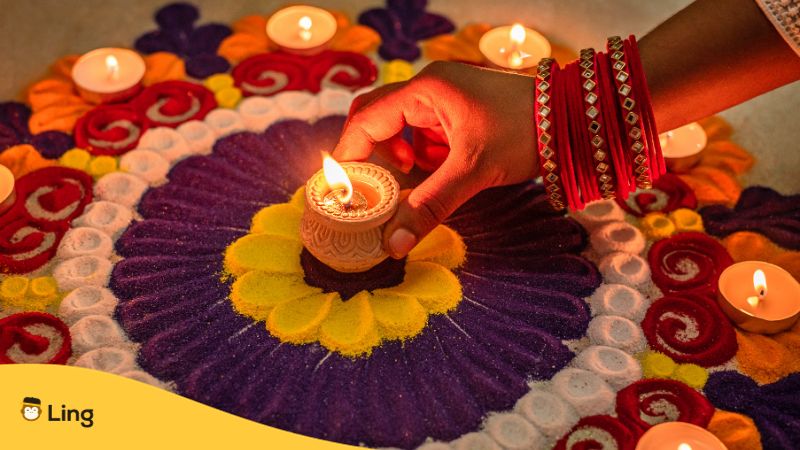
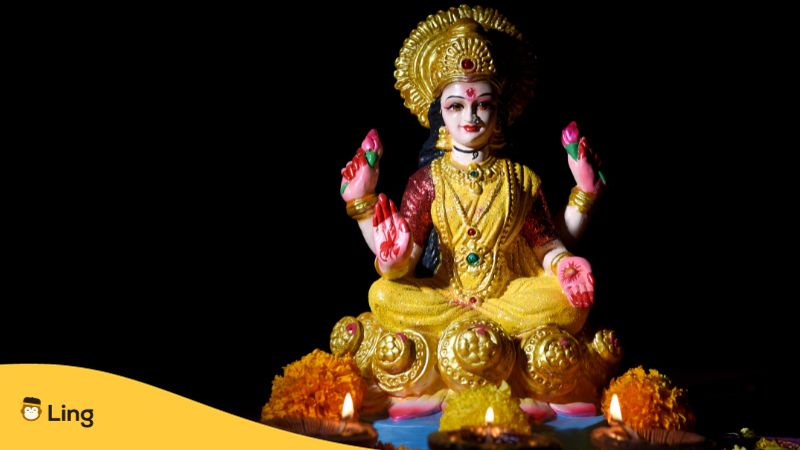
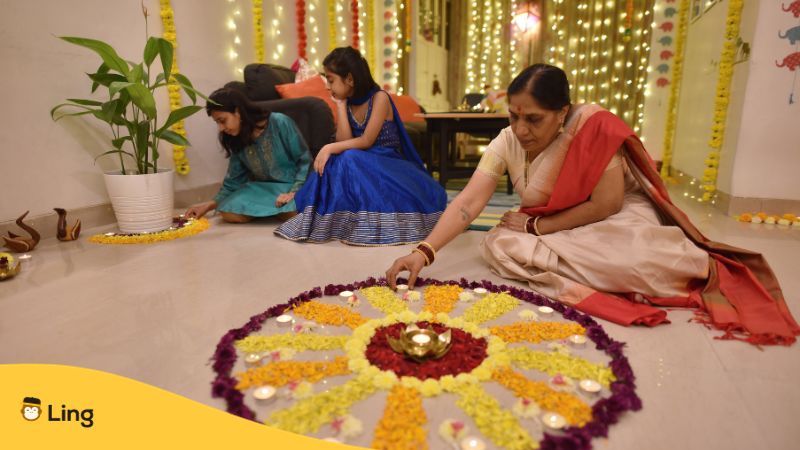
The third day is the main celebration day. People celebrate by making Rangoli with colored powders, rice flour, and fresh flower petals in front of their houses. Families assemble for Lakshmi Puja – a ritual to worship Lakshmi and Lord Ganesh in order to welcome the goddess of money, success, and prosperity into their house.
They then light up their homes with rows of earthen oil lamps called Diyas. Sweets, dry fruits, and gifts are exchanged with neighbors. Then people in the neighborhood and families gather for fireworks displays. Some families also host card parties to bring in lady luck.
The fourth day of Govardhan Puja signifies reverence for nature. The fifth and last day is dedicated to affectionate bonds between siblings celebrated on Bhai Dooj.
Family, Friends, & Feasts: The Social Fabric Of Diwali
Diwali is when family and friends come together, often dressed in new clothes as if to say, “Hey, let’s start afresh!” For all five days, gifts are exchanged, and oh, the feasts! Imagine tables laden with sweets and savories that make you forget your diet plans. In short, the choicest and the best food in India can be savored during Diwali.
I remember my grandmother spending days on end preparing for this feast. The entire five-day festival would be spent gorging on homemade savory snacks like namakpaare and namkeen, and stuffing our mouths with delectable sweets like gulab jamuns, jalebis, kaju barfi, and besan laddoos. Much like how we do during Holi in India – another big festival celebrated in many parts of India.
Diwali Today: Modern Celebrations & Global Reach
Cut to the 21st century, and Diwali has donned a modern avatar. While the essence remains intact, social media is now awash with ‘Diwali selfies’. Also, it’s heartwarming to see Diwali transcend borders, illuminating hearts globally. Whether it’s London or New York, Diwali’s spirit of joy and togetherness finds a special place. Would you believe even the White House has been celebrating Diwali since the year 2009?
In fact, in countries like Nepal, Fiji, Guyana, Malaysia (excluding Sarawak), Mauritius, Myanmar, Singapore, Sri Lanka, Suriname, and Trinidad & Tobago, the main day of the Diwali celebration is an official holiday.
FAQs About Diwali Meaning
What Is The Correct Greeting For Diwali?
In Hindi, the correct greeting to wish someone on Diwali is Happy Diwali, Shubh Diwali, or Shubh Deepavali. The Hindi word shubh means "auspicious" and the greeting translates to, "have an auspicious Diwali."
What Is Deepavali In English?
Deepavali is the biggest Indian holiday - apart from Holi in India - and it has no translation or equivalent term in English. However, globally, the holiday is known as Diwali.
Why Do We Wish Diwali?
Diwali greetings are generally about wishing abundance and prosperity to your family, friends, colleagues, and other loved ones. We wish Diwali to Hindus, Jains, Sikhs, and other Indian communities and members of the Indian diaspora who are living around the world to greet them on their biggest holiday.
The Eternal Light Of A Happy Diwali: Key Takeaways
As we wrap up our Diwali tale, let’s go through what we learned about this Indian holiday. Diwali – the Hindu festival of light – is celebrated to mark the victory of good over evil. This five-day-long festival is celebrated by Hindus, Jains, and Sikhs – in India and Nepal, in many SEA countries and in countries with big Indian diaspora.
To greet someone with a Happy Diwali, you can use greetings such as Shubh Diwali or Shubh Deepavali. Diwali celebrations start with a thorough deep cleaning of your home, decorating it with fresh flowers, and traditional motifs like rangoli and diyas. Each day, different worshipping rituals are done and on Diwali day, people get together, exchange sweets and gifts, and have feasts together.
To learn more about Diwali, you can try using the Ling app. It has a dedicated Culture Notes feature in top 10 Indian language courses – a limited time Diwali special feature – to help you learn about culture along with the language, for your holistic language learning.
Did you enjoy this Diwali festival post? Then keep an eye to Ling’s blog space for more fun and culturally immersive content related to Diwali. Wish you a Happy Diwali!