By
Betül Dağ
Last updated July 19, 2024
Published on July 17, 2024
Table Of Contents
A greeting (selamlaşma) is an important value of Turkish culture. Once you visit Turkey, you’ll find out that there are various ways of greetings in Turkish.
The Turkish phrases used for greeting change based on the formality, occasion, and person. So there are some crucial differences that you must pay attention to when you greet someone in Turkish.
Turkish greetings are not limited to words. You can also greet someone with gestures that can be commonly seen all over the country. But again, there are things to bear in mind when performing these gestures. So that you will always look respectful and sincere.
In this post, you’ll learn Turkish greetings and gestures. After reading this article, the gestures that Turkish people do when greeting each other will make sense to you. So that you will be able to grasp the Turkish culture a little better.
Table of Contents
How To Say Hello In Turkish?
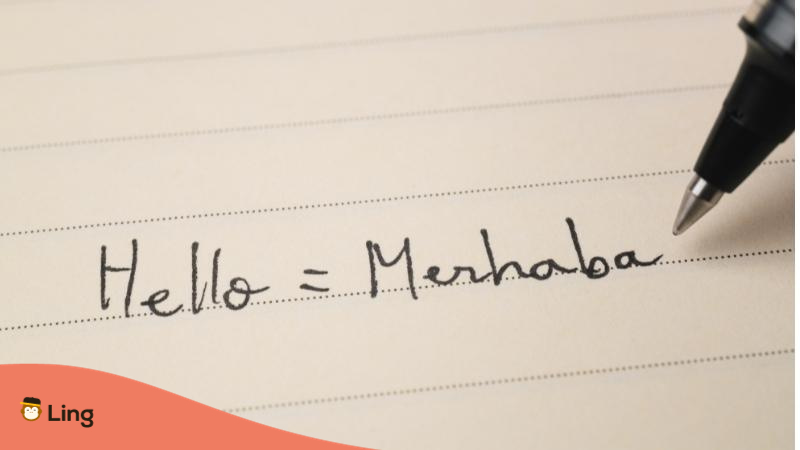
The most commonly used word to say hello is merhaba in the Turkish language. It is a neutral phrase, so you can prefer using it in both formal and informal situations.
Also, there are some other ways to say hello in different situations.
Turkish Formal Greeting
As I mentioned before, you can just say merhaba in a formal setting, such as in a business environment. Or when talking to someone that you don’t know well, because you want to sound polite and formal.
Hello, sir/ma’am – Merhaba efendim
It’s the formalized way of merhaba by adding efendim at the end. It literally means ”hello sir.”
Turkish Informal Greetings
Nobody wants to sound serious and formal in a family or friend’s meeting. That’s why you should learn informal Turkish greetings when you sit in a pretty cafe with your friends.
So here are the informal ways of greeting someone in Turkish.
Hello – Merhabalar
It is the same phrase as the previous one, but the only difference is that it’s the plural form of merhaba. Somehow, it sounds casual when it’s in the plural form. You can use this phrase when you meet with a group of friends outside. You will have greeted each of your Turkish friends at once by just saying merhabalar.
Hi – Selam
Selam is most commonly used by young people in Turkey. It literally means peace, and it is a pretty informal phrase usually used among Turkish friends.
May peace be upon you. – Selamün aleyküm
This phrase is derived from the universal Islamic greeting ”Es selam’ün aleyküm”, which is actually an Arabic phrase. Since the majority of the population in Turkey are Muslims, you can hear this phrase commonly in daily life.
However, since this phrase has religious connotations, some people don’t prefer to use it.
Time-Specific Turkish Greetings
Here are some basic Turkish words that you can use for greeting people in the morning, afternoon, and evening times. You’re probably familiar with them but still have a look at them just in case.
English
Turkish
Sound
Good morning /Have a good morning
Günaydın /Hayırlı sabahlar
Günaydın Hayırlı sabahlar[Speechword]</td></tr><tr><td class="has-text-align-left" data-align="left">Good afternoon<br>/Have a good afternoon<br>/Have a good day</td><td class="has-text-align-left" data-align="left">Tünaydın<br>/İyi öğlenler<br>/İyi günler</td><td class="has-text-align-left" data-align="left">[Speechword voice="Turkish Female" isinline]Tünaydın[Speechword]<br>[Speechword voice="Turkish Female" isinline]İyi öğlenler[Speechword]<br>[Speechword voice="Turkish Female" isinline]İyi günler[Speechword]</td></tr><tr><td class="has-text-align-left" data-align="left">Good evening<br>/Have a good evening</td><td class="has-text-align-left" data-align="left">İyi akşamlar<br>/Hayırlı akşamlar</td><td class="has-text-align-left" data-align="left">[Speechword voice="Turkish Female" isinline]İyi akşamlar[Speechword]<br>[Speechword voice="Turkish Female" isinline]Hayırlı akşamlar[Speechword]</td></tr><tr><td class="has-text-align-left" data-align="left">Good night</td><td class="has-text-align-left" data-align="left">İyi geceler</td><td class="has-text-align-left" data-align="left">[Speechword voice="Turkish Female" isinline]İyi geceler[Speechword]</td></tr></tbody></table><figcaption class="wp-element-caption">Greetings in Turkish – Ling</figcaption></figure>
<h2 class="wp-block-heading" id="commonly-used-gestures-in-turkish-greetings">Commonly Used Gestures In Turkish Greetings</h2>
<figure class="wp-block-image size-full"><img src="https://ling-app.com/wp-content/uploads/2022/07/Greetings-In-Turkish-Handshake.jpg" alt="Greetings In Turkish Handshake" class="wp-image-713684" /></figure>
<p class="wp-block-paragraph">I’m 100% sure that none of the language courses will teach popular gestures in Turkish culture. You’re one of the lucky language learners reading this article!</p>
<p class="wp-block-paragraph">Sometimes only gestures can mean a lot without any words. Turkish people use many gestures in daily life, so let’s find out what they do to greet each other.</p>
<h3 class="wp-block-heading" id="handshake">Handshake</h3>
<p class="wp-block-paragraph">Handshaking is a universal gesture that is used for greeting in any country. You can perform it in Turkey as well. It is suitable for formal settings or the first time you meet with someone. We don’t shake hands with friends and family since it’s a formal gesture.</p>
<p class="wp-block-paragraph">Take into consideration that some people, especially ladies wearing hijab, may not prefer to shake hands with the opposite gender because of their religious beliefs. On the other hand, some people are totally okay with it.</p>
<h3 class="wp-block-heading" id="nodding-slightly">Nodding Slightly</h3>
<p class="wp-block-paragraph">Nodding is a way of polite greeting on formal occasions. Also, you can greet someone by slightly nodding if the person is not close to where you are, but you see them from a certain distance.</p>
<h3 class="wp-block-heading" id="waving-your-hand">Waving Your Hand</h3>
<p class="wp-block-paragraph">Waving your hand is another universal gesture that can be seen anywhere in the world. You can wave your hand when you see a friend across the road, or if you are to greet someone from a certain distance.</p>
<h3 class="wp-block-heading" id="hugging">Hugging</h3>
<p class="wp-block-paragraph">Another common way of greeting someone is hugging them. Kissing the other person’s cheek is also okay, especially among women, if that person is a close friend or family member.</p>
<p class="wp-block-paragraph">It is an informal and intimate gesture, for sure. So you shouldn’t do that to strangers.</p>
<h3 class="wp-block-heading" id="kissing-the-hand-of-the-elder">Kissing The Hand Of The Elder</h3>
<p class="wp-block-paragraph">It is a unique gesture belonging to Turkish culture. I’m sure it’s unfamiliar to Western people. Elder Turkish people expect you to kiss their hand and put it on your forehand when you greet them.</p>
<p class="wp-block-paragraph">We always do that when visiting grandparents. It’s also a tradition for Eid (<em>Bayram</em>) times. Turkish people visit their older ones during Eid to show their respect and remembrance and perform that gesture.</p>
<h3 class="wp-block-heading" id="touching-heads-to-one-another">Touching Heads To One Another</h3>
<p class="wp-block-paragraph">This gesture is mostly performed by men. When two male friends see each other, they slightly shake hands and touch the edge of their heads on each other from the right and left in order.</p>
<p class="wp-block-paragraph">Sometimes they even make small talk while doing this gesture.</p>
<h3 class="wp-block-heading" id="placing-hand-on-the-chest">Placing Hand On The Chest</h3>
<p class="wp-block-paragraph">This is a gesture with religious connotations. Religious people don’t prefer touching the opposite gender physically. So when someone intends to do a handshake or hug, they politely step back and put their hand above their heart on the left. You may have seen it in Turkish TV series because many male characters use the hand-on-the-chest gesture.</p>
<p class="wp-block-paragraph">It is a sign that they accept your greeting and greet you back this way. It is a common gesture in Muslim-majority countries. So don’t get it wrong if it ever happens to you as a foreigner.</p>
<h2 class="wp-block-heading" id="turkish-greetings-for-special-occasions">Turkish Greetings For Special Occasions</h2>
<figure class="wp-block-image size-full"><img src="https://ling-app.com/wp-content/uploads/2022/07/Turkish-Greetings-For-Special-Occasions-1.jpg" alt="" class="wp-image-69554" /></figure>
<p class="wp-block-paragraph">If you happen to be in Turkey and find yourself on a special occasion, you can use the appropriate one among these Turkish phrases.</p>
<p class="wp-block-paragraph">You don’t have to feel awkward if you already know these <strong>greetings in Turkish</strong>. You can <strong><a href="https://ling-app.com/tr/congratulations-in-turkish/">celebrate with people in Turkish</a></strong> and enjoy the event!</p>
<figure class="wp-block-table is-style-stripes"><table class="has-luminous-vivid-amber-background-color has-background"><thead><tr><th class="has-text-align-left" data-align="left">Turkish </th><th class="has-text-align-left" data-align="left">English </th><th class="has-text-align-left" data-align="left">Sound</th></tr></thead><tbody><tr><td class="has-text-align-left" data-align="left">Doğum günün kutlu olsun!</td><td class="has-text-align-left" data-align="left">Happy birthday.</td><td class="has-text-align-left" data-align="left">[Speechword voice="Turkish Female" isinline]Doğum günün kutlu olsun!
İyi ki doğdun!
I’m glad you were born.
İyi ki doğdun!
Bol şans!
Lots of luck.
Bol şans!
İyi şanslar!
Good luck.
İyi şanslar!
İyi Bayramlar!
Happy Eid.
İyi Bayramlar!
Mutlu yıllar!
Happy New Year.
Mutlu yıllar!
Tebrikler!
Congratulations.
Tebrikler!
Greetings in Turkish – Ling
Alright, you’ve learned so many Turkish phrases only in this article on your own. And if you’ve already read our previous Turkish blog posts, tebrikler, now you’re ready to have your first Turkish conversation!
If you want to learn more than just small talk and greetings in Turkish, you should definitely try the Ling app!
How Do You Say “Greeting” In Turkish?
Greeting means selamlaşma in Turkish and it refers to the act of greeting or exchanging greetings, emphasizing the cultural importance of respectful and warm interactions.
Frequently Asked Questions About Greetings In Turkish
1. How Do You Greet Someone In Turkish?
You can greet someone by saying merhaba (hello) or selam (hi).
2. Is It Selam Or Merhaba?
Both are correct. Merhaba is more formal, while selam is more casual.
3. What Is The Greeting Style In Turkey?
In Turkey, people usually greet each other with merhaba or selam. It’s common to shake hands or kiss on both cheeks among friends and family.
4. Is It Merhaba Or Merhabalar?
Merhaba is singular and merhabalar is plural. You can use either, but merhabalar is often used to greet multiple people or to be extra polite.
Final Words
In summary, knowing greetings in Turkish, whether using merhaba or selam, and understanding gestures like handshakes and cheek kisses, is key to respecting and connecting with Turkish culture. These customs vary with the situation and relationship, enhancing your experience and connections while visiting Turkey.