Have you ever felt nervous about starting a conversation, especially in a new place where you don’t know anyone?
A simple “Good morning” can be the perfect way to break the ice.
In this article, you’ll learn how to say good morning in Javanese, along with other useful greetings that can help you connect with locals and make your experience even more meaningful.
I want to learn even more languages with Ling!
Download now!
Good Morning In Javanese
In Javanese, people usually say Sugeng enjing, which means ‘good morning’ (pronounced soo-geng en-jing).
- Sugeng means happy, safe, or blessed.
- Enjing means morning.
So when you say Sugeng enjing, you are wishing someone a happy and blessed morning.
Take a look at the table below for examples of how to say good morning in Javanese in different contexts, along with pronunciation and usage.
| Javanese | Pronunciation | Usage |
|---|---|---|
| Sugeng enjing | soo-geng en-jing | Use with elders, teachers, strangers, or in respectful situations. |
| Enjing | en-jing | Use with friends, siblings, or peers in everyday conversations. |
| Selamat pagi (Indonesian) | suh-lah-maht pah-gee | Common across Indonesia, including Java. Safe to use if unsure about formality. |
| Halo, sugeng enjing | hah-loh soo-geng en-jing | Mixing “hello” with the Javanese greeting makes you sound approachable |
Cultural Gestures In The Javanese Language
Sugeng enjing and other Javanese greetings convey not only the time of day but also respect and social hierarchy.
When you say Sugeng enjing to an elder, it is more than just a simple “Good morning.” It reflects the Javanese values of harmony (rukun) and respect (unggah-ungguh), showing humility and acknowledging the other person’s presence.
In this way, saying good morning in Javanese is both a greeting and a sign of respect.
Here’s a table to see some other greetings in the Javanese language.
| English | Javanese | Pronunciation | Usage |
|---|---|---|---|
| Good morning | Sugeng enjing | soo-geng en-jing | Formal, used with elders, teachers, or strangers in the morning |
| Good afternoon | Sugeng siang | soo-geng see-ahng | Formal, used from late morning to afternoon |
| Good evening / late afternoon | Sugeng sonten | soo-geng son-ten | Formal |
| Good night | Sugeng dalu | soo-geng dah-loo | Formal, when leaving or at night |
| Hello | Halo | hah-loh | Casual, used with friends, peers, or younger people |
| How are you? | Piye kabarmu? | pee-yeh kah-bar-moo | Informal, casual conversation with friends |
| Welcome | Sugeng rawuh | soo-geng ra-woo | Formal greeting for guests or elders |
Practical Tips To Use Good Morning In Javanese Phrases
- Take note of the greetings that other people use and imitate them. This allows you to maintain cultural sensitivity without worrying about timing.
- Use Sugeng enjing when formally greeting elders, teachers, or anyone deserving respect.
- When formally welcoming someone, you can also say Sugeng rawuh, a greeting that is appropriate at any time.
- After a greeting or conversation, say Matur nuwun- thank you, to show kindness and respect for the culture.
- It’s okay to use Indonesian greetings like Selamat pagi if you’re not sure.
- Locals will appreciate your effort to speak their language, even if it’s only Halo in Javanese. So don’t worry about getting morning or afternoon greetings perfectly.

Real Life Scenario
Locals in Central Java and Yogyakarta often use Sugeng enjing to greet elders, teachers, and even neighbors in the morning. It shows respect for the culture and is considered polite and courteous.
Example
In Yogyakarta, you walk into a small warung, which is a neighborhood restaurant.
The owner smiles at you. You say, Sugeng enjing, Bu-Good morning, ma’am.
She will likely smile more broadly and respond, “Sugeng enjing,” appreciating the effort you made to greet her in Javanese.
Compared to simply saying Enjing or using the Indonesian expression Selamat pagi in informal settings, Sugeng enjing feels warmer and more deeply connected to Javanese tradition.
Meanwhile, check out the Ling app, which recently added seven new language courses, including Javanese, making it easier than ever to start learning!

Traveler Must-Dos In A Javanese Morning
A list of a few things that every traveler must remember in a Javanese morning is as follows:
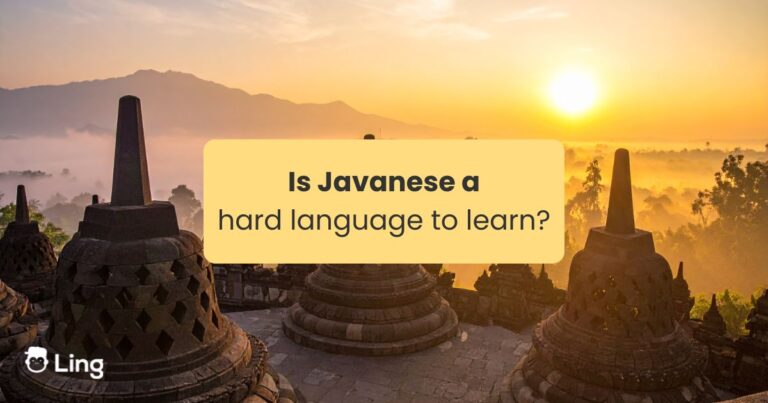
- Catch the sunrise at famous viewpoints like Borobudur Temple, Mount Merapi, or Mount Bromo.
- Witness morning prayers and experience the spiritual calm at a temple.
- Try regional breakfast dishes such as warm bubur ayam (chicken porridge), lupis (sticky rice with palm sugar), or gudeg (sweet jackfruit stew).
- Enjoy traditional Javanese coffee, like kopi tubruk or kopi jos.
- Visit morning markets where locals sell handmade goods, fresh fruits, and batik.
- Take a peaceful morning walk through rice fields or villages before the crowds arrive.
- To connect with locals, greet them with phrases like Sugeng enjing.
To make your mornings more memorable and enjoyable, use this handy table of Javanese phrases.
| English | Javanese | Pronunciation |
|---|---|---|
| How are you? | Kulo piye kabare? | Koo-lo pee-yeh kah-bah-reh |
| I’m fine | Kulo sae | Koo-lo sah-eh |
| Where is the market? | Pasar wonten pundi? | Pah-sahr won-ten poon-dee |
| Where can I get breakfast? | Panganan enjing wonten pundi? | Pah-ngah-nahn en-jing won-ten poon-dee |
| Coffee, please | Kopi, monggo | Ko-pee, mong-go |
| How much is this? | Regane pinten? | Reh-gah-neh pin-ten |
| Can you help me? | Bisa tulung kula? | Bee-sah too-loong koo-lah |
| Thank you | Matur nuwun | Mah-toor noo-woon |
| Excuse me | Nyuwun sewu | Nyoo-woon seh-woo |
| I don’t understand | Kula mboten mangertos | Koo-lah m-bow-ten mahn-ger-tos |
| What time is it? | Jam pinten? | Jahm pin-ten |
| See you later | Ketemu maneh | Keh-teh-moo mah-neh |
| Sir | Bapak | Bah-pahk |
| Ma’am | Ibu | Ee-boo |
Bonus Tip :
Always follow your greeting with Bapak-sir or Ibu-ma’am when addressing strangers or elders. This small gesture of respect makes your interaction more friendly and polite.
Frequently Asked Questions
How Do You Say Good Morning Wishes In Javanese?
Sugeng enjing, which means ‘happy’ or ‘blessed morning,’ is the Javanese way to wish someone a good morning. To make your greeting more heartfelt and thoughtful, you can add a polite phrase like Mugi sehat lan rahayu, which means ‘May you be safe and healthy.’
Can I Combine Javanese And Indonesian Greetings?
Yes! Many Javanese residents naturally mix Javanese and Indonesian in everyday conversations. If you’re still learning the language, combining the two makes your greetings more adaptable, friendly, and culturally appropriate.
Why Should I learn Javanese If I’m Only Visiting For a Short Trip?
Learning a few simple Javanese phrases, such as Sugeng enjing – ‘good morning’ or Matur nuwun – ‘thank you’, can make a significant impact, even on a short trip. The effort is greatly appreciated by the locals, and it facilitates more genuine connections and day-to-day interactions. Additionally, even if your visit is short, a simple greeting makes you stand out as a responsible and culturally aware tourist.
Key Takeaways
Now you can confidently say good morning in Javanese, a simple gesture that can open doors to deeper cultural connections.
You also have a clear understanding of polite greetings, including ways to make them more heartfelt, which will help you navigate new situations with respect and ease.
By combining practical language learning methods with a willingness to practice, you can begin your journey without hesitation. Just pack your bags, greet the locals, and immerse yourself in the rich traditions of Java.
Ready To Say More Than Just Good Morning In Javanese?
Now that you’re ready to learn Javanese, you’ve probably started with basic greetings to spark conversations or satisfy your curiosity.
The Ling app is a perfect solution for this. It offers gamified lessons that keep your motivation high with rewards and banana points. You can also use its offline mode to learn anytime, anywhere, while leaderboards and streaks help you stay consistent and track your progress.
Ling makes learning Javanese fun, practical, and easy. Don’t wait. Download the app today and start your journey into the language and culture of Java.
Wishing you the best on your learning adventure!