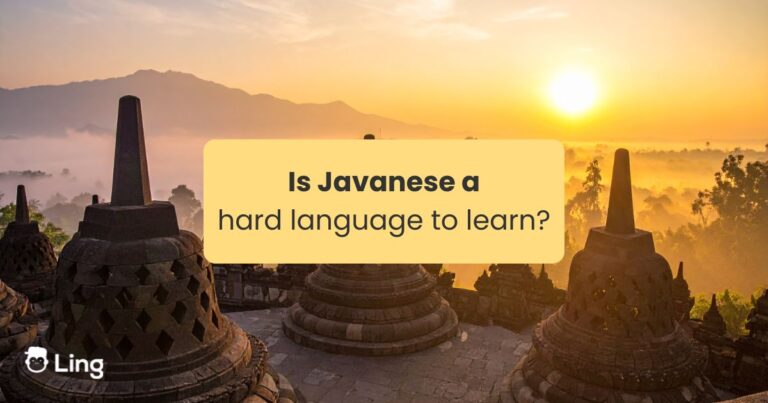
A Javanese wedding – a colorful spectacle of beauty traditions – is also a deeply spiritual journey rooted in ancestral wisdom, symbolism, and the belief that every union is divinely guided. From the first family gathering to the final sacred blessing, each ritual carries its own purpose, reflecting the Javanese values of harmony, respect, and cultural pride.
If you’re curious about Indonesian traditions or planning to attend a Javanese wedding yourself, understanding the meaning behind these customs will make the experience even more special. And if you want to go a step further and learn Javanese phrases commonly used during these ceremonies, the Ling app offers bite-sized, culturally rich lessons to help you connect more meaningfully.
In this article, you’ll discover the origins of these beautiful rituals and explore what truly makes a traditional Javanese wedding so unique. Ready to dive deeper? Try learning a few Javanese expressions with Ling while you read.
I want to learn even more languages with Ling!
Download now!
Traditional Javanese Wedding Rituals
Traditional Javanese weddings consist of a series of meaningful ceremonies. It begins with Peningsetan, where the groom’s family visits the bride’s home with gifts called seserahan, symbolizing the joining of both families. Siraman follows, a purification ritual where water is poured over the bride and groom to cleanse impurities and mark a fresh start. On the night before the wedding, Midodareni is held, giving the bride a final night of individuality.
The Akad Nikah formally recognizes the marriage, followed by Panggih, where the couple meets as husband and wife for the first time. The celebrations end with Sungkeman, a ritual in which the newlyweds kneel before their parents and elders to seek blessings and show gratitude.

Modern-Day Interpretations Of Javanese Wedding Customs
Javanese wedding customs have been brilliantly modified to accommodate modern lifestyles while maintaining their cultural significance.
- Rather than being held on different days, the Siraman and Sungkeman ceremonies are frequently conducted on the same day.
- Once celebrated overnight at the bride’s family home, the Midodareni is now occasionally substituted with a quick family get-together or, for overseas couples, a virtual blessing session.
- Similarly, the Panggih ceremony, which formerly included ornate processions and rituals, has been simplified, yet the couple’s first meeting remains a treasured emotional moment.
The core of the ceremony, respecting elders, asking for blessings, and bringing two families together, remains the same despite these modifications.
Javanese Wedding Preparations
In Javanese culture, preparing for a wedding is steeped in spirituality, symbolism, and respect for family traditions.
The first step often involves cleaning and decorating the home, as a pure and orderly environment is believed to invite blessings for the couple.
Family members play important roles in the preparations. Brothers and other relatives help welcome guests and set up the bridal chamber known as kamar pengantin, while the bride’s parents take the lead in planning the ceremonies.
Below is a table showing the Javanese terms for different members of the bridal family.
| English | Javanese | Transliteration |
|---|---|---|
| Bride | ꦥꦺꦁꦒꦤ꧀ꦠꦶꦤ꧀ꦥꦸꦠꦿꦶ | Pengantin Putri |
| Groom | ꦥꦺꦁꦒꦤ꧀ꦠꦶꦤ꧀ꦏꦏꦸꦁ | Pengantin Kakung |
| Bride’s Father | ꦫꦩꦥꦺꦁꦒꦤ꧀ꦠꦶꦤ꧀ꦥꦸꦠꦿꦶ | Rama Pengantin Putri |
| Bride’s Mother | ꦆꦧꦸꦥꦺꦁꦒꦤ꧀ꦠꦶꦤ꧀ꦥꦸꦠꦿꦶ | Ibu Pengantin Putri |
| Groom’s Father | ꦫꦩꦥꦺꦁꦒꦤ꧀ꦠꦶꦤ꧀ꦏꦏꦸꦁ | Rama Pengantin Kakung |
| Groom’s Mother | ꦆꦧꦸꦥꦺꦁꦒꦤ꧀ꦠꦶꦤ꧀ꦏꦏꦸꦁ | Ibu Pengantin Kakung |
| Father-in-law | ꦩꦺꦂꦠꦸꦲꦏꦏꦸꦁ | Mertua Kakung |
| Mother-in-law | ꦩꦺꦂꦠꦸꦲꦥꦸꦠꦿꦶ | Mertua Putri |
| Husband | ꦧꦺꦴꦗꦺꦴꦏꦏꦸꦁ | Bojo Kakung |
| Wife | ꦧꦺꦴꦗꦺꦴꦥꦸꦠꦿꦶ | Bojo Putri |
| Older Brother | ꦩꦱ꧀ | Mas |
| Older Sister | ꦩ꧀ꦧꦏ꧀ | Mbak |
| Younger Brother / Sister | ꦄꦢꦶꦏ꧀ | Adik |
| Brother-in-law | ꦆꦥꦂꦏꦏꦸꦁ | Ipar Kakung |
| Sister-in-law | ꦆꦥꦂꦥꦸꦠꦿꦶ | Ipar Putri |
| Best Man | ꦥꦚꦁꦒ/ꦥꦩꦺꦝꦂꦏꦫ | Panyangga / Pamedharkara |
| Bridesmaid | ꦥꦩꦺꦝꦂꦱꦧꦶꦤ꧀/ꦄꦩꦺꦴꦁꦠꦩꦸ | Pamedhar Sabin / Among Tamu |
Attire And Decorations In Javanese Weddings
The bride and groom wear exquisite traditional attire inspired by the royal courts of Yogyakarta or Surakarta.
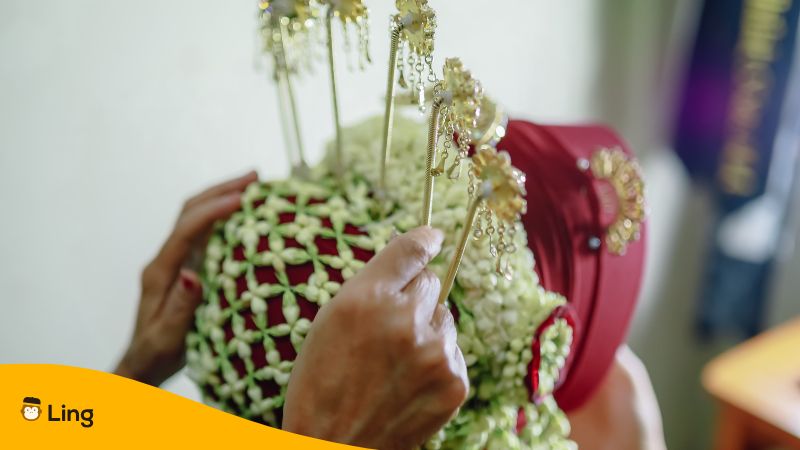
The bride usually wears a long batik fabric called jarik, wrapped elegantly around her waist, paired with a fitted blouse called a kebaya that features intricate embroidery. Her hair is styled in a paes ageng, a traditional bridal hairstyle dyed black to accentuate the shape of her forehead, symbolizing elegance and purity.
The groom complements her outfit with a blangkon headpiece, a batik sarong, and a beskap, a formal Javanese jacket.
The clothing and decorations at a traditional Javanese wedding are more than just ornamental. They represent elegance, honor, and cultural pride.
Symbolic elements such as banana trees for fertility, jasmine flowers for purity, and yellow rice cones called tumpeng for prosperity are used to adorn the bridal room. Every ornament carries a story and is meant to bring the couple good fortune and lasting love.

Music, Dance, And Food In Javanese Weddings
A Javanese wedding is never complete without traditional music and dance.
Throughout the ceremony, the soft rhythms of gamelan, a traditional Indonesian orchestra, create a calm and spiritual atmosphere. Traditional Javanese dances such as the Bedhaya or Serimpi are performed to honor guests and ancestors. These dances are slow, graceful, and full of symbolic gestures that express love, respect, and harmony.
The celebration concludes with a lavish feast. Guests enjoy refreshing traditional drinks alongside authentic Javanese dishes such as gudeg, a sweet jackfruit stew, nasi kuning, yellow rice, and sate ayam, chicken satay. Each dish reflects the warmth and hospitality that are central to Javanese culture.
The Essence Of Marriage In Javanese Culture
According to Javanese people, marriage is not just a personal milestone but also a reflection of community and tradition.
Through marriage, they honor their ancestors, strengthen family ties, and preserve social harmony.
It instills the virtues of devotion called setya, patience known as sabar, and mutual respect referred to as hormat, all of which are considered essential for a peaceful life.
Here is a table of common Javanese words related to wedding ceremonies.
| English | Javanese | Transliteration |
|---|---|---|
| Wedding | ꦥꦿꦶꦪꦸꦁꦒꦠ꧀ | Priyunggat |
| Marriage Ceremony | ꦥꦿꦶꦪꦸꦁꦒꦠ꧀ꦱꦺꦴꦁꦏꦶ | Priyunggat songki |
| Blessing | ꦩꦼꦤꦺꦴꦱ꧀ | Menos |
| Reception | ꦱꦶꦭꦸꦏꦶ | Siluki |
| Feast | ꦱꦶꦫꦶꦱ꧀ | Siris |
| Music | ꦩꦸꦱꦶꦏ꧀ | Musik |
| Dance | ꦝꦤ꧀ꦕ | Dhanca |
Tips For Participating In A Javanese Wedding While Being Culturally Sensitive
Attending a Javanese wedding is a memorable cultural experience, and these tips can help you join in respectfully and enjoy the celebration.
- Dress appropriately: Choose modest clothing or follow any dress guidelines provided.
- Respect the rituals: Observe carefully and participate only when invited.
- Greet elders properly: A slight bow or polite greeting shows respect.
- Enjoy the food: Traditional dishes like gudeg and nasi kuning are part of the experience.
- Simple greetings like Sugeng rawuh (ꦱꦸꦒꦼꦁꦫꦮꦸꦃ), which means ‘welcome,’ or Mugi rahayu (ꦩꦸꦒꦶꦫꦲꦪꦸ), meaning ‘wishing you well,’ help you connect with hosts and show that you appreciate their culture.
How Do You Say ‘Wedding’ In Javanese?
The term for ‘wedding’ in Javanese is commonly expressed as pernikahan (ꦥꦼꦤꦶꦏꦲꦤ꧀), which refers to the formal and cultural union of two individuals. In everyday conversation, the word kawin (ꦏꦮꦶꦤ꧀) means ‘to marry.’
Frequently Asked Questions About The Javanese Wedding Ceremony
How Long Does A Traditional Javanese Wedding Last?
In the past, ceremonies that included siraman, midodareni, akad nikah, panggih, and the reception could last for several days. These are frequently shortened to a one- or two-day event for modern weddings.
What Is The Role Of A Pemaes?
A Pemaes is a traditional wedding stylist and ritual guide who prepares the bride, conducts the ceremony, and ensures all rituals are carried out correctly.
What Is The Meaning Of Offering Yellow Rice In Javanese Weddings?
Yellow rice is served as a reminder of fresh starts and is a symbol of wealth, happiness, and blessings.
Closing Notes On Javanese Weddings
When you step into Java, knowing just “hello” in Javanese isn’t enough to understand their customs and ceremonies. To truly connect with the people, their warmth, and their way of life, it helps to be familiar with their traditions.
In this post, we have seen that the real key to feeling at home in Java is to embrace its culture. Javanese weddings reflect the deep influence of family, tradition, and cultural heritage. From the ceremonies and preparations to the attire, decorations, music, dance, and food, every element is a beautiful blend of spirituality, tradition, and respect.
Immerse Yourself In Javanese Life With Ling
After exploring all these fascinating Javanese wedding customs and traditions, are you curious to learn the Javanese language?
The Ling app can guide you every step of the way, no matter your goal. With native speaker audio and structured learning paths, even the most challenging languages become easier to master.
So why wait? Download the Ling app today and start your language journey!