A conversation about the bones of the human body in Thai is unlikely, but it is not impossible. If you are traveling in Thailand and an accident leaves you with a fracture, you need to tell the medical staff which bone hurts, and you need to do it quickly.
This guide covers the Thai word for bone, the four types of bone, and the vocabulary for the skull, the torso and the limbs, with audio on every term.
What Is Bone In Thai?
grà-dùuk (กระดูก) is the Thai word for bones. The word dùuk (ดูก) comes from the merging of the local dialect spoken in northern Thailand and the Lao language.
Learning Thai is more than memorizing words
Explore more →
- The local dialect is spoken in northern Thailand: gà-dùuk (ᨠᨯᩪᨠ)
- The Lao language: gà-dùuk (ກະດູກ)
Keep on reading to learn more Thai bone terms!
Vocabulary For Bones Of The Human Body In Thai
If you look at a human skeleton image, you will see many different types of bones. Those bones serve various functions and connect other parts of the body, including:
- Flat bone – grà dùuk bɛɛn (กระดูกแบน)
- Short bone – grà dùuk sân (กระดูกสั้น)
- Long bone – grà dùuk yaao (กระดูกยาว)
- Irregular bone – grà dùuk rûup râang mâi nɛ̂ɛ nɔɔn (กระดูกรูปร่างไม่แน่นอน)
These are the main types of bones that form the structure of humans.
Each bone will connect and support other bones to move and be in proper body shape.
At the same time, the human body has primary parts of bones in its skeletons, including:
| English | Thai | Pronunciation | Sound |
|---|---|---|---|
| Skull | กะโหลกศรีษะ | Gà lòok sǐi sà | |
| Spine | กระดูกสันหลัง | Grà dùuk sǎn lǎng | |
| Chest bone | กระดูกหน้าอก | Grà dùuk nâa òk | |
| Arm bone | กระดูกแขน | Grà dùuk kɛ̌ɛn | |
| Pelvis | กระดูกเชิงกราน | Grà dùuk chəəng graan | |
| Hand bone | กระดูกมือ | Grà dùuk mʉʉ | |
| Leg bone | กระดูกขา | Grà dùuk kǎa | |
| Foot bone | กระดูกเท้า | Grà dùuk táao |
Bones For Human Skull
Here is some Thai terminology for describing the bones of the head part.
| English | Thai | Pronunciation | Sound |
|---|---|---|---|
| Frontal bone | กระดูกหน้าผาก | Grà dùuk nâa pàak | |
| Parietal bone | กระดูกด้านข้างศรีษะ | Grà dùuk dâan kâang sǐi sà | |
| Temporal bone | กระดูกขมับ | Grà dùuk kà máp | |
| Occipital bone | กระดูกท้ายทอย | Grà dùuk táai tɔɔi | |
| Sphenoid bone | กระดูกรูปผีเสื้อ | Grà dùuk rûup pǐi sʉ̂a | |
| Ethmoid bone | กระดูกขือจมูก | Grà dùuk kʉ̌ʉ jà mûuk | |
| Zygomatic bone | กระดูกโหนกแก้ม | Grà dùuk nòok gɛ̂ɛm | |
| Maxillary bone | กระดูกขากรรไกรบน | Grà dùuk kàak rɔɔn grai bon | |
| Lacrimal bone | กระดูกแอ่งถุงน้ำตา | Grà dùuk ɛ̀ng tǔng náam dtaa | |
| Palatine bone | กระดูกเพดานปาก | Grà dùuk pee daan bpàak | |
| Nasal bone | กระดูกจมูก | Grà dùuk jà mûuk | |
| Inferior nasal conchae | กระดูกก้นหอยของจมูกชิ้นล่าง | Grà dùuk gôn hɔ̌ɔi kɔ̌ɔng jà mûuk chín lâang | |
| Vomer bone | กระดูกโวเมอร์ | Grà dùuk woo məə | |
| Mandible | กระดูกขากรรไกรล่าง | Grà dùuk kǎa gan grai lâang | |
| Malleus (middle ear part) | กระดูกค้อน | Grà dùuk kɔ́ɔn | |
| Incus (middle ear part) | กระดูกทั่ง | Grà dùuk tâng | |
| Stapes (middle ear part) | กระดูกโกลน | Grà dùuk gloon |
If you want to know other body parts of the human body in Thai, it may even help you determine which health issues you need to be addressed for.
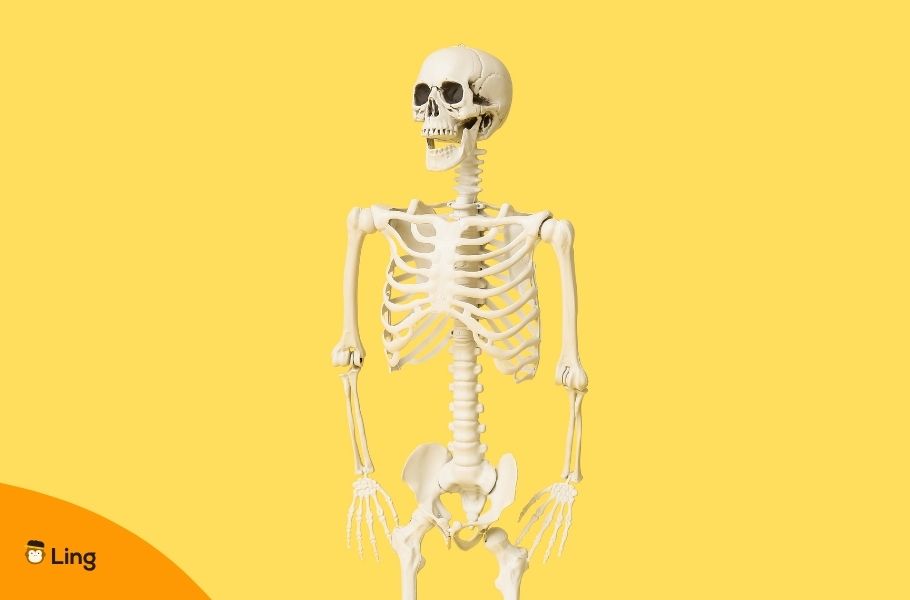
Bones For Upper Body Part
Here is some Thai terminology for describing the bones in your upper body.
| English | Thai | Pronunciation | Sound |
|---|---|---|---|
| Human skeleton | โครงกระดูกมนุษย์ | Kroong grà duu gom nút | |
| Hyoid | กระดูกโคนลิ้น | Grà dùuk koon lín | |
| Spine | กระดูกสันหลัง | Grà dùuk sǎn lǎng | |
| Clavicle | กระดูกไหปลาร้า | Grà dùuk hǎi bplaa ráa | |
| Scapula | กระดูกสะบัก | Grà dùuk sà bàk | |
| Sternum | กระดูกทรวงอก | Grà dùuk suang òk | |
| Ribs | กระดูกซี่โครง | Grà dùuk sîi kroong | |
| Cervical vertebrae | กระดูกสันหลังส่วนคอ | Grà dùuk sǎn lǎng sùan kɔɔ | |
| Thoracic vertebrae | กระดูกสันหลังส่วนอก | Grà dùuk sǎn lǎng sùan òk | |
| Lumbar vertebrae | กระดูกสันหลังส่วนเอว | Grà dùuk sǎn lǎng sùan eeo | |
| Sacrum | กระดูกสันหลังส่วนกระเบนเหน็บ | Grà dùuk sǎn lǎng sùan grà been nèp | |
| Coccyx | กระดูกสันหลังส่วนก้นกบ | Grà dùuk sǎn lǎng sùan gôn gòp | |
| Humerus | กระดูกต้นแขน | Grà dùuk dtôn kɛ̌ɛn | |
| Carpal | กระดูกข้อมือ | Grà dùuk kɔ̂ɔ mʉʉ | |
| Metacarpal | กระดูกฝ่ามือ | Grà dùuk fàa mʉʉ | |
| Phalanges | กระดูกนิ้วมือ | Grà dùuk níu mʉʉ |
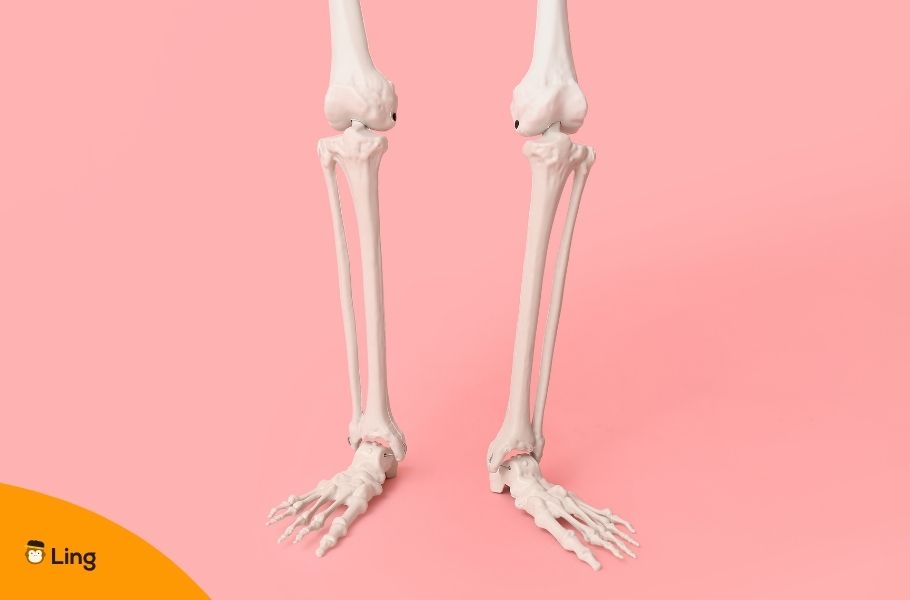
Bones For Lower Body Part
Here is some Thai terminology for describing the bones in your lower body.
| English | Thai | Pronunciation | Sound |
|---|---|---|---|
| Ilium | กระดูกปีกสะโพก | Grà dùuk bpìik sà pôok | |
| Ischium | กระดูกก้น | Grà dùuk gôn | |
| Femur (legs) | กระดูกต้นขา | Grà dùuk dtôn kǎa | |
| Patella | กระดูกสะบ้า | Grà dùuk sà bâa | |
| Tibia (legs) | กระดูกแข้ง | Grà dùuk kɛ̂ɛng | |
| Fibula | กระดูกน่อง | Grà dùuk nɔ̂ɔng | |
| Tarsals (feet) | กระดูกข้อเท้า | Grà dùuk kɔ̂ɔ táao | |
| Calcaneus (heel bone) | กระดูกส้นเท้า | Grà dùuk sôn táao | |
| Phalanges | กระดูกนิ้วเท้า | Grà dùuk níu táao |
What Have You Learned About Bones In Thai?
Skull, spine, ribs, fingers and toes: that is a full set of bone vocabulary, with the Thai term and the audio for each one. Keep the tables to hand and you can describe an injury to a Thai speaker instead of pointing at it.
If you want the rest of the body too, work through the parts of the body in Thai next, and read up on how to plan a trip to Thailand before you go.
Frequently Asked Questions About Bones In Thai
Where Does The Thai Word For Bone Come From?
The Thai word for bone is grà-dùuk. Its second syllable came into Thai from the local dialect of northern Thailand and from Lao, where the same word is used.
How Do You Say Broken Bone To A Thai Doctor?
Name the bone and point to it. Pair the Thai word for the bone with the part of the body it sits in, so Grà dùuk kǎa for the leg bone or Grà dùuk kɛ̌ɛn for the arm bone, and the medical staff can work from there.
How Many Types Of Bone Are There In Thai Vocabulary?
Four, and they are the same four an English speaker learns: flat, short, long and irregular. Each one has its own Thai term, listed with audio above.
Learn Thai With The Ling App
Medical vocabulary is the kind of Thai you want before you need it, not during. Ling teaches it the same way it teaches everything else, in short lessons you can do on a bus.
- Flashcards with images, translations and native speaker audio
- Audio at normal and slow speed, word by word
- Writing lessons that take the Thai script stroke by stroke
- Dialog, for interactive conversation practice
- A review that brings back the words you miss
Start learning the Thai language today, with a 7-day free trial to look around first.