Imagine you don’t know the names of shapes in your native language. How would you describe an object? It would be very challenging, to say the least. Even though you’ve done your best to describe something, the other person might not be able to get it or misunderstand it.
We realize how important shapes are in our daily lives only when we think of their absence. It is the same in your target language, in this case, Japanese. If you know shapes in Japanese you can describe objects more easily.
Let’s learn shapes in the Japanese language!
I want to learn even more languages with Ling!
Download now!
Common Geometric Shapes In Japanese
Let’s start with learning how to say ‘shape’ in Japanese. The word ‘shape’ is 形 (katachi) in the Japanese language.
That being said, we can now continue explaining the essential shapes by giving additional information about their wording. You will master how to say all these objects and shapes in Japanese in no time!
Circle – 丸 (maru)

The circle is a two-dimensional geometric shape looking like a closed curved line in which any point on the line has the same distance from the center of the circle.
A circle is called 丸 (maru) in Japanese. Additionally, if you want to describe an object by referring to its circular shape, you can use the adjective 丸い (marui) which means circular or round.
Fun Fact: 丸 (maru) is also the name of the Japanese period ” 。” and it makes perfect sense since it is actually a circle!
Triangle – 三角 (sankaku)
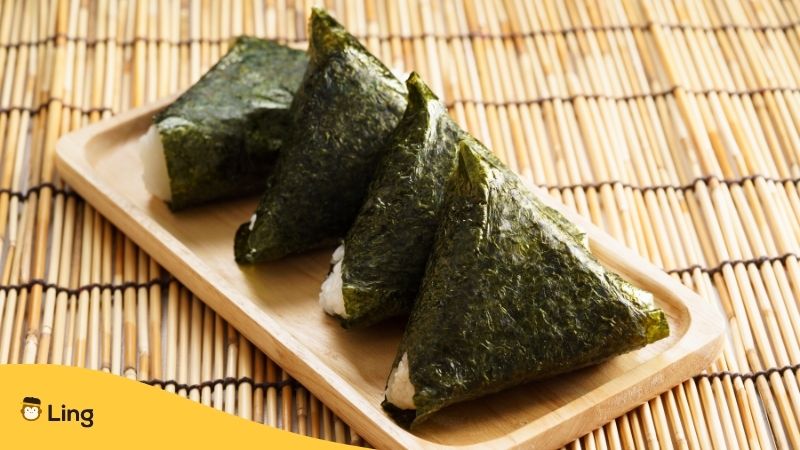
A triangle is a geometric shape with three sides, three corners, and three angles. The triangle shape is considered one of the most important shapes as it makes up the base of other polygons.
A triangle is called 三角 (sankaku) in Japanese. The kanji for the triangle is the combination of “三 three” and “角 angle” in the Japanese language which makes it easier to recall.
Square – 四角 (shikaku)

A square shape is called 四角 (shikaku) in Japanese. Similar to the triangle, the kanji for the square is the combination of “四 four” and “角 angle” in the Japanese language which makes it easier to remember for learners.
Additionally, if you want to describe an object by referring to its square shape, you can use the adjective 四角い (shikakui) which means square as an adjective, not a noun.
Rectangle – 長方形 (chouhoukei)

The rectangle is a quadrilateral geometric shape with 4 straight lines called sides. Their opposite sides are parallel to one another.
A rectangle is called 長方形 (chouhoukei) in Japanese. And, the kanji for the rectangle is the combination of “長い long” and “形 shape” because it really looks like a long square.
The Suffix 形 (gata) In Japanese
In Japanese grammar, you’ll notice that suffixes can change the meaning of the word they’re attached to. We’ll learn the function of the suffix 形 (gata) as it is related to our topic, shapes in Japanese, today.
The suffix 形 (が た gata) is generally used for irregular shapes such as the heart shape. So if you want to refer to the shape of something, you should add 形 (gata) after it. For example:
- The heart shape: ハート (hāto) + 形 (gata) = ハート形 (hātogata)
- The star shape: 星 (hoshi) + 形 (gata) = 星形 (hoshigata)
- The diamond shape: 菱 (hishi) + 形 (gata) = 菱形 (hishigata)
More Japanese Vocabulary Related To Shapes
Here is an extended vocabulary list for you to learn more shapes in Japanese. Don’t worry, I included the hiragana versions of all the words here, so it will be easier for you to read!
| English | Japanese | Hiragana | Romaji | Pronunciation |
|---|---|---|---|---|
| shape | 形 | かたち | katach | |
| triangle | 三角形 | さんかくけい | sankakuke | |
| square | 正方形 | せいほうけい | seihoukei | |
| rectangle | 長方形 | ちょうほうけい | chouhoukei | |
| rhombus | 菱形 | ひしがた | hishigata | |
| circle, round | 円形 | えんけい | enkei | |
| oval | 楕円形 | だえんけい | daenkei | |
| parallelogram | 平行四辺形 | へいこうしへんけい | heikoushihenkei | |
| trapezoid | 台形 | だいけい | daikei | |
| kite | 凧形 | たこがた | takogata | |
| cone | 円錐 | えんすい | ensui | |
| sphere | 球形 | きゅうけい | kyuukei | |
| sector | 扇形 | おうぎがた | ougigata | |
| arch | アーチ | aachi | ||
| box | 箱 | はこ | hako | |
| cube | 立方体 | りっぽうたい | rippoutai | |
| curve | 曲線 | きょくせん | kyokusen | |
| cylinder | 円柱 | えんちゅう | enchuu | |
| dome | 円蓋 | えんがい | engai | |
| flat | 平らな | たいらな | tairana | |
| hexagon | 六角形 | ろっかっけい | rokkakkei | |
| heptagon | 七角形 | しちかっけい | shichikakkei | |
| line | 線 | せん | sen | |
| octagon | 八角形 | はっかくけい | hakkakukei | |
| elliptical shape | 楕円形 | だえんけい | daenkei | |
| pentagon | 五角形 | ごかくけい | gokakukei | |
| level surface | 平面 | へいめん | heimen | |
| pyramid | ピラミッド | piramiddo | ||
| rhombus | 形菱 | ひしがた | hishigata | |
| sphere | 玉 | たま | tama | |
| spiral | スパイラル | supairaru | ||
| square | 正方形 | せいほうけい | seihoukei | |
| torus | 円環 | えんかん | enkan | |
| tube | 筒形 | つつがた | tsutsugata | |
| wavy | くねくねした | kunekune shita |
If you’re interested in learning more Japanese, I want you to meet Ling App and share your comment on learning Japanese with Ling!
Learn Japanese With Ling App!
If you want to learn the Japanese language, among the 60+ languages offered in the app, the Ling App is here for you!

Surely this isn’t the only topic you would like to learn! The Ling App provides a wealth of Japanese vocabulary that you can learn at your own pace. Just grab your iOS or Android device right now and head to Google Play Store or Apple App Store to download it. Mini-games, puzzles, and AI chatbots to practice Japanese-speaking skills are just a few of the interactive activities to help you learn Japanese easily.
Plus, don’t forget to visit our Japanese blog weekly to learn more about the Japanese language and culture!
Most Japanese learners use Ling to improve their language skills, so why not join them? Download the Ling App, and get ready to speak Japanese soon!
Until next time, じゃあまたね!