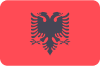


Thinking about picking up Albanian, but not sure if it’s even worth it? Many people wonder why learn Albanian when there are so many other options out there.
It basically all comes down to wanting something practical. A new language can open doors to different cultures and opportunities you wouldn’t otherwise reach. This guide covers five reasons that we think will convince you to start learning Albanian today!
What You Need To Know
- Albanian is in its own branch of the Indo-European language family. It doesn’t belong to any Slavic, Romance, or Germanic group.
- It is genuinely useful for travel in Albania and Kosovo, especially outside major cities.
- Over 44% of Albanians live abroad, so you will hear and use the language across Europe and beyond.
- Speaking Albanian can open niche career paths in NGOs, tourism, translation, and EU-linked projects.
- It gives you direct access to culture, with words like besa that can’t be easily translated.
1. The Albanian Language Is One Of A Kind
Albanian is not related to any other European language. While most European languages belong to either the Slavic, Germanic, or Romance group, Albanian is the only surviving language of its branch in the Indo-European family.
I want to learn even more languages with Ling!
Download now!
Albanians are said to be descendants of Illyrians who lived in the western Balkans over 2,500 years ago. This makes Albanian an ancient language, and one of the oldest surviving in the region.
That means that if you’re learning Albanian, you’re learning a language that has been preserved over centuries of Roman rule, Slavic migrations, and regional isolation in the Balkan mountains.
2. Albanian Is Useful When Traveling In The Balkans
Albanian culture is known for its impeccable hospitality, where you will feel like a welcome guest, especially if you know some basic Albanian.
Albania’s tourism is booming at the moment. Its stunning landscapes and rich history are attracting more visitors each year. In fact, in 2023 Albania had the 4th-largest increase in tourists worldwide. Knowing some Albanian is, therefore, a valuable asset for travelers who are looking for an authentic experience. Not to mention, the small coastal towns in Albania are still far less crowded than most Mediterranean hotspots. This alone should give you reason to think about visiting Albania and learning the language.

3. Albanian Connects You To A Global Diaspora
Albanian is the official language in Albania and Kosovo, and the co-official language in North Macedonia and Montenegro. But Albanian is also spoken by large communities in countries like Germany, Switzerland, Italy, the United States, and the United Kingdom.
According to the World Bank, more than 1.2 million Albanians live abroad. That is over 44% of the population, which means you’ll come across Albanian-speaking areas all the time.
Knowing Albanian becomes even more important if you’re dating an Albanian abroad, for example. Their family members might not speak English, and when you speak their native language, Albanians notice it immediately because most foreigners don’t even bother to learn it.
4. Albanian Opens Doors To New Career Opportunities
If you’re interested in working in Albania, knowing the language will give you a clear advantage right away.
But why move there in the first place? Albania is very affordable compared to Western Europe. It is also growing fast in fields like construction and energy which means there are real gaps in the job market that companies are actively trying to fill.
Albania’s EU accession talks are also creating exciting business opportunities, particularly in sectors like renewable energy, tech startups, and tourism, which need professionals who can speak Albanian.
Foreign workers are already coming in for that reason. Local businesses rely on international staff because demand is rising faster than the local workforce can cover it.
So the appeal is simple. You are not fighting hundreds of applicants for every position, and everyday costs like rent and food are lower compared to places like Germany, France, or the Netherlands.
It’s also not just inside the country. International organizations throughout the Balkans are always looking Albanian speakers for roles in humanitarian NGOs, peacekeeping missions, and development agencies.
5. Albanian Culture Is Built Into The Language
Lots of Albanian words describe everyday life in a very specific way. For example, there is a word called besa or besäthat doesn’t really have a direct translation, but it’s like a pledge of honor that Albanians take very seriously. It means that you keep your word no matter what. If someone gives you besa, it means they make a promise you can fully trust.
There are also words like xhiro which simply means evening walk, but it actually describes are daily social routine where people meet, talk, and hang out with each other in a public space. Another example is mik, which is a word for friend, but it’s only used when it goes beyond casual friendship. People use it to describe a long-term loyalty and personal bond.
The way people address each other in Albania changes depending on age, how well they know each other, and even on the situation they’re in. Even simple things like these can teach you how relationships work in Albania. All of this is part of the Albanian heritage.
This is why learning the language matters. You are learning how people structure social life through speech.
How Does Albanian Compare To Other Balkan Languages?
The Balkan region has several closely related languages, especially within the Slavic group. Albanian is not close to any other language in terms of vocabulary, however it does have some loanwords from other languages and some shared history with certain Balkan languages.
Here’s a quick comparison with a nearby language to see what makes it different and what kind of learning experience it offers:
| Language | Related to | Similarity for English speakers | Writing system | Why people learn it |
|---|---|---|---|---|
| Albanian | Unique branch of Indo-European | Low, most vocabulary feels new | Latin alphabet | For a completely unique language with no close European relatives |
| Serbian | Slavic language | Medium, shares patterns with other Slavic languages | Cyrillic + Latin | Useful across Serbia and nearby countries in the Balkans |
| Croatian | Slavic language | Medium, slightly easier if you know another Slavic language | Latin alphabet | Practical for travel and communication in the region |
| Greek | Separate Indo-European branch | Low, different vocabulary and structure | Greek alphabet | Useful for travel and history in the Eastern Mediterranean |
Albanian and Greek offer the most unique learning experience, while Slavic languages provide more overlap with each other.
Ling’s Tips For Beginner Albanian Learners
Here are some useful tips to keep in mind when learning Albanian if you’re a complete beginner:
- Start by learning the alphabet. Albanians write using Latin letters, which makes it easier for English speakers.
- Each of the 36 letters in the Albanian alphabet represents one sound, which means that it’s easy to read once you learn the system.
- Learn phrases you would actually use in real life, like një kafe, ju lutem (one coffee, please) or ku është stacioni? (Where is the station?)
- Learn one “safe filler” phrase early, like mirë (okay/good), and use it to react in conversations when you don’t know what to say.
- Notice how in spoken Albanian, people often shorten things. For example çfarë po bën? (What are you doing?) Often sounds like ça po bën? or even just ça bën?
- Download a structured app like Ling that offers an Albanian course with native audio, conversation practice, culture notes, grammar explanations, and several other features useful for language learning.
- Words in Albanian change endings to show meaning. For example, vajzë (girl) is different from vajza (the girl). The ending changes because Albanian uses endings rather than separate words like ‘the’ in English to show if something is general or specific.
- Albanian has a complex system of moods and tenses, with six types of moods and three simple and five complex tenses, which is distinctive among Balkan languages. For example, jam (I am), isha (I was), and do të jem (I will be) show different time forms of the same verb. It also changes mood depending on meaning, like shkoj (I go), të shkoj (that I go), or do të shkoja (I would go), where the ending shifts to show intention, possibility, or condition.

FAQs: Why Learn Albanian?
Is Albanian A Useful Language To Learn?
Yes, Albanian is useful if you want to communicate with millions of speakers in Albania, Kosovo, and across diaspora communities.
Which Albanian Dialect Should I Learn?
The best choice for language learners is the Tosk dialect, because it’s what standard Albanian is based on. It’s used in education, media, and official communication. The other Albanian dialect Gheg is spoken mainly in northern Albania and Kosovo, but you will naturally understand it once you learn standard Albanian.
Can Beginners Realistically Learn Albanian?
Yes, beginners can learn Albanian if they focus on consistent practice and real conversations. Most learners reach basic conversational ability in a few months of steady exposure, especially when they practice listening and speaking from the beginning.
Is Albanian Hard For English Speakers?
Yes, Albanian can be hard for native English speakers, because it has a unique grammatical system and vocabulary that doesn’t resemble English or most European languages. However, it becomes easier with consistent exposure and spoken practice.
Why Albanian Is Worth Learning
Learning Albanian offers something really rare, and that is a language that doesn’t fall into your typical European language groups, like Slavic, or Germanic. You’re learning something completely new from the start without relying on familiar words or similarities.
At the same time, it’s not just abstract curiosity, since there are millions of Albanian speakers across Albania, Kosovo, and large diaspora communities, so it has real everyday use.
So if you’re still wondering why learn Albanian, the answer is simple: it opens practical paths in travel, works, and communication across the Balkans, Europe, and beyond.
Want To Learn Albanian But Not Sure Where To Start?
You don’t need to figure it out alone. As an alternative to Duolingo, which doesn’t have Albanian, Ling gives you a structured Albanian course with native audio, simple speaking practice, and real beginner lessons so you can start using the language instead of just studying it.
Download the Ling app and start your first Albanian lessons today!