

The most essential Tagalog family vocabulary includes “mother” – ina/nanay, “father” – ama/tatay, “older sister” – ate, “older brother” – kuya, “grandmother” – lola, and “grandfather” – lolo.
When it comes to Filipinos, the family is the most important thing. So if you want to impress your Pinoy friends, colleagues, or special someone, this comprehensive list of Tagalog family vocabulary covers the terms you’ll encounter in day-to-day settings.
Ever heard someone say anak, bunso, tiyo, or pinsan? Let’s get to know what they mean, along with a few truths about a typical Filipino household.
Learning Tagalog is more than memorizing words
Explore more →
Tagalog Family Vocabulary
Essential Tagalog family vocabulary includes “parents” – magulang, “child” – anak, “sibling” – kapatid, “uncle” – tiyo, “aunt” – tiya, and “cousin” – pinsan, plus in-law terms like “brother-in-law” – bayaw and “sister-in-law” – hipag.
But here’s a comprehensive list of all the Tagalog terms that you should learn, especially if you want to impress native speakers. Note that by tradition, Filipinos love being called by these labels rather than their first name.
In fact, even if they are not your real kuya (brother) or ate (sister), you can use any of these as a sign of respect. For example, if you want to buy off of the streets some street food sold by an old lady, you can simply say paibili po (English translation: can I buy one?) and add the word nanay (mom) or ate to sound respectful in Tagalog.
You can also try the Ling app to learn Tagalog in a fun and easy way.
So, ready to learn more? Read and practice the Tagalog labels below.
| English | Tagalog | Role | Sound |
|---|---|---|---|
| Parents | Magulang / Mga magulang | Primary caregivers and decision-makers in the family. | |
| Grandfather | Lolo | Senior male figure, often seen as a source of wisdom. | |
| Grandmother | Lola | Senior female figure, often seen as a caregiver and advisor. | |
| Child | Anak / Mga anak | Offspring of the parents, central to the family’s structure. | |
| Wife | Asawang babae | Partner to the husband, shares in caregiving and household duties. | |
| Husband | Asawang lalaki | Partner to the wife, shares in providing and decision-making. | |
| Mother | Ina / Nanay / Inay / Inang | Primary female caregiver, often the emotional backbone of the family. | |
| Mother (Informal form) | Nay / Ma / Mudra / Ermat / Mama / Momshie | Informal term for mother, indicating closeness and affection. | |
| Father | Ama / Tatay / Itay / Itang | Primary male caregiver, often the family’s provider. | |
| Father (Informal form) | Tay / Pa / Erpat / Papa / Tatang | Informal term for father, denoting warmth and closeness. | |
| Older sister | Ate / Kapatid na babae | Elder female sibling, often helps with caregiving and chores. | |
| Older brother | Kuya / Kapatid na lalaki | Elder male sibling, often seen as a protector and role model. | |
| Eldest child, firstborn | Panganay | The first child, usually has leadership roles among siblings. | |
| Youngest child | Bunso | The last born, often receives more affection and leniency. | |
| Sibling | Kapatid | Brother or sister, shares a close familial bond. | |
| Son | Anak na lalaki | Male child of the parents. | |
| Daughter | Anak na babae | Female child of the parents. | |
| Uncle | Tiyo | Brother of a parent, often involved in the children’s lives. | |
| Aunt | Tiya | Sister of a parent, often provides support and care. | |
| Niece / Nephew | Pamangkin | Child of one’s sibling, treated with affection akin to one’s own child. | |
| Stepmother | Madrasta | A female figure who marries a child’s parent after the death or divorce of their original spouse. | |
| Stepfather | Amain | A male figure who marries a child’s parent after the death or divorce of their original spouse. | |
| Cousin | Pinsan | Child of one’s aunt or uncle, part of the extended family. | |
| Daughter-in-law | Manugang na babae | Wife of one’s son. | |
| Son-in-law | Manugang na lalaki | Husband of one’s daughter. | |
| Sister-in-law | Hipag | Wife of one’s brother or sister of one’s spouse. | |
| Brother-in-law | Bayaw | Husband of one’s sister or brother of one’s spouse. |
What Are The Tagalog Phrases Often Used By Filipino Families?}
Common family phrases in Tagalog include “let’s eat!” – Kain na!, “take care!” – Ingat ka!, and “I love you” – Mahal kita, which you’ll hear daily in Filipino homes.
After all, Filipino families have their own special way of talking! It’s warm, sometimes funny, and always full of love. Let’s look at some Tagalog family vocabulary and phrases that are as common as rice on the table:
- Kain na! (Let’s eat!): No matter where you are in the house, when you hear this, you know it’s time to drop everything. Food is ready, and meals are a family event.
- Halika na! (Come here!): Whether it’s to eat, have a family meeting, or just cuddle, this call to gather is hard to resist.
- Ingat ka! (Take care!): Said with a hug and a kiss, this is how Filipinos say goodbye to loved ones, even for short trips.
- Paalam (Goodbye): But it’s never a simple goodbye! Filipinos often add reminders like “Text when you arrive!” or “Don’t forget your jacket!”
- Anak (Child/My child): Parents use this sweet word for their own children, but also younger relatives or even close family friends.
- Mahal kita (I love you): Filipinos might not say this as often as some cultures, but when they do, it comes from the heart.
- Kamusta ka? (How are you?): This isn’t just about your day. It’s an invitation to share your stories, good and bad.
- Tulog na (Time to sleep): Heard at the end of a long day, it’s a signal to rest and get ready for another day together.
- Salamat (Thank you): For big things or small acts of kindness, Filipinos always remember to say thanks.
In every Kain na! and Mahal kita, you’ll feel the special bond Filipino families have. Each phrase is special because of that love. Next time you’re with a Filipino family, listen closely – you’ll hear their culture in every word!
Filipino Household: Who Are The Typical Family Members?
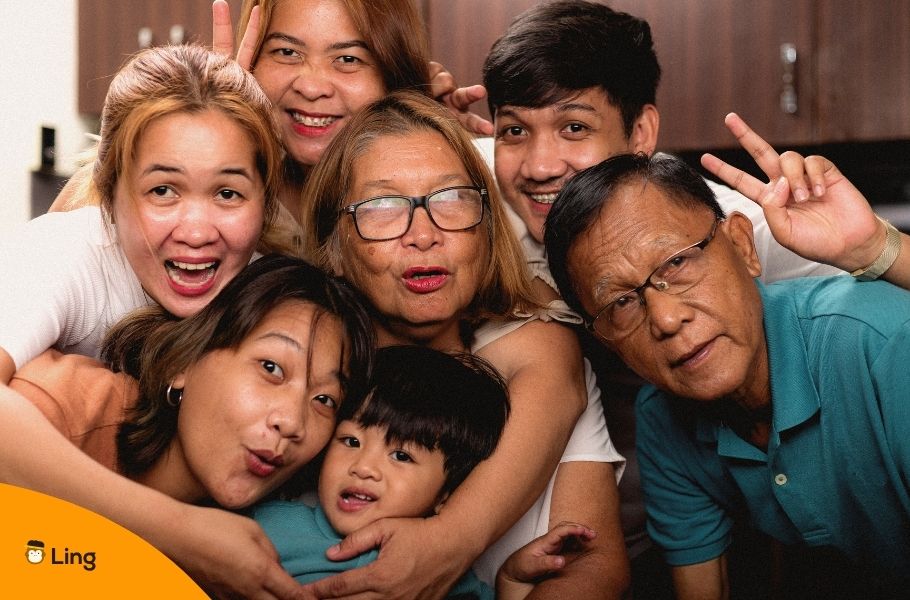
A typical Filipino household is often multigenerational, commonly including parents, grandparents, children, and sometimes aunts, uncles, and cousins all under one roof.
Ever heard of the word pamilya? This is a Tagalog word that refers to family, and it remains one of the terms that do not have direct Tagalog synonyms.
You see, the Philippine tradition when it comes to families is very much different from what you can see in the Western concept. Usually, when a member reaches 18 years old, Western families expect their child to move and find their own place.
Is Staying At Home Normal To Filipinos?
For Filipinos, it is always suggested that you stay with your family until you are married. Though this tradition still exists today, a huge number of people are slowly adopting the Western concept and have moved to a place that is much nearer to their workplace.
Why do they choose to stay? It’s a cultural thing. In the Philippines, staying with your family until you’re married is a tradition and a way of life that fosters strong familial bonds and ensures everyone looks out for each other.
And if ever you get invited to attend a traditional family party or any of the Philippine festivals, depending on the place, do not be surprised if you meet not just the parents but the whole clan!
This is because the family circle often includes everyone, from close relatives to those slightly more distant. It’s a demonstration of the Filipino value of unity and togetherness, showing how deeply interconnected and supportive their community is.
Who Lives Inside A Filipino House?
You see, the country has a very strong familial relationship, to the point that it is possible to find almost three generations living in just one house or compound! In fact, some streets are even named after the popular families who reside in that certain place.
Given the household and room structure in the Philippines, you can also expect to hear that kids have grown up not just with the help of the mother and father but with the entire family! Isn’t that exciting?
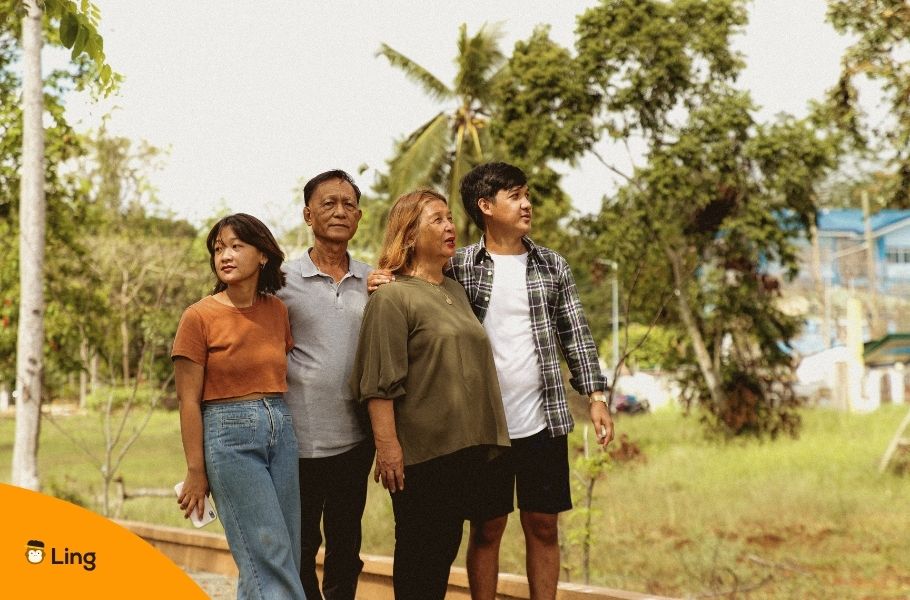
So, who shares the same roof? It’s common to find parents, grandparents, siblings, and sometimes even aunts, uncles, and cousins living together. This arrangement creates a nurturing environment where values, traditions, and familial bonds are passed down through generations, enriching the lives of all members.
What Are The Filipino Family Values And Traditions?
Core Filipino family values include respect for elders (shown through pagmamano), close family ties, the bayanihan spirit of community, warm hospitality, and strong religious faith.
Because in the Philippines, family is everything. They have many values and traditions passed down from their ancestors, and Filipinos live with them every day. From the way they say mano po to big family parties at Christmas, everything is about bringing the family closer together.
Filipino culture is a mix of their own traditions and influences from Spain and even America! This makes them unique. Respect, working together, helping your neighbors… these are the most important things. Let’s take a closer look:
- Respect for Elders: Filipinos have deep respect for their elders. You see this in pagmamano, where a younger person takes an older person’s hand and touches it to their forehead.
- Close Family Ties: Filipino families aren’t just parents and kids. They include aunts, uncles, cousins, everyone! Sometimes, many relatives live together, which shows how important it is to support each other.
- Bayanihan Spirit: This means everyone in the community works together. In the past, they might literally carry a family’s house to a new place! Now, it means anyone helping out someone in need.
- Hospitality: Filipino families are famous for their warm hospitality, treating guests like they’re part of the family! Sharing food and opening their homes comes from the heart.
- Strong Religious Faith: Many Filipinos are Catholic. Church is a big part of daily life and celebrations! This shapes many family traditions, like going to Mass on Sundays and having big feasts for religious holidays.
- Importance of Celebrations: Filipinos love any excuse to celebrate! Birthdays, graduations, and especially Christmas and New Year mean big feasts, music, dancing, and lots of family time.
- Education as a Priority: Filipino families believe education is the key to a better future. Parents often make sacrifices to make sure their children get a good education.
- Filial Piety: Children are taught to support and care for their parents when they get old. This way, elderly family members are always loved and respected.
- Karaoke as a Family Bonding Activity: Okay, karaoke might not be a super old tradition, but now it’s a huge part of family fun! It shows how Filipinos love music, love to celebrate, and love being together.
Learning these values and traditions is a wonderful way to start understanding Filipino families, but it’s only the beginning. As you explore Tagalog words for family members, you’ll learn deeper connections. You’ll see how even simple words like ate or kuya carry warmth and respect that reflect the strong bonds that define Filipino families.
Are There Other Words Used By Filipinos To Call Their Family Members?
Many Filipinos will either use Spanish or the Hokkien (Chinese) language when referring to their family members. People often remember that Hokkien is a dialect, but it has evolved into its own separate language, just like what happened with the Tagalog language history. This is especially true for those people who have developed their vocabulary outside the Fu-Jian Province in China.
For Hokkien Chinese, these are some of the colloquial words for Filipino families:
- ditse – second eldest sister
- diko – second eldest brother
- sangko – third eldest brother
- sanse – third eldest sister
- ingkong – grandfather
- siyaho – elder sister’s husband
- inso – eldest brother’s wife
For the Spanish language, check out these family words:
- Abuelo – grandfather
- Abuela – grandmother
- Unica iha – first daughter/only daughter
- Unico iho – first son/only son
- Tiyo – uncle
- Tiya – aunt
How Do You Say “Family” In Tagalog?
The Tagalog translation for “family” is pamilya
More Tagalog Family Vocabulary For Practice
Ready for more Tagalog words? If you’re eager to impress your close family, friends and your loved ones, take a look at this Tagalog vocabulary list below:
| English | Tagalog | Sound |
|---|---|---|
| How are your parents-in-law? | Kamusta na ang mga biyenan mo? | |
| His sister even went to the United States to join the celebration | Ang kapatid niyang babae ay pumunta pa sa Estados Unidos para makisalo sa pagdiriwang | |
| They have three children now | Tatlo na ang kanilang mga anak | |
| Stephen let his stepfather inside when he saw him alone outside the house | Pinapasok ni Stephen ang kanyang amain nang makita niya itong magisa lang sa labas ng kanilang bahay | |
| To be honest, every day is like a fiesta when our relatives are here | Sa totoo lang, parang araw araw ay piyesta sa bahay kapag andito ang aming mga kamag-anak |
Tips For Learning Tagalog Family Vocabulary
The fastest way to learn Tagalog family words is to use them out loud, connect them to real people, and lean on the respect titles Filipinos use daily. A few quick tips:
- Use the titles as respect words. You don’t need to be related to call someone “older sister” – ate or “older brother” – kuya; Filipinos use these with strangers, vendors, and friends to show politeness.
- Group the words by generation. Learning lolo/lola (grandparents), nanay/tatay (parents), and ate/kuya (siblings) together makes them easier to remember.
- Practice with real family scenes. Attach each word to a real person you know, which helps the vocabulary stick far better than rote memorization.
- Listen for the honorific po. Filipinos often pair family titles with po for respect, as in Kumusta po kayo, Lola? (“How are you, Grandmother?”). Adding it makes your Tagalog sound warmer and more polite with elders.
- Notice regional and borrowed terms. Some families use Spanish- or Chinese-derived words like tita (aunt) or ditse (second eldest sister), so don’t be surprised if you hear family members called by names outside the standard list.
- Teaching kids, too? If you’re passing Tagalog on to little ones, these apps for learning Tagalog for kids make family words fun and easy to absorb.
Frequently Asked Questions About Tagalog Family Vocabulary
What Are Filipino Endearments For Their Parents And Family?
Filipinos love creating cute names for their loved ones. For parents, it’s the same. Common ones include “my love” – mahal, “my child” – anak, “mother” – inay, “father” – itay, and “youngest of the family” – bunso.
Although some of these words may seem like ordinary Tagalog words, they can be used with a bit of sweet or caring intonation when you are referring to your close family relatives.
How Big Is A Typical Filipino Family?
Filipinos are typically huge families, with numbers like four to five or even up to a ten-digit number. However, nowadays, due to family planning, many Filipinos decide to have only two children or not have children at all. Some families decide to have fur babies instead.
What Are The Filipino Words For “Family Members”?
The general Tagalog word for family members is mga miyembro ng pamilya, while relatives as a whole are called kamag-anak.
What Are Some Tagalog Sayings About Family?
A well-known Filipino saying is “Ang hindi marunong lumingon sa pinanggalingan ay hindi makararating sa paroroonan” (“One who does not look back at where they came from will never reach their destination”).
Filipinos also live by values like “Kapamilya ka namin” (“You’re family to us”), reflecting how central family is to the culture.
What Do Filipinos Call Their Aunties?
Filipinos usually call their aunties tita or tiya. Tita is the more casual, affectionate term used daily, while tiya is slightly more traditional. Both are also used warmly for close family friends, even when there’s no blood relation.
What Are The Most Important Tagalog Family Words To Know?
The most important Tagalog family words are “mother” – nanay, “father” – tatay, “older sister” – ate, “older brother” – kuya, “grandmother” – lola, “grandfather” – lolo, and “child” – anak. The general word for “family” itself is pamilya.
Recap: Tagalog Family Vocabulary
To recap, essential Tagalog family vocabulary includes “mother” – nanay, “father” – tatay, “child” – anak, “older sister” – ate, and “older brother” – kuya.
Learning Tagalog family words is like… you get a special key! This key opens the door to Filipino hearts. Each word – magulang, anak – tells a little bit about how Filipinos love their families. It’s about respect, being close, and always being there for each other. This is more than just speaking; it’s like feeling what Filipino family means.
Imagine you call someone ate or kuya, and right away, you feel like you belong. That’s how these words work! They make friendship easy; they make you feel welcome.
So keep learning, try using this Tagalog family vocabulary, and let them show you something special. In the Philippines, being a friend means you’re like family, too.
Learn Tagalog With Ling!
Ready to go beyond the word list and actually use these Tagalog family words with confidence? Whether you’re connecting with a Filipino partner’s family, reconnecting with your own heritage, or preparing for a trip to the Philippines, knowing how to warmly say “mother” – nanay or greet an ate makes all the difference.
The Ling app makes learning Tagalog easy. It brings vocabulary to life with native-speaker audio so you nail the pronunciation, offers quick daily lessons that fit a busy schedule, and games and quizzes keep family words sticking.
Download the Ling app today and start talking with your Filipino family in Tagalog!