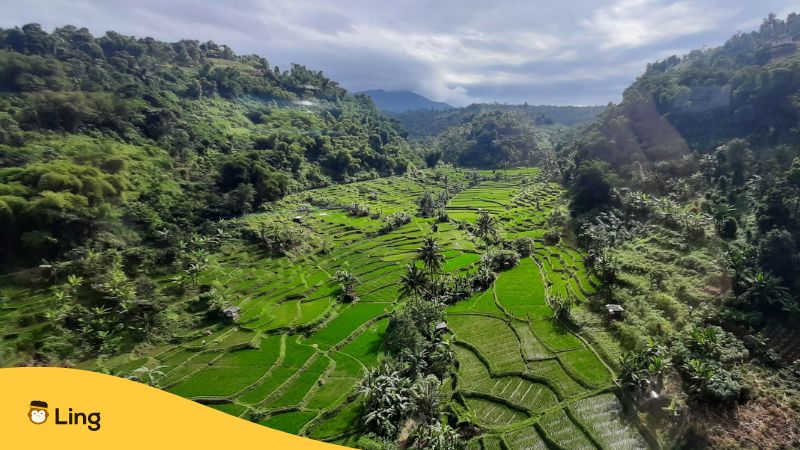
Sundanese culture comes from West Java, Indonesia. The things that shape it most are the people’s strong values, mountains, rivers, and rice fields. But there’s so much more to this vibrant society that we can uncover.
In this post, you’ll discover everything about the Sundanese language, people, customs, and daily practices. Keep reading to explore the traditions that continue to shape Sundanese life today.
What Is Sundanese?
Sundanese is the name for one of the largest ethnic groups of West Java, Indonesia. It also refers to their language, which millions speak every day as their mother tongue.
I want to learn even more languages with Ling!
Download now!
Let’s kick things off with a short history lesson about the Sundanese!
Brief History Of Sundanese
The story of the Sundanese begins in the fifth century with the Tarumanagara kingdom. This early kingdom was known to trade with China and other parts of Asia.
Over the centuries, Sundanese lands saw many kingdoms and rulers. Religions like Buddhism and Hinduism shaped their art, rituals, and daily life long before Islam arrived through trade in the 16th century.
In the colonial era, the Dutch turned the Sundanese lands into a source of coffee, tea, spices, and rubber. By the 20th century, Sundanese people joined to push for Indonesian independence. After 1945, their homeland became West Java, one of Indonesia’s richest provinces.
Today, there are over 30 million Sundanese people living across Java and beyond. Their history is full of different kingdoms, trade, colonial rule, and independence, yet their language, customs, and community spirit remain strong.
The Land Of The Sundanese People In West Java
Most Sundanese people today live in the western part of the Indonesian island of Java. It serves as the center of Indonesia’s economy and government. The country’s capital, Jakarta, is also on the island.
The northern coast is flat and good for farming, while the southern coast is known for its rolling hills. The middle of West Java has mountains and many volcanoes, some of which are still active. The northern coastline, which stretches along the Java Sea, is where fishing communities thrive and saltwater fish are an important part of Sundanese cuisine.
In East Java, the Javanese are the main ethnic group, with their own language and traditions, offering a different side of Indonesian culture.
The Sundanese Language
Most Sundanese people speak two languages: Sundanese, also known as baha Sunda, and Indonesia’s national language. At home or with friends, they usually speak Sundanese. In public or at work, they switch to Indonesian. Both languages belong to the Austronesian family.
Sundanese has many regional dialects, which use different levels of formality depending on who you are speaking to. You talk differently to an older relative than to a friend or younger sibling. Most people use two or three levels, while older generations sometimes even use four.
The Sundanese Society
Now let’s have a look at the cultural traditions that shape everyday Sundanese society and life.
Music, Dance, And Arts
Sundanese culture comes alive through music, dance, and traditional arts.
Degund is what we call the traditional Sundanese music style, which is often played with instruments made out of bamboo, called angklung, calung, and suling.
The angklung is an instrument that makes sound when you shake its bamboo tubes, the calung is played by hitting bamboo bars to create rhythm, and the suling is a bamboo flute that adds soft, flowing notes. You will likely hear these instruments played at village celebrations.
The Sundanese culture also includes traditional dances, like the fast and lively jaipongan, where the dancers move to the rhythm in playful steps.
There’s also a traditional dance called tari topend, where dancers wear wooden masks and act out characters from folklore and history.
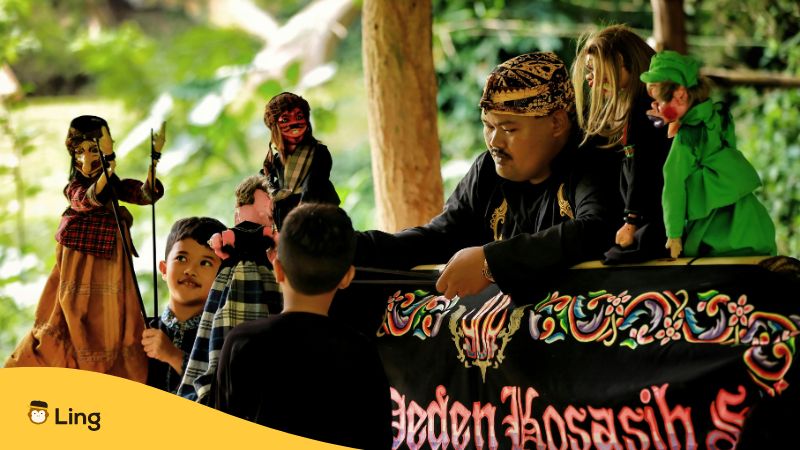
And lastly, one of the best-known forms of artistic expression in Sundanese culture is the Wayang Golek puppet show, where puppeteers act out tales from the Mahabharata, Ramayana, or other local stories.
Culinary Treasures
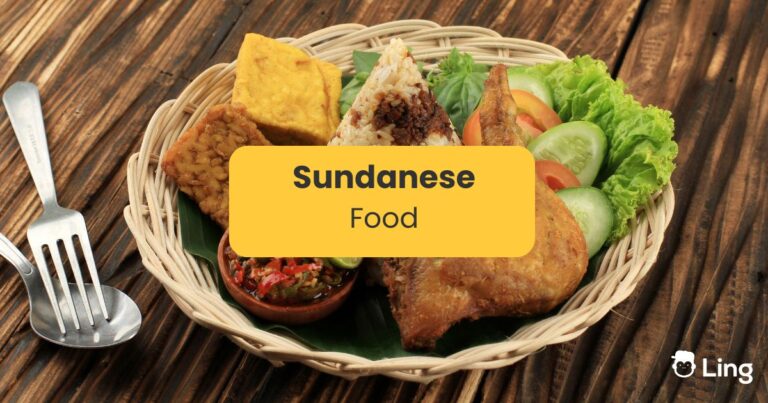
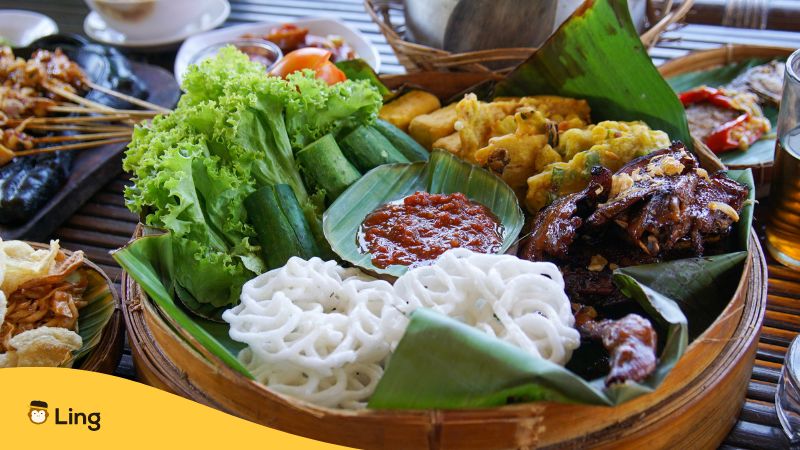
As already mentioned, the Sundanese are huge rice consumers. They eat it with vegetables, fish, or meat. They use garlic, turmeric, ginger, coriander, and lemongrass to add flavor and serve a hot chili-garlic sauce on the side.
Rice also comes in different styles: They’ve got the Boboko white rice in a bamboo container and Nasi Timbel rice wrapped in banana leaves. Then there’s the Tutug Oncom, which is mixed rice with roasted fermented peanuts. They also have Nasi Liwer, which is cooked with coconut milk and herbs. The brown rice is called Nasi Merah.
So yes, rice is super important in the Sundanese cuisine.
Apart from rice, Sundanese meals include plenty of fresh vegetables, fish, and meat. In coastal areas, people eat saltwater fish. In the mountains, pond-raised carp or goldfish are common. They don’t like pork, but eat meat from goats, cows, water buffaloes, chickens, ducks, geese, and pigeons.
Raw vegetables are a common side, called Lalapan, and include cucumber, eggplant, and papaya leaves. Popular main dishes include fried or grilled gourami, fried or grilled chicken, and gepuk, which is spiced, tender beef. Sundanese vegetable dishes include Karedok, Gado-Gado, and Lotek.
Side dishes are usually fried tofu, fried tempe, grilled petai, and jengkol stew. Soups like Sayur Asem use tamarind for a sour taste and include melinjo nuts and leaves.
So, you see, in Sundanese cuisine, rice is the star of the show, but everything on the plate has its moment to shine.
Values And Philosophies
In Sundanese culture, respect, cooperation, and thoughtfulness guide life at home, in the village, and in encounters with strangers. People watch out for one another and value harmony in their communities.
This can especially be seen in their life philosophy called silih asih, silih asah, silih asuh. Literally, it means to love one another, to educate or improve each other, and to care for one another.
This can be shown in helping a neighbor, teaching someone new skills, resolving conflicts calmly, or taking care of family and community members. In that sense, it functions like an unwritten rule for living harmoniously.
Another core value is something they call someah hade ka semah, which roughly means “be friendly and good toward guests”. They live by this value of treating guests with kindness, and as a visitor, you will notice it in their genuine friendliness towards you.
Traditional Clothing
Sundanese traditional clothing is simple and elegant. Women usually wear a kebaya, a fitted long-sleeved blouse, with a sarung, a cloth wrapped around the waist that reaches the ankles.
Men also wear a sarung, paired with a long-sleeved batik shirt or a fitted embroidered jacket.
Today, these clothes are mostly worn for weddings or special events. For everyday life, people usually wear Western or Islamic-style clothing.
Milestones And Rituals
In Sundanese culture, marriage has nine stages. It starts with a meeting between the families. The groom then brings gifts to the bride’s family. On the wedding day, parents feed the couple their last bites from home. A week later, the groom’s family hosts a gathering for friends and relatives.
Some Sundanese people only have one name, while others have a first and last name. Women keep their birth names after marriage, but they can be addressed as “Mrs.” followed by their husband’s name.
When it comes to funerals, after someone passes away, relatives bring money and rice, and a kiai prays over the body before burial. Rituals continue on the third, seventh, fortieth, one-hundredth, and one-thousandth days after death.
How Do You Say Culture In Sundanese Language?
The word for “culture” in Sundanese is kabudayaan. This is the more formal term used in official or academic contexts. For everyday conversation, people usually say budaya. It’s simpler and works well when talking about traditions, music, food, or daily life.
Sundanese Vocabulary
Here’re some simple culture-related words you can use to practice your Sundanese:
| English | Sundanese |
|---|---|
| Culture | Budaya |
| Tradition | Tradisi |
| music | Musik |
| Dance | Tarian |
| Instrument | Mittalaite |
| Rice | Béas |
| Vegetable | Sayur |
| Guest | Tamuh |
| Ceremony | Upacara |
| Festival | Festival |
| Respect | Hormat |
| Family | Kulawarga |
| Friend | Babaturan / Réréncangan |
| Hospitality | Someah |
| Story | Carita |
| Mask | Topéng |
| Traditional clothes | Pakaian adat |
| Village | Désa |
| Community | Masarakat |
Tips For Exploring The Sundanese Culture
- Learning the language is always the first step. For example, simple greetings like sampurasun, which means hello in Sundanese.
- Learn basic food words like béas (rice), sayur (vegetable), and lalapan (fresh vegetables), and use the Ling app to expand your vocabulary.
- Dig deeper into Sundanese values like silih asih, silih asah, silih asuh, and think about what it means to them.
- Listen to traditional music and look up Wayang Golek performances online. If you’re in Java, see if there are any events you can join live.
- Practice a little every day to remember what you learn. Use a method called spaced repetition, where you repeat something just as you’re about to forget it, for better retention.
- Try small conversations with locals to use what you’ve learned in real situations. If you’re too scared, try using Ling’s dialogue feature for practicing.
Frequently Asked Questions About Sundanese Culture
What Religion Is The Most Prevalent In Sundanese Culture?
Most Sundanese are Muslim, which means they follow daily prayers, do the Ramadan fasting, and many of them even make the pilgrimage to Mecca. But they are also Catholics or Protestants. The traditional ceremonies, especially those that are linked to rice farming, still include older Hindu elements.
What Race Is Sundanese?
The Sundanese are part of the Austronesian race, which includes many people across Southeast Asia and the Pacific Islands. They are considered Southeast Asian in broader racial terms.
What Is The Ethnic Village Of The Sundanese People?
The best-known traditional Sundanese village is called Kampung Naga. It’s located in Tasikmalaya in West Java. The people there still live like their ancestors, in bamboo houses surrounded by rice fields, rivers, and a sacred forest. To reach the village, you need to walk down hundreds of stone steps, which makes it isolated and mysterious.
Sundanese Culture In A Nutshell
So, what can we take away from Sundanese culture?
The people of West Java have a fascinating history, traditions, and values that can only be found in this part of the world. In this post we’ve covered everything about their unique music, traditional dances and art perfomances, clothing, and their most delicious food.
Understanding the core Sundanese values like loving, teaching, caring for one another, and showing kindness is important for language learners, as they can more easily understand why certain words, greetings, and expressions are used.
But this was just the beginning. Sundanese culture is full of stories and traditions waiting for you to discover them. Take a moment to explore, try out a few words, and connect with the people behind the language.
Interested In Learning Sundanese? Try The Ling App!
Ready to take your travel experiences to the next level? Download Ling and unlock the power of language to explore more deeply, connect with locals, and experience every culture authentically.
Learn Sundanese on the go, practice the phrases that matter, and step into every town, village, and market with confidence. Make your travels richer, more meaningful, and truly unforgettable with Ling as your ultimate travel companion.