

The Philippines is a country full of beautiful and interesting traditions that have been passed down through generations. Whether it’s the Filipino way of celebrating festivals or the traditional way of greeting guests, there is always something new to learn about this country’s culture.
If you’re planning on traveling to the Philippines, or are interested in learning more about the Filipino language and culture, then you’ll want to check out this list of the five most interesting Filipino traditions and rituals!
Table of Contents
Philippines Traditions And Rituals 1: Pagmamano
Filipinos have a unique way of greeting each other. It’s called pagmamano and is typically done when visiting an elder’s house or as a greeting upon meeting them.
Learning Tagalog is more than memorizing words
Explore more →
When showing this courtesy, you should begin by saying, “Mano po.” The term “mano” comes from the Spanish term for “hand” and the Tagalog word “po,” which is used to end sentences politely.
The phrase “mano po” translates to both “may I have your hand?” and “may I receive your blessing?” Then, elders will extend their hand to you and reply, “Kaawaan ka ng Diyos,” which directly translates to “May the Almighty have mercy on you.”
You should then grasp the elder’s hand and press it on your forehead. This gesture is meant to show respect for the elder who’s welcoming you to their house. Once this has been done, you should say “Salamat po,” which translates to “thank you in Tagalog.”
Philippines Traditions And Rituals 2: Using “Po” And “Opo”
In Filipino households, po and opo are typical ways of expressing respect for one another. The polite response to “yes” is “opo.” However, “po” in speech conveys respect for the individual being addressed without implying any specific connotation.
If you want to be polite in speaking with Filipinos, it’s important to know when and how to use certain words. The words “po” and “opo” are two of the most common, and you should use these terms when speaking with elders or people in authority.
Philippines Traditions And Rituals 3: Family Matters Most
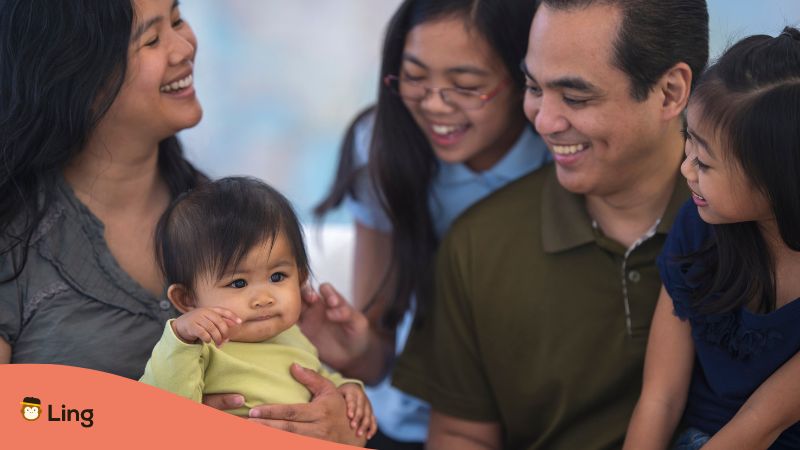
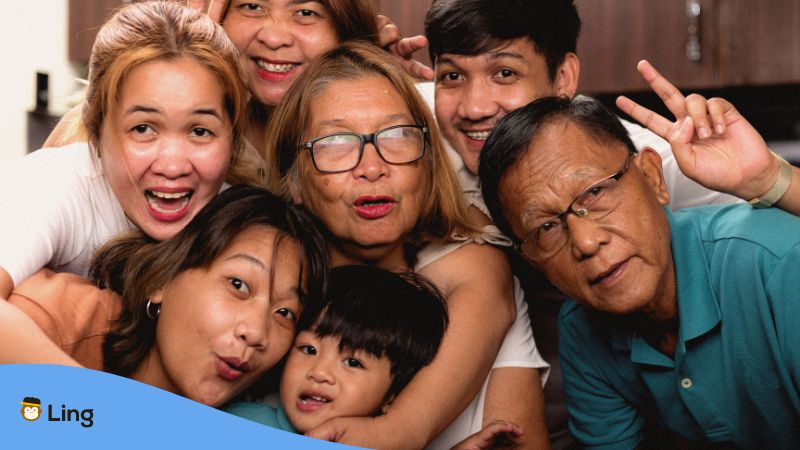
Family is everything in Filipino culture. It’s not uncommon to see extended family members, including aunts, uncles, grandparents, and many children, all living under one roof.
Moreover, it’s not unusual for Filipino families to live with other relatives and even their great-grandparents. It is a very close-knit and caring unit that values each member and respects their roles within the family.
In addition, Filipinos are so family-focused that they often see themselves as part of the same family as their relatives by marriage. So your husband’s brother’s wife’s cousin is also your cousin!
So, when you meet someone new in the Philippines, don’t be surprised if they refer to you as “Tita” or “Tito” (Aunt or Uncle). It’s just how they show love for one another—and it helps them feel connected even when they aren’t related by blood.
The concept of family in the Philippines extends far beyond their immediate family. It includes everyone who shares a bond with them.
So, don’t be surprised if you’re invited to a family event or get an unexpected invitation from someone you just met. It’s just part of the culture!
Philippines Traditions And Rituals 4: Colorful Fiestas In The Philippine Culture
From rural areas to bustling cities, Filipino people honor their cultural identity in a fun and meaningful way. They celebrate everything from patron saint days to harvest time and do it in style.
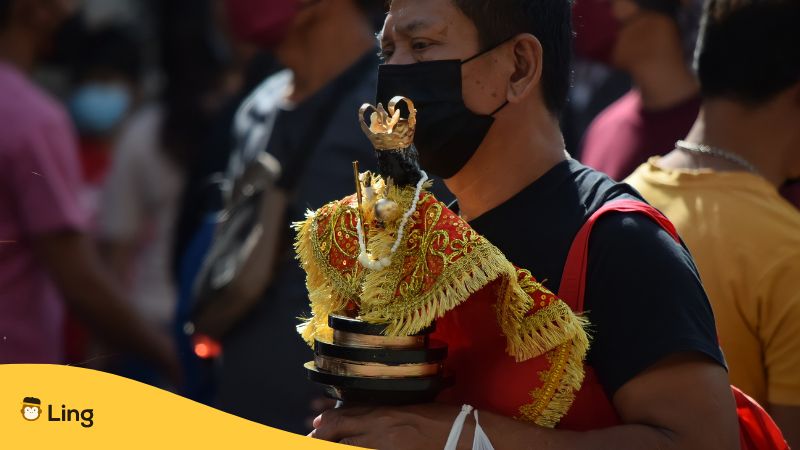
One of the Philippines’ biggest and most famous festivals is the Sinulog, which came from the word “sulog” (meaning “like the movement of water current”).
This event which brings in visitors from all over the world takes place in Cebu City every January, honoring its patron saint, Santo Niño de Cebu. (“Santo” meaning “Saint” and “Niño” meaning “boy/ child” in Spanish).
Another festival is the Pahiyas, which celebrates the harvest season. It takes place in Lucban, Quezon, every April and is famous for its colorful floats made from plant stalks and decorated with fruits and vegetables.
Philippines Traditions And Rituals 5: Celebrations Are Always With Food
The Philippines is home to a vibrant culture, and food is at the center of it. It’s not uncommon for Filipinos to celebrate every occasion with food. Birthdays, graduations, weddings—you name it.
You’ll find that even the most simple of gatherings will be accompanied by a feast. And it will leave you wondering how so much deliciousness could be contained in one place!
Suckling pig is a traditional dish that’s perfect for special occasions. It’s made from young pigs that are roasted whole and served with liver sauce.
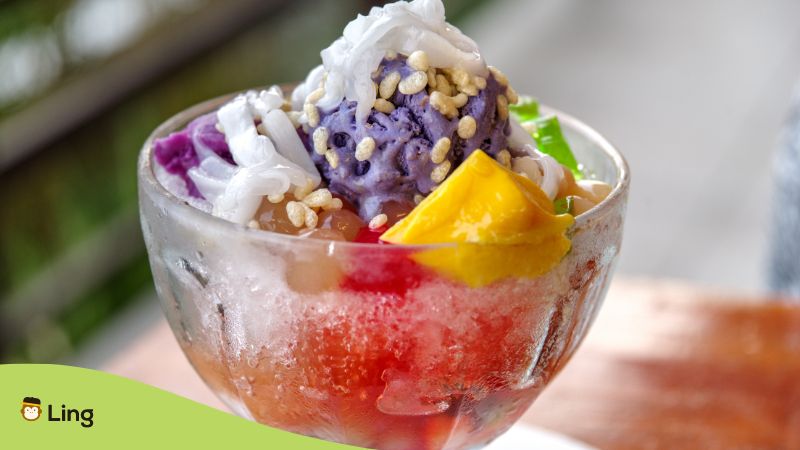
Another popular dish on any festive table is halo-halo, a popular dessert made from shaved ice and other ingredients like beans, fruits, and milk. It typically has a whole lot of colors too!
Filipinos also love sweet foods. And when we say “sweets,” you can bet that coconut milk will be involved somewhere along the line! Coconut milk is used in traditional Filipino desserts like suman (glutinous rice cakes wrapped in palm trees’ leaves) and puto bumbong (steamed sticky rice cakes with shredded coconut).
Filipino’s love for food is one of the reasons why they are known as the world’s best hosts.
They will go out of their way to ensure you have a wonderful time, including feeding you delicious feasts! Hence, Filipino hospitality is not just mere words. It is a way of life that’s deeply rooted in Philippine culture.
Philippines Traditions And Rituals 6: Filipinos Are Devout
Religion is a significant part of Filipino life. The country is a predominantly Roman Catholic nation, but there is also other Christian denomination that you’ll find in the Filipino community.
Moreover, you might be surprised that the Philippines also has several Muslim communities and people who practice Buddhism or other religions.
The Catholic Church is among the most important institutions in Filipino society, influencing everything from personal relationships to beliefs and customs.
For example, there is a strong emphasis on values and love for elders, which stems from the role that parents play in their children’s lives as well as their religious beliefs.
Philippines Traditions And Rituals 7: Bayanihan
Bayanihan is one of the most unique cultural practices in the Philippines. This Filipino word means “communal labor.” It represents a community effort that includes every member, regardless of age or gender.
It’s all about helping others and working together towards a common goal. It is mostly used as a work ethic in the Philippines or just camaraderie in general. Not only does this make it easier to accomplish tasks that would be difficult or impossible for one person alone, but it also strengthens community relationships. It brings people together to work toward something positive.
How Do You Say Tradition And Rituals In Tagalog?
The Tagalog word for tradition is tradisyon
Meanwhile, you can say ritwal when you want to refer to rituals in Tagalog.
Both of these words may be used interchangeably but depending on context, it can also mean two different things.
Other Words And Phrases Related To Philippine Tradition And Rituals
| English | Tagalog | Sound |
|---|---|---|
| No direct translation but it is an act of wooing someone through music | Harana | |
| Fiesta | Pista/Piyesta | |
| To Visit | Bumisita/Bisitahin | |
| Are there different kinds of Philippine traditions? | Iba iba ba ang mga tradisyon ng Pilipino? | |
| We will visit you this May to celebrate the fiesta | Pupunta kami sa inyo sa Mayo upang magdiwang ng piyesta. | |
| They did a sign of respect for their grandparents. | Nagmano ang dalawang bata sa kanilang mga lolo’t lola. |
Take note that for the word mano, there is no direct English translation. But it is a gesture of respect by putting their parents or grandparent’s hand into their forehead.
Speaking of no translation, we believe it’s the best time to amp up your Tagalog language. Polish your Tagalog skills today using the Ling app. It’s the fastest, easiest way to learn a new language. And with our challenging quizzes, you’ll never get bored while learning!
To make sure you’re getting the most out of your language learning experience, download Ling today!
Commonly Asked Questions About Philippine Traditions And Rituals
What Are The Love Traditions In The Philippines?
Filipinos are romantic in nature and they are very committed. These are all well reflected in the Philippine tradition, Harana. It is a traditional musical way of wooing someone by singing a song outside their loved one’s window or singing a love song in public. Although Harana is not done by many Filipinos today, it is still practiced by many younger Filipinos during school events like prom or when courting someone.
If you’re interested in making your way into a Filipino who speaks Tagalog, make sure to throw some flirting punch lines in Tagalog to amaze them.
What Are The Filipino Mourning Rituals?
Filipinos have a mourning ritual where they will hold a wake for nine (9) whole days to remember the good deeds and influence of the beloved family member or friend. In this period, it was common to have friends, relatives, and other people visit the casket for the urn of the person for public or private viewing. It also depends on the religion of the person who died or the late Filipino family’s religion on what the practices, customs, and rituals will be.
What Is The Most Important Tradition In The Philippines?
Short answer: there is not one single important tradition, as Filipinos believe every tradition and ritual has its good and bad sides.
Many Filipinos’ core beliefs are deeply rooted in religion and respect. In that sense, many Filipinos will say that respect for the elderly is the most important tradition. On the other hand, other Filipinos will disagree and express the importance of tradition for Filipino hospitality and kindness and even defy wits by changing the definition of the commonly known “Filipino time.”
All in all, the most essential thing to remember is that it’s best to practice the better tradition than cultivate and pass down the negative traditions along the way.
Philippines Traditions And Rituals Are Reflections Of Their History
The Philippines is a country with a rich history, and it’s no surprise that its traditions and customs reflect that. In fact, it’s among the reasons why so many people love visiting the Philippines.
From their fantastic hospitality to their colorful Filipino festivals, there’s always something new to experience when you visit this wonderful country.
And be sure to polish your language skills as well; it’s a great way to meet some Filipinos and learn more about their history and culture!