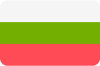


Wondering why there’s no Bulgarian on Babbel? You’re not overlooking anything. Bulgarian isn’t currently one of the languages available on Babbel, which can be frustrating if it’s the language you want to learn.
The good news is that you don’t have to put your Bulgarian plans on hold, because Ling has a dedicated Bulgarian course with lessons covering all you need to start speaking Bulgarian in no time.
In this article, we’ll look at why Bulgarian isn’t available on Babbel, how difficult Bulgarian is for beginners, and what makes Ling the best alternative.
I want to learn even more languages with Ling!
Download now!
Why Is There No Bulgarian On Babbel?
The platform has not made an official statement explaining why there is no Bulgarian on Babbel. However, there are a few possible reasons for the gap, based on how Babbel develops its courses and chooses which languages to support. These could be:
- Course development takes time and resources. Babbel says its courses are created by language experts and tailored to specific language combinations. Adding Bulgarian would therefore require dedicated lessons, grammar explanations, audio, exercises, and quality checks rather than simply translating an existing course.
- Babbel has a relatively focused language catalog. Compared with some other language-learning apps, Babbel supports a limited number of languages. Bulgarian may simply not have been prioritized alongside the languages currently in its catalog.
- Demand may influence which languages are developed. This is only a possibility, as Babbel has not confirmed it as a reason for excluding Bulgarian. When Babbel added Russian to its portfolio, for example, the company noted that Russian was among its most requested languages.
- Creating a Bulgarian course would require a dedicated team. Babbel’s own materials explain that its content is carefully created and curated by specialists, and that updating content across multiple languages can require considerable time and resources.
- The Bulgarian course would need to be built around the language itself. Bulgarian uses the Cyrillic alphabet and has its own grammar, pronunciation, vocabulary, and sentence patterns. Babbel’s approach is to tailor courses to individual language combinations, so a Bulgarian course would need its own content rather than being a simple adaptation of another Slavic-language course.
These are possible explanations, not confirmed reasons from Babbel. For now, the important point is simple: Bulgarian is not currently in Babbel’s language catalog, so learners looking to study Bulgarian need to use another platform.

Why Bulgarian Deserves A Spot On Babbel
If there’s no Bulgarian on Babbel, that doesn’t mean there’s no good reason to learn it. Bulgarian has a lot going for it: millions of speakers, culture, history, and the natural beauty of Bulgaria. Here are some of the biggest reasons Bulgarian deserves a spot on Babbel.
- More than 12 million people speak Bulgarian worldwide. Bulgarian is the official language of Bulgaria and one of the European Union’s 24 official languages. It gives you a way to connect with millions of speakers while exploring a country known for its Black Sea coastline, mountains, historic towns, and rich cultural heritage. Bulgaria also has 10 UNESCO World Heritage properties, including Rila Monastery, the Ancient City of Nessebar, and Pirin National Park.
- Affordable travel. Bulgaria is known for being one of the more affordable destinations in Europe, especially compared with popular cities such as Paris and London. That makes it an attractive choice for travelers who want to explore Europe without spending as much. Learning Bulgarian can make those trips even better by helping you communicate with locals and get beyond the usual tourist experience.
- Beautiful beaches. Bulgaria has more than 300 km of Black Sea coastline, with popular destinations such as Golden Sands, Sunny Beach, Sozopol, and Albena. The UNESCO-listed town of Nessebar is another highlight, combining beaches with centuries of history.
- Amazing mountains. Bulgaria is a great travel destination for anyone who enjoys hiking and the outdoors. The Rila and Pirin mountain ranges are home to beautiful landscapes, lakes, hiking trails, and some of the country’s most famous natural attractions. Knowing some Bulgarian can make it easier to navigate, talk to locals, and learn more about the places you visit.
- Historic monasteries and landmarks. Bulgaria has a rich religious and cultural history, with monasteries, churches, cathedrals, and ancient towns spread across the country. Rila Monastery is perhaps the best-known example, while landmarks such as Alexander Nevsky Cathedral in Sofia offer another glimpse into Bulgaria’s history and traditions. Learning some basic Bulgarian can help you understand the names, stories, and cultural details behind these places.
So, why does Bulgarian deserve a spot on Babbel? There are millions of potential learners and speakers, a fascinating culture to discover, and plenty of practical reasons to learn the language. Until Babbel adds a Bulgarian course, learners who want structured lessons can turn to an app that already supports Bulgarian.
Is Bulgarian Hard To Learn?
Bulgarian may be difficult for English speakers, as the FSI classifies it as a Category III language, but it’s absolutely learnable. The biggest early hurdle is usually the Cyrillic alphabet. Once you get comfortable reading it, Bulgarian has some features that are surprisingly friendly, especially compared with other Slavic languages.
Bulgarian is a South Slavic language and uses a 30-letter Cyrillic alphabet. Unlike many other Slavic languages, modern Bulgarian has almost completely lost noun case endings and instead uses word order and prepositions more often. It also has a definite article that is attached to the end of a word.
What Makes Bulgarian Challenging?
There are a few things that can surprise beginners:
- The Cyrillic alphabet: You need to learn a new writing system if you are used to the Latin alphabet.
- Verb forms: Bulgarian has a complex verb system, including different tenses and aspects.
- Definite articles: Instead of putting “the” before a noun, Bulgarian places the definite article after the word.
- Pronunciation: Sounds such as ъ can take some practice for English speakers.
- Word stress: Stress is not always predictable, so listening practice matters.
- Grammar patterns: Gender, verb forms, pronouns, and article endings all take time to get used to.
What Makes Bulgarian Easier for Beginners?
It’s not all bad news. Bulgarian has several features that can make it feel more approachable once you get past the alphabet. The language is related to other Slavic languages, so learners who already know Russian, Serbian, Macedonian, or another Slavic language may recognize some vocabulary and grammatical patterns.
Bulgarian also has very few noun cases compared with languages such as Russian or Polish. That does not make Bulgarian simple, but it removes one major area of grammar that beginners in other Slavic languages have to deal with.
What Common Mistakes Do Beginners Make When Learning Bulgarian?
A few mistakes come up again and again:
- Trying to skip the Cyrillic alphabet. Learning the Bulgarian alphabet early makes everything else easier.
- Reading Bulgarian using English pronunciation rules. Bulgarian letters do not always behave the way an English speaker expects.
- Ignoring word endings. Definite articles and gender endings carry important information.
- Memorizing verbs without context. Bulgarian verbs can change depending on tense and aspect, so learning them inside useful sentences is often more helpful.
- Focusing only on reading. You also need listening and speaking practice if your goal is conversation.
- Translating every sentence word for word. Bulgarian sentence patterns will not always match English exactly.
Babbel Vs Ling: Which One Supports Bulgarian?
If you specifically want to learn Bulgarian, the answer is straightforward: Ling supports Bulgarian, while Babbel currently does not.
| Feature | Babbel | Ling |
|---|---|---|
| Bulgarian course | No | Yes |
| Bulgarian reading practice | No | Yes |
| Native-speaker audio | Available in supported courses | Yes |
| Speaking practice | Available in supported courses | Yes |
| Interactive exercises | Yes | Yes |
| Conversation practice | Yes for supported languages | Yes |
| Bulgarian-specific learning path | No | Yes |
Ling’s Bulgarian course includes interactive exercises, speaking activities, finger tracing for writing, vocabulary practice, and grammar help.
If your goal is to learn Bulgarian specifically, Ling is the more practical choice because it has a comprehensive Bulgarian course and Babbel does not.
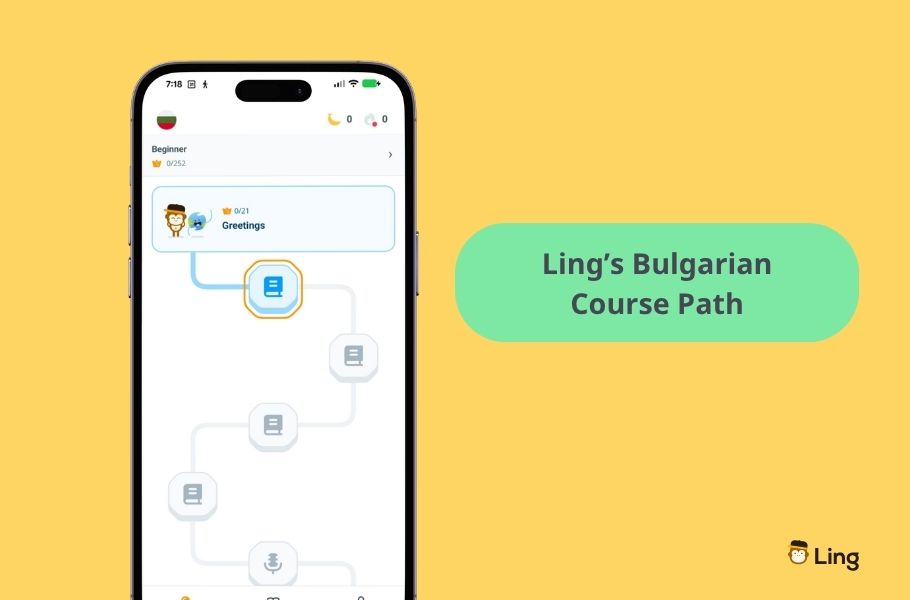
The Best Alternative To Babbel For Learning Bulgarian: The Ling App
If you’re looking for a way to learn Bulgarian after discovering there’s no Bulgarian on Babbel, Ling gives you a dedicated course with practical tools for building real communication skills. Here’s what you can expect:
- Game-like exercises make practicing Bulgarian vocabulary and phrases more enjoyable while helping you stay consistent with your learning.
- Native-speaker audio allows you to hear Bulgarian as it is naturally spoken, making it easier to work on your listening skills and pronunciation from the beginning.
- The dialogs put Bulgarian into everyday situations, giving you a chance to read and hear conversations instead of only memorizing individual words.
- Speaking exercises give you opportunities to practice saying Bulgarian words and sentences and build confidence using the language out loud.
And the best part? You can try Ling with a 7-day free trial and see whether it fits the way you like to learn.
Who Is The Ling App Best For?
Ling is a good choice if you want to learn Bulgarian through a mix of structured lessons, interactive exercises, and real-life conversation practice. It can be especially useful if you are a:
- Complete beginner who is starting Bulgarian from scratch and needs help with the Cyrillic alphabet, basic vocabulary, and everyday phrases.
- Traveler who wants to learn useful Bulgarian phrases before visiting Bulgaria, from ordering food to asking for directions and chatting with locals.
- Language enthusiast who enjoys learning less commonly taught languages and wants to add Bulgarian to their language-learning journey.
- Heritage learner who seeks to reconnect with Bulgarian family, culture, or heritage and build confidence using the language.
- Partner or friend of a Bulgarian speaker who wants to learn their loved one’s language and make everyday conversations more meaningful.
- Busy learner who prefers short, interactive lessons that can fit into a daily routine rather than long study sessions
Why Serious Learners Choose Ling?
Ling is not just an option because there is no Bulgarian on Babbel. It’s the best option for learning Bulgarian because the app has an entire Bulgarian course with everything you need to build your skills from scratch.
Ling has 10M+ downloads and is rated 4.7/5 by learners across the Play Store and App Store for its gamified approach and intuitive interface, so it has clearly earned the trust of language learners across the globe. Here’s what some of them have to say:
“I love that it offers such a wide variety of languages. I really liked this app from the very beginning, and I feel it’s a great option if you want to learn a language. What I like most is that the lessons are short, so they never feel tiring or boring.”
-Yaijara Xiomara Garcia Betancort
“I like that it gets straight to the point, and you can repeat a lesson over and over until you understand it. I also love that everything is written in your language, with the pronunciation and spelling shown in the original language. You don’t start with random lessons that don’t seem to get you anywhere, like with its most famous competitor, Duolingo.”
-llgocat
What You’ll Achieve In Your First Week Using Ling
With a 7-day free trial, you can explore Ling’s premium features at no cost. So, what can you actually learn in just one week? Let’s find out.
| Day | Achievement | Examples From Ling Bulgarian Course |
|---|---|---|
| Day 1 | Learn greetings and introductions | Hello – Zdraveyte (Здравейте) |
| Day 2 | Introduce yourself and ask simple questions | What’s your name? – Kak se kazvate? (Как се казвате?) |
| Day 3 | Master numbers | One coffee, please. – Edno kafe, molya. (Едно кафе, моля.) |
| Day 4 | Learn useful travel phrases | Where is the bathroom? – Kăde e banyata? (Къде е банята?) |
| Day 5 | Learn words and phrases for common activities | I’m going to work. – Oтивam na rabota. (Отивам на работа.) |
| Day 6 | Explore food and dining vocabulary | I’d like a banitsa, please. – Iskam edna banitsa, molya. (Искам една баница, моля.) |
| Day 7 | Learn common expressions | How are you? – Kak si? (Как си?) |
FAQs: No Bulgarian On Babbel
Is There Bulgarian On Babbel?
No. Bulgarian is not currently available as a course on Babbel. If you want to learn Bulgarian through a structured language-learning app, Ling offers a complete Bulgarian course with lessons covering vocabulary, pronunciation, reading, and conversations.
Why Is Bulgarian Not Available On Babbel?
Babbel has not publicly confirmed a specific reason why Bulgarian is missing from its language catalog. One possible explanation is the time and resources needed to create a complete course for a new language, including lessons, audio, grammar explanations, exercises, and quality checks.
What Is The Best Alternative To Babbel For Learning Bulgarian?
The Ling app is the best alternative if your goal is to learn Bulgarian. Unlike Babbel, Ling has a dedicated Bulgarian course with interactive exercises, native-speaker audio, and dialogue activities.
Is The Ling App Good For Learning Bulgarian?
Yes. Ling is a good choice for learning Bulgarian because it lets you practice the language from several angles instead of focusing only on vocabulary.
Can I Learn Bulgarian By Myself?
Yes, you can learn Bulgarian on your own with the right resources. A structured app such as Ling can give you a starting point for vocabulary, reading, listening, and speaking, while additional exposure to Bulgarian through music, videos, books, and conversations can help you progress further.
How Long Does It Take To Learn Bulgarian?
There is no fixed timeline because it depends on your goals, how often you study, and whether you already know another Slavic language. With consistent daily practice, you can start building useful vocabulary and handling simple conversations relatively quickly, but reaching an advanced level takes much longer.
Start Learning Bulgarian With Ling
If you searched for a Bulgarian course on Babbel and did not find it, that doesn’t mean you have to wait for Babbel to add it. Ling has an in-depth Bulgarian course with everything you need to build your skills and become conversational.
The annual plan currently includes a 7-day free trial, so you can explore the app and try its full range of learning features.
There is no reason to keep waiting. Download the Ling app and start learning Bulgarian immediately.