Imagine a world without insects, or mga insekto in Tagalog. No more honey bees to pollinate our crops, no more butterflies to brighten up our gardens, and no more ants to remind us to clean up our mess. It’s hard to fathom, right?
As much as we may find insects pesky at times, they play an incredibly important role in our ecosystems. And the Philippines has a rich diversity of insects, each with its own name in Tagalog.
As someone who grew up fascinated by these little creatures, I’m excited to take you on a journey to explore the common names of insects in Tagalog and what they mean to Philippine culture and ecosystems.
Learning Tagalog is more than memorizing words
Explore more →
Names Of Insects In Tagalog In The Philippines
Now, let me introduce you to some of the most exciting and unique names of insects in Tagalog you might encounter in the country, along with some information about them.
Anay (Termite)
Pronunciation: Ah-nay
Termites, also known as anay, can cause significant damage to homes and other wooden structures. They have a caste system with different roles and often build mud tunnels to protect themselves.
Bubuyog (Bee)
Pronunciation: Bu-bu-yog
Bubuyog or bees play an essential role in pollination and producing honey. They live in colonies with a well-defined caste system and have furry bodies covered in tiny hairs.
Gagamba (Spider)
Pronunciation: Gah-gam-ba
Spiders are eight-legged beings that spin webs and immobilize their prey with venomous bites. They come in various shapes and sizes, and some species can change color to blend in with their surroundings. Although they are not technically insects, we thought we should include them in this list.
Ipis (Cockroach)
Pronunciation: Ih-pis
Cockroaches are typical household pests that can be difficult to get rid of. They have a flat, oval-shaped body and are often found in areas where food and moisture are present.
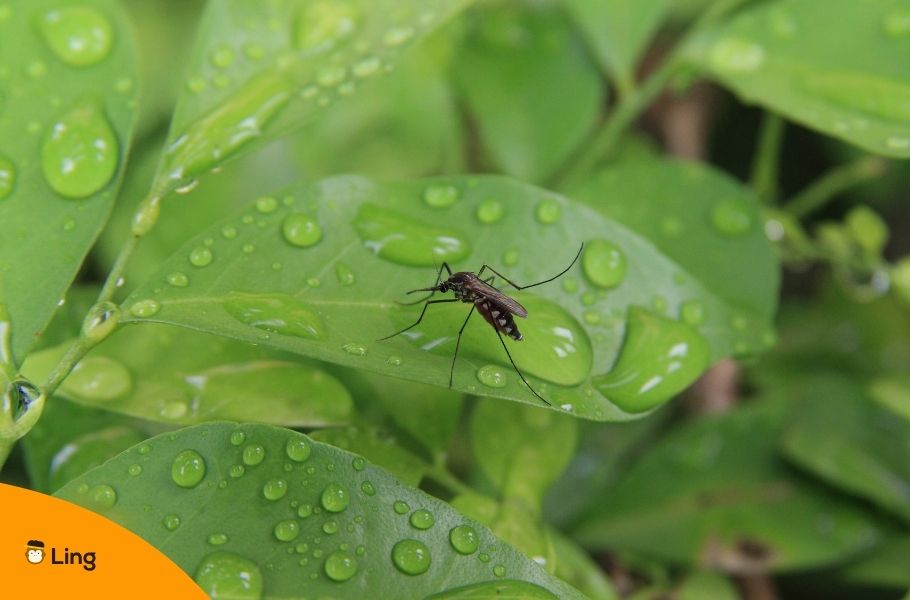
Lamok (Mosquito)
Pronunciation: Lah-mok
Lamok or mosquitoes are known for transmitting diseases and are attracted to humans by the carbon dioxide we exhale. They have slender bodies and long, thin legs.
Langaw (Housefly)
Pronunciation: Lah-ngaw
Flies are attracted to food and other organic matter and have large compound eyes that help them avoid predators. They have a buzzing sound and are often found in rooms of Filipino houses and other indoor and outdoor spaces.
Langgam (Ant)
Pronunciation: Lang-gam
Ants or langgam in Tagalog are social insects that work together to forage for food and protect their colony. They have narrow waists and communicate through pheromones.
Paru-Paro (Butterfly)
Pronunciation: Pah-ru -pah-ro
Butterflies play an important role in pollination and have long, thin bodies and large, delicate wings. They undergo a complete metamorphosis from egg to caterpillar to chrysalis to adult butterfly.
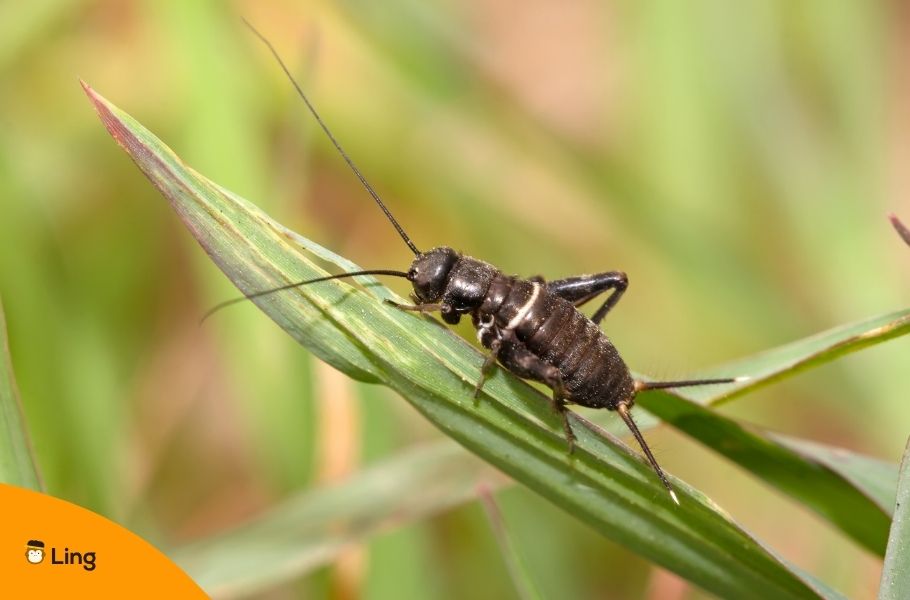
Kuliglig (Cricket)
Pronunciation: Kuh-lig-lig
Crickets are small, jumping insects that produce a distinctive chirping sound. They have long, thin bodies and powerful hind legs that allow them to jump up to several times their body length.
Good to know: kuliglig is also the Tagalog word for cicada, so the same name covers both of these noisy insects, as the Wiktionary entry for kuliglig shows.
Tipaklong (Grasshopper)
Pronunciation: Tih-pahk-long
Grasshoppers are jumping insects that eat large quantities of vegetation, which makes them an important food source for many animals. They have long, slender bodies and large hind legs and can jump up to 20 times their body length.
Salagubang (Beetle)
Pronunciation: Sah-lah-gu-bang
Beetles have a hard exoskeleton that protects them from predators. They play an essential role in pollination and pest control and have a pair of wings covered by a protective shell.
Samba-Samba (Praying Mantis)
Pronunciation: Sahm-ba sahm-bah
Praying mantises are predatory insects with long, powerful front legs used to capture and hold their prey. They also have a unique mating behavior, with the female often consuming the male after mating.
Surot (Bed Bug)
Pronunciation: Sooh-rot
Bed bugs are tiny, annoying, parasitic insects that feed on human and animal blood. They have flat, oval-shaped bodies and are often found in Filipino homes and cheap hotels in the Philippines.
Brief History Of Tagalog Insect Names
The history of Tagalog insect names goes way back, all the way to ancient times when Filipinos were already living alongside these little critters.
Some of these names are part of everyday Tagalog, and a few are worth a closer look:
- Tutubi is the Tagalog word for dragonfly.
- Ipis, the cockroach, is famous for surviving in the dirtiest environments. Talk about resilience, am I right?
- Salagubang is the Tagalog word for beetle, and it also shows up in dishes like adobong salagubang.
It’s amazing how these names have evolved and adapted to cultural influences over time.
Studying the history of Tagalog insect names is not only fascinating, but it also gives us a glimpse into the diverse and rich cultural heritage of our language.
Diversity And Characteristics Of Insects In The Philippines
Did you know that the Philippines is home to over 20,000 known species of insects? Yup, you read that right: twenty thousand!
And the best part? Many of these bugs can only be found in this part of the world, which makes this archipelago a treasure trove of creepy crawlies for insect enthusiasts and scientists alike. Insects are found not only in many plants but also in flowers like the Philippine Sampaguita.
Some of the most common insects in the Philippines include beetles, butterflies, flies, bees, wasps, ants, grasshoppers, cockroaches, termites, and mosquitoes. You name it, they got it, from the tiniest buzzing bee to the peskiest bloodsucking mosquito.
Despite their vast numbers and appearance differences, insects share a lot in common:
- They all have three body segments (the head, thorax, and abdomen) and six legs.
- Most insects have one or two pairs of wings.
- Their compound eyes allow them to see in different directions at once.
- Many insects go through a metamorphosis as they develop from egg to adult, transforming from one form to another.

Traditional Uses Of Insects In Philippine Culture
In the Philippines, insects have been an important part of the culture for a long time. They’ve been used for all sorts of things, from eating to treating illnesses and even in superstitions and beliefs. Let’s have a closer look at some of them:
Insects As Food
You may be surprised to know that Pinoys have been chowing down on insects for ages. Yes, that’s true! They use bugs like it’s no biggie in traditional Tagalog dishes passed down through generations.
Here are a few dishes worth knowing:
- Adobong salagubang is a beetle cooked in vinegar and soy sauce that Filipino people from Nueva Ecija love.
- Kamaru is fried mole crickets and a must-try for those who like their food to have a bit of a crunch.
- Kinilaw na tamilok is made from shipworms found in mangrove trees. Strictly speaking, tamilok is not an insect at all: shipworms are marine bivalve mollusks, closer to clams. The word kinilaw comes from the Tagalog word hilaw, which means “raw,” but the dish isn’t totally raw: it’s soaked in vinegar first so the acid cooks it.
But it’s not just about satisfying a craving for a crunchy snack! Crickets and grasshoppers are insects rich in protein, vitamins, and minerals. In fact, they’re known to have more protein per gram than beef or chicken. Interesting, right?
Insects As Traditional Medicine
Moving on, in the Philippines, insects have been used to treat various health problems for centuries.
For example, the Agusan Manobo tribe from Agusan del Sur province uses different parts of plants and insects to treat ailments like animal (snake) and insect bites, skin infections, and even tuberculosis.
Entomotherapy, the practice of using insects for medical purposes, has its roots in traditional medicine. It’s believed that compounds found in certain insects can have therapeutic effects, like reducing inflammation or relieving pain.
Superstitions And Beliefs
Finally, let’s talk about superstitions and beliefs. In Philippine culture, insects are often associated with luck or omens.
- Praying mantis: if you see one, it’s considered a sign of good fortune. The praying mantis is like a symbol of balance, patience, and focus.
- Cricket: killing one is believed to bring bad luck, because crickets are associated with abundance, prosperity, and good luck. So if you accidentally squash one, be sure to apologize to its spirit to avoid inviting any negative energy into your life.
And get this: some insects are even believed to have special powers. The anting-anting is a talisman made from the exoskeletons of beetles or the wings of butterflies. Wearing one is thought to give you special abilities or protection, depending on the type of insect used. Cool, right?
More Insects Names In Tagalog
In the word list below, you’ll find more names of insects in Tagalog with their pronunciations. We’ve got common ones like lice and interesting ones like gadflies. Now that you have a preview of how Filipinos have different names for objects, you should explore more about this language. If you’re looking for an app to practice with, our guide to Tagalog app alternatives to Duolingo compares a few options.
Here they are:
| English | Tagalog | Pronunciation | Sound |
|---|---|---|---|
| Cicada | Kuliglig | kuh-LIG-lig | |
| Firefly | Alitaptap | ah-lee-TAHP-tap | |
| Flea | Pulgas | POOL-gahs | |
| Gadfly | Bangaw | BAH-nga-aw | |
| Lice | Kuto | KOO-toh | |
| Locust | Balang | bah-LAHNG | |
| Wasp | Putakte | POOH-tak-teh | |
| Moth | Gamugamo | gah-moo-GAH-moo | |
| Tick | Garapata | gah-RAH-pa-tah |
How Do You Say Insects In Tagalog?
The Tagalog word for insects is mga insekto.
If you want to ask someone the name of an insect in Tagalog, you can say this sentence, Ano ang pangalan ng insektong iyan/ito? /
How Do You Say Bug In Tagalog?
There’s no separate everyday word for bug: most people simply say insekto, or name the bug itself, like surot for a bed bug or ipis for a cockroach. You may also hear kulisap, which means insect, especially a tiny one.
More Sentences To Practice For Names Of Insects In Tagalog
| English | Tagalog | Sound |
|---|---|---|
| Are there many mosquitos in the province? | Marami bang mga lamok sa probinsya? | |
| The dog needs to be bathed before it gets some ticks | Kailangan nang paliguan ang aso bago pa ito magkagarapata | |
| Fireflies are my favorite | Paborito ko ang mga alitaptap | |
| Be careful because you might step into ant hills | Magingat ka at baka makatapak ka ng mga punso ng langgam | |
| Is this insect’s name hard to say? | Mahirap bang bigkasin ang pangalan ng insektong ito? |
FAQs About Insects In The Philippines
What Is The Most Common Bug In The Philippines?
One of the most common bugs in the Philippines is the ipis (cockroach). They’re found in all types of environments but thrive in warm, humid places with food sources. Other frequently seen insects include langgam (ants), lamok (mosquitoes), and gamu-gamo (moths).
What Is The Bug That Smells Bad In The Philippines?
One notoriously smelly bug in the Philippines is the atangya or Rice Black Bug (RBB). These pests are a significant problem for rice farmers, producing an unpleasant odor and damaging crops.
Are There Kissing Bugs In The Philippines?
While kissing bugs, known for transmitting Chagas disease, are not endemic to the Philippines, there have been reports of the species Triatoma rubrofasciata being found in Quezon City. These insects typically live within human dwellings and are active at night.
Ready To Learn More Tagalog With Ling?
Now you know these common names of insects in Tagalog, you can name all the creepy crawlies you might come across in the Philippines! Whether you’re a bug enthusiast or just looking to impress your friends, knowing your langgam from your salagubang is always handy.
With flashcards, native speaker audio, quick mini-games and Dialog for real conversation practice, Ling keeps learning simple and fun. Start learning Tagalog today, and give those little critters some love too!