Are you navigating the maze of Korean excuses? It’s like deciphering a K-drama plot without subtitles. But don’t worry! We’re here to provide clear insights into the world of Korean excuses. We will organize various expressions for the typical Korean excuse, “I tried to do it, but…(아니.. 하려고 했는데)” according to different situations. Ready to explore? Let’s dive in!
Table of Contents
Korean Excuses: What Are They?
When you hear “excuse” in English, you likely think of a simple justification. In Korean, though, it translates to Byeon-Myeong(변명) and packs a bit more punch. While it’s used in scenarios mirroring its English sibling – think admitting mistakes or clarifying misunderstandings – its cultural undertones are richer.
I want to learn even more languages with Ling!
Download now!
Dive deeper into Korean excuses in social norms, and you’ll see excuses drenched in layers of respect, humility, and a genuine concern for others. Enter the concept of “saving face,” a ritual of upholding one’s esteem and societal standing.
In the Korean social playbook, offering an excuse isn’t merely a defensive play. It’s a well-executed pass that acknowledges the current predicament, respects the receiving party, and ensures that, at the end of the interaction, everyone still has their “face” intact. So, it’s less about self-defense and more about harmonious coexistence.
What Are The Common Korean Excuses?
Ever been hit with a ‘Sorry, I can’t because…’ in Korean and wondered if these Korean excuses are a common go-to? Just like you’d say “My dog ate my homework” in school, cultures around the world have their own favorite set of excuses. But here’s the twist: these excuses, in the veil of simplicity, spill the beans about the culture’s deep-rooted values and ethos. So, put on your detective cap as we decode Korea’s popular escape routes, including these Korean excuses, sprinkled with a dash of humor and heaps of insights!
1. 버스를 놓쳤어요 (beoseu-reul nochyeosseoyo) – “I missed the bus.”
In Korea, not being on time isn’t just a minor hiccup; it’s almost a crime! Reflecting Korea’s stress on respecting another’s time, this excuse shines when someone’s a tad bit late. Add in the ever-bustling streets of cities like Seoul, and you’ve got yourself a perfect ‘get out of jail’ card. And if the bus excuse gets stale? There’s always the “The traffic was jammed.” card to play.
2. 다른 약속이 있어요 (dareun yaksogi isseoyo) – “I have another appointment.”
Avoiding confrontation, Korean style! Rather than directly saying “Nah, not interested,” this detour of an excuse is all about keeping the peace and ensuring that feelings remain unscathed.

3. 너무 바빴어요 (neomu bappasseoyo) – “I was swamped.”
Korea’s fast-paced life has most people spinning multiple plates. So, when someone bows out citing their packed schedule, it’s not just an excuse but a nod to the nation’s bustling, work-driven ethos.
4. 배가 불러요 (baega bulleoyo) – “I’m stuffed.”
Nothing says bonding in Korea like sharing a meal. But if you’re looking to dodge that extra serving, claiming your full stomach is your trusty ally. It’s the gentle way of saying “Thanks, but no thanks.”
5. 잊어버렸어요! (ij-eobeoryeosseoyo) – “I forgot!”
A universal brain-fog moment, admitting you forgot in Korea is also a subtle ask for some compassion. ‘Hey, I’m human too!’ – is what these Korean excuses softly whisper. In a society that values harmony and understanding, acknowledging forgetfulness can bridge communication gaps and foster empathy. It’s a reminder that everyone has their off days, and sometimes, a little kindness goes a long way
6. 몸이 좋지 않아요 (momi joji anhayo) – “I’m not feeling well.”
Health is a frequently cited reason for various situations in Korean culture. It ties back to the Confucian values of self-care and respect for the body. Using health as an excuse signals to others that the individual is not neglecting their duty or invitation lightly but is genuinely concerned about their well-being.
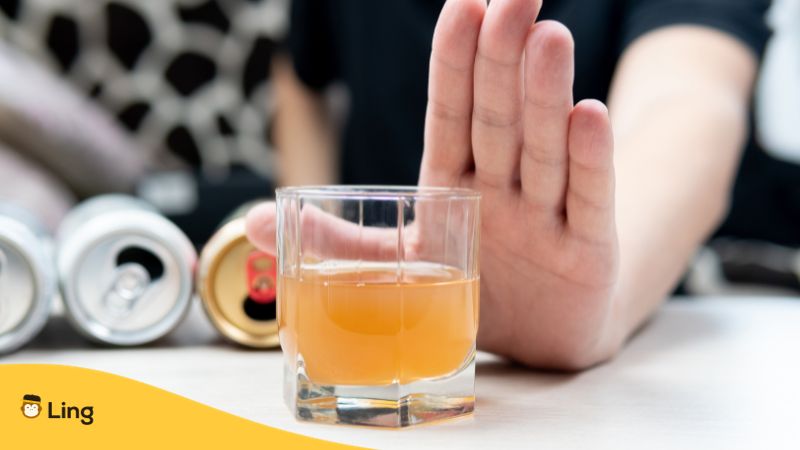
7. 술을 못 마셔요 (sul-eul mot masyeoyo) – “I can’t drink alcohol.”
With Korea’s buzzing drinking scenes, not everyone’s up for a shot (or ten). This excuse? It’s the smooth way of saying “I’ll pass” without breaking the party spirit. If you’re curious about Korean drinking culture, feel free to check this out.”
8. 피곤해요 (pigonghaeyo) – “I’m tired.”
With its demanding work culture, many Koreans find themselves exhausted. Expressing fatigue is a genuine explanation for needing to decline certain activities, especially after-work gatherings. These Korean excuses underscore the importance Koreans place on self-care amidst their busy lives
9. 가족과의 약속이 있어요 (gajokgwa-ui yaksogi isseoyo) – “I have plans with my family.”
Family plays a pivotal role in Korean culture. Using this excuse highlights one’s responsibility and commitment to familial bonds. It’s a reminder of the Confucian values deeply rooted in Korean society, emphasizing respect and duty towards family.
10. 오늘 기분이 별로예요 (oneul gibuni byeollo-yeoyo) – “I’m not in the mood today.”
Mental and emotional well-being is gaining increasing importance in modern Korean society. Using mood as a reason showcases an individual’s need for self-reflection and personal space, a growing trend in Korea’s evolving social landscape.
11. 날씨가 안 좋아서 (nalssiga an joh-aseo) – “The weather isn’t good.”
Korea experiences diverse weather conditions, from scorching summers to frigid winters. These Korean excuses often pop up when the weather acts as a deterrent, underscoring the practicality ingrained in the Korean mindset
Essential Vocabulary for Korean Excuses
Have you checked out the famous Korean excuses? Then it’s time to learn about the representative vocabulary related to them. Please check the table below.
| English | Korean | Transcription | Sound |
|---|---|---|---|
| I’m sorry | 미안해 | Mianhae | |
| I’m busy | 바빠 | Bappa | |
| I’m late | 늦었어 | Neujeosseo | |
| I’m tired | 피곤해 | Pigonhae | |
| I forgot | 까먹었어 | Kkameogeosseo | |
| The traffic was bad | 차가 막혔어 | Chaga makhyeosseo | |
| I’m sick | 아파 | Apa | |
| There was an accident | 사고가 났어 | Sagoga natseo | |
| I had a meeting | 회의가 있어서 | Hoeuiga isseoseo | |
| I overslept | 늦잠 잤어 | Neujjam jasseo |
What Are Common FAQs About Korean Excuses?
1. What Cultural Factors Shape Korean Excuses?
Korean culture places a strong emphasis on harmony, respect, and relationships. Excuses are often crafted to avoid direct confrontation or discomfort. This cultural context influences how Koreans communicate their needs and boundaries, making it essential for foreigners to understand these subtleties to navigate social interactions effectively.
2. Do Excuses Differ In Formal Vs. Informal Settings?
Yes, the way Korean excuses are expressed in Korea can vary between formal and informal settings. In professional environments, Koreans may use more polite language and formal phrases. In casual settings, friends might use more relaxed language. Adapting communication style according to the context is crucial for effective interaction.
3. Are There Regional Variations In Korean Excuses?
Yes, regional variations do exist in how excuses are expressed in Korea. For instance, individuals from Busan may use different colloquial phrases compared to those from Seoul. Understanding these regional differences can enhance communication and foster better relationships with locals across various areas of Korea.
And Are You Craving More?
Korean excuses, much like those in any language, are more than just words and phrases to sidestep obligations or communicate personal boundaries. They are a reflection of a society’s values, culture, and history. Every “I can’t” or “Sorry, but…” gives us a sneak peek into the vibrant dance between Korea’s time-honored traditions and its bustling modern-day norms.
Now, if this tease into the Korean world has got your curiosity antennas wiggling, there’s a golden ticket waiting for you. Check out the Ling app. Traditional books and online lectures are great, of course, but start with the smartphone you always carry with you. You will definitely become familiar with Korean more easily and quickly.
That’s it for now. If you’re curious about other aspects of the Korean language and culture, such as Korean food, Korean dramas, or some useful tips for your upcoming Korean trip, please check those URLs as well.
Ready, set, 한글 (Hangul)!