



Most people assume there’s some limit on how many languages a person can learn, maybe three or four before it all gets more complicated. That’s not really true. The answer to the question “how many languages can a person learn?” is actually very nuanced.
Several factors need to be taken into account when it comes to foreign language learning. And it is even more true when learning multiple languages.
In this article, we’ll try to answer this question and help you understand what really counts.
I want to learn even more languages with Ling!
Download now!
Key Takeaways
- There’s no scientifically confirmed limit on how many languages a person can learn. The real limitations generally come from time, exposure and motivation.
- Most regular learners can realistically reach fluency in 2 to 4 languages in their lives, although some learners can go much higher.
- Being “fluent” in a language doesn’t only represent one skill. Active (speaking, writing) and passive (listening, reading) fluency develop individually, and most polyglots and other multilingual individuals can be stronger in one than the other, depending on the language.
- Every language that stops being used erodes with time. As such, maintaining a language alive in the brain is much more difficult than learning a new one.
How Many Languages Can A Person Learn And Realistically Be Fluent In?
It is commonly believed that most people can maintain strong fluency in 2 to 4 languages at a time, with polyglots being able to reach a much higher number. One example is Ioannis Ikonomou, a European Commission translator who reportedly speaks 32 languages, 16 of them fluently. In other words, he’s fully fluent in only half of them, with the rest at a reading or translation level.
You might see this pattern through almost every famous polyglot: They speak the languages they learned at different skill levels, and they are not fluent in all of them.
What Does Being Fluent In A Language Mean?
Fluency splits into two skills that don’t develop at the same pace. Active fluency is your ability to speak and write, and to generate language on demand. Passive fluency, on the other hand, is your ability to understand spoken and written language without producing it yourself.
You’ve probably felt this while learning languages: You can understand the language you learn better than you can speak it.
This is why most people who speak more than one language are generally passively fluent in half of the languages they speak, and do not speak all these languages fluently.
How Many Languages Can You Learn In A Lifetime?
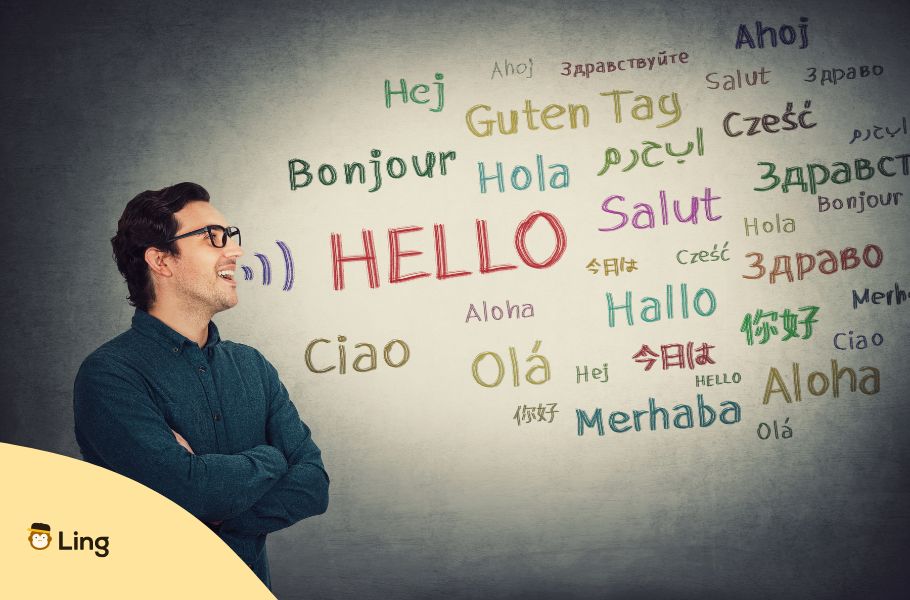
Over a full lifetime, dedicated and determined learners can learn 6 to 12 languages and reach an acceptable conversational level, depending on how closely related to their native languages those languages are and how much time they need to split between learning new ones and maintaining old ones.
According to the U.S. Foreign Service Institute (FSI), a Category I language like Spanish or French requires roughly 600 to 750 class hours to reach professional proficiency, while a Category IV language like Arabic, Mandarin, or Japanese requires much more, closer to 2,200 hours.
From a realistic point of view, one thus needs 10 hours a week, around 60 to 75 weeks, to learn an “easy language”, or nearly 4 years for a harder one.
What Determines How Many Languages You Can Learn?
Language learning is a discipline affected by many factors such as:
- Age: Younger learners often pick up their native languages more easily, while adults tend to learn grammar faster thanks to stronger study skills and metalinguistic awareness.
- Motivation: A language tied to family, career, or a specific goal becomes much easier to learn.
- Exposure: Immersion in the language changes everything. Ten hours of practice a week can never replace living somewhere the language is spoken daily.
- Language similarity: Related languages share vocabulary and structure, which can significantly reduce the time spent learning the language.
To sum up, age, motivation, level of exposure, and familiarity with the language will have a crucial role in determining how many languages a person can learn.
How To Keep A Language That You Learned?
Holding onto a language you already speak takes far less time than learning it, of course. But this doesn’t mean you can be careless with it.
Experienced polyglots and educators suggest that you need to have at least 1 to 3 hours a week per language to keep it from eroding.
And as cliché as it may sound, practice makes perfect.
FAQ – How Many Languages Can A Person Learn?
How Many Languages Can You Learn In A Lifetime?
There’s no fixed number, but most learners can realistically acquire 6 to 12 languages if they maintain a steady learning schedule.
How Many Languages Can A Person Realistically Be Fluent In?
Most people can be fluent in 2 to 4 languages. Going beyond this number is generally rarer, as some languages spoken and learned have different characteristics that are not as easily acquired as in other languages.
Is It Easy To Learn Multiple Languages?
Learning several languages at once it definitely not an easy thing. One needs to be extremely motivated to be able to speak fluently and to avoid giving up. Moreover, learning a language also has to do with being regularly exposed to the language.
Start Your Polyglot’s Journey With Ling!
Forget about chasing numbers! You don’t need to cram in as many languages as possible. The best and most useful thing you can do is to pick a new language, stick with it long enough to use it, and let your list grow only once the first one feels solid.
So, give yourself a small, specific goal through which you can order food, introduce yourself, and follow a simple conversation. The Ling app makes this possible with short daily lessons and native-speaker audio across 70+ languages.
So, quicky join us to start your polyglot journey with us. Download the Ling app and start learning more languages today:

















































































