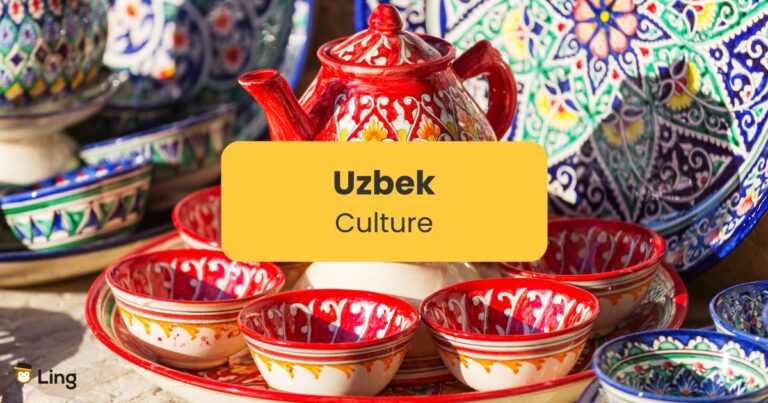
If you’re planning to travel to Uzbekistan, don’t forget to learn some basic Uzbek phrases, especially how to say hello and ask “How are you?” as you’ll use them the most. Although these phrases are simple, it feels good to hear them in your native language, doesn’t it? That’s why learning at least these two phrases in the local language is recommended and goes a long way.
But wait! This article won’t just teach you how to ask ‘how are you?‘ in Uzbek. You’ll also get a cheat sheet of other travel-related Uzbek phrases to help you master the basics before you arrive in any Uzbek-speaking area.
Let’s begin!
I want to learn even more languages with Ling!
Download now!
How Do You Say How Are You In Uzbek?
Imagine wandering the streets of Uzbekistan with a backpack on your shoulders, looking around cluelessly and wondering where to start. This is exactly where knowing how to say ‘how are you?’ in Uzbek, along with other related greetings, will help the most. If you know some travel-related Uzbek phrases, you can step forward to connect with the locals instead of just standing and staring at everything with wide eyes.
In fact, it isn’t even difficult to ask ‘how are you?’ in Uzbek. Just say Kah-lah-Yee-siz (Qalaysiz). This is the most polite and formal way of asking about someone’s well-being, so you can use it when talking to strangers or elders.
However, if you are communicating with someone your age, a sibling, or a close friend, say Kah-lah-Yee-sahn (Qalaysan). This is a casual and friendly way of asking ‘How are you?’ in Uzbek.
Locals also use another, sweeter way to ask how are you in Uzbek, which is yakh-shi-mee-siz (yaxshimisiz). Its literal meaning is ‘Are you well?’. Some people even shorten this phrase and say yakh-shi-mee (yaxshimi) when asking about someone’s well-being.
See? With just one phrase, you can ask about people’s health and how they are doing.
How To Respond To How Are You In Uzbek?
Chances are, the locals will definitely reply to your ‘How are you?’ and will also ask you back with the phrase ‘And you?’ siz-chee (Sizchi). If you find yourself in this situation, how should you respond?
Don’t worry, just say yakh-shi, rahh-mat (yaxshi, rahmat), which means I am good, thank you. You can also respond to ‘how are you’ in Uzbek as:
- Yo-mon eh-mas (Yomon emas), which means not bad
- Ah-joy-ib (Ajoyib), which means great
So, whenever anyone asks you about your well-being, you can use any of these phrases to respond to how are you in Uzbek. Easy, right?
Other Must-Know Travel-Friendly Uzbek Phrases
Now that you have learned to ask ‘how are you’ in Uzbek and its response, let’s look at some more useful phrases that you might need when traveling to Uzbekistan:
| English | Uzbek | Pronunciation |
|---|---|---|
| Hello / Peace be upon you | Assalomu Alaykum (formal) Salom (casual) | ah-sah-loh-moo ah-lay-koomSah-lohm |
| Good evening | Hayrli Kech | Hahyr-lee kech |
| Thank you | Rahmat | rahh-mat |
| Please | Iltimos | il-tee-mohs |
| Excuse me | Kechirasiz / Uzr | keh-chee-rah-siz / oozr |
| Goodbye | Xayr | Khayr |
| See you later | Ko’rishguncha | ko-rish-goon-chah |
| Where is the train station? | Vokzal qayerda? | vok-zahl kah-yer-dah? |
| Let’s have tea together | Keling, birga choy ichamiz. | keh-ling beer-gah choy ee-cha-meez |
| How much is this? | Bu nech pul? | boo nech pool |
| Yes | Ha | hah |
| No | Yo’q | yohk |
| I need help! | Menga yordam kerak | men-gah yor-dahm keh-rahk |
| Where can I find a doctor? | qayerdan shifokor topsam bo’ladi | kah-yer-dahn shif-oh-kor-top-sahm boh-lah-dee |
| Please stop here | Iltimos, bu yerda to‘xtang | il-tee-mos, boo yerdah tokh-tang |
| Call the police | Militsiyani chaqiring | mee-leet-see-yah-nee cha-kee-ring |
| Where is the toilet? | Hojatxona qayerda | Hoh-jat-kho-nah kah-yer-dah |
| I want a table for two. | Ikki kishilik stol kerak | ikki kee-shee-leek stol keh-rak |
| Do you speak English? | Inglizcha gaplashasizmi | ing-leez-cha gap-ee-rah-siz-mee |
Tips To Say ‘How Are You’ In Uzbek In The Right Way
Here are some cultural tips to ensure you appear polite and respectful when meeting Uzbek people:
1. Choose The Right Words
Showing respect through words is the main purpose of greetings. So, when asking how are you in Uzbek, choose the correct form. When speaking to strangers, elders, or shop vendors, use kah-lah-yee-siz (Qalaysiz), which is polite and formal. When talking to peers, siblings, or close friends, use kah-lah-yee-san (Qalaysan), which is casual and friendly. A small change in the word shifts the tone from formal to informal.
2. Timing Matters
Don’t rush directly and ask ‘how are you’ in Uzbek when meeting someone. Always initiate your conversations with a simple hello, and you know the standard Islamic way of saying hello in Uzbek is ah-sah-loh-moo ah-lay-koom (AssaAssalomu Alaykum).
3. Pair Your Greeting With A Kind Gesture
Body language plays a significant role in communication, so try to adopt the behavior of the locals. For instance, Uzbek women smile and give a slight nod when talking, while Uzbek men put their hand on their chest when greeting.
4. Smile And Respond Confidently
Always greet and communicate with a smiling face. Even if you aren’t fluent in the language, a simple greeting with a smile can go a long way.
5. Practice Consistently For Accurate Pronunciation
Practice is the key to achieving fluency, so make an effort to speak Uzbek often. You can either do this in front of a mirror or use language apps like the Ling app, which even offers a dialog feature. It works as a private space where you can listen to native Uzbek speakers and practice speaking like them.
Why Is It Important For Travelers To Learn To Say ‘How Are You’ In Uzbek?
As you know, Uzbekistan was one of the Silk Road cities, and fortunately, Uzbekistan remains a vital hub for several trade routes. Plus, thousands of people visit Uzbekistan for job hunting, business purposes, or tourism.
Speaking of language, Uzbek is the official language of Uzbekistan and now uses the Latin alphabet. However, don’t be surprised if you see Uzbek written in Cyrillic script—it’s the old writing system. Uzbek belongs to the Turkic language family, so it is very similar to other Turkic languages such as Kazakh and Turkish. It also contains words borrowed from Persian, Arabic, and Russian. Besides Uzbekistan, Uzbek is widely spoken in Russia, Kyrgyzstan, Turkey, and other parts of Central Asia. Considering its importance, I’m surprised there’s still no Uzbek course on Duolingo.
If you are planning to visit Uzbekistan or other Uzbek-speaking regions, you will hear the language often. Learning basic Uzbek phrases, especially polite words and greetings, can help you bridge the communication gap and make exploring the country much easier. One such greeting is how are you in Uzbek. Luckily, you’ve already learned it, and I’m sure you won’t regret memorizing it.
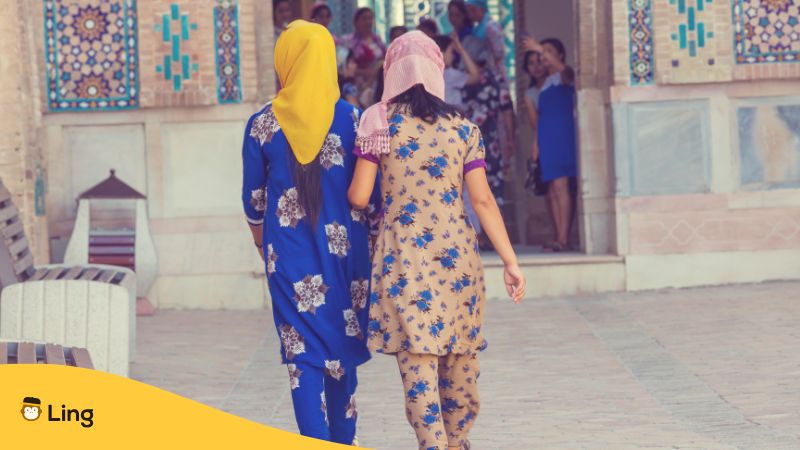
Frequently Asked Questions About Saying ‘How Are You’ In Uzbek
How Do I Say How Are You All In Uzbek When Greeting A Group?
You can say 'How are you all' in Uzbek as Qalaysizlar, which is pronounced as Kah-lah-Yee-siz-lar. It is a formal way of greeting when talking to a group or family members.
What Is An Easy Way To Say ‘Long Time No See, How Are You’ In Uzbek?
If you meet a long-lost friend and want to say long time no see, how are you in Uzbek, you can say An-cha-dan beh-ree ko-rish-ma-dik, kah-lah-yee-siz (Anchadan beri ko‘rishmadik, qalaysiz). Let’s break down this phrase to understand it easily:
An-chaa (Ancha) means a long time
Dan beh-ree (Dan beri) means for a while
ko-rish-ma-dik (ko‘rishmadik) means we haven’t met or seen
kah-lah-yee-siz (Qalaysiz) means how are you
Can I Greet Locals In English Instead Of Uzbek In Uzbekistan?
Yes, you can greet Uzbek people in English, as it is becoming increasingly popular among the young generation, business personnel, and tourist guides, especially in Tashkent, Samarkand, and Bukhara. However, you might still struggle to communicate with the locals in English, as the English speakers are relatively rare in most areas of Uzbekistan, particularly in rural areas.
Comparatively, Russian, Tajik, and Uzbek are the most commonly spoken languages in the region. Therefore, I would recommend that you master at least the basics of either Russian or Uzbek. It will greatly help you ask for directions, inquire about the cost from taxi drivers, or order from the menu at any local restaurant.
How To Say ‘I Am Tired’ In Response To How Are You In Uzbek?
If you want to respond to How are you in Uzbek as ‘I am tired’, say char-cha-deem (charchadim). You can also say Yakh-shee eh-mas-man (Yaxshi emasman), which means I am not well. But, locals generally always give a positive response, even if they are not feeling well. So, the choice is yours.
Learn To Greet Confidently And Show Respect
Greetings are a great way to show respect and politeness. Always start your conversations with a simple greeting, such as hello, good morning, or similar phrases. The good news is that you now know how to ask how are you in Uzbek and even how to respond to it, so you can use these phrases confidently in your conversations.
But don’t forget the tips mentioned earlier. They will help you maintain a polite tone and respectful body language. You can also learn more travel-friendly phrases to communicate with locals easily. Since Duolingo doesn’t offer a Uzbek course yet, you can try Ling as an alternative. It is definitely worth a shot. The Ling app has all the features you need and is one of the best language learning methods for new learners.
Master Uzbek The Easy Way With Ling!
So, are you ready to learn Uzbek before you board your flight to Uzbekistan? If yes, you have come to the right place. With the Ling app’s newly launched Uzbek course, you can easily tick another language off your bucket list and fuel your passion for learning new languages in no time.
Ling offers interactive lessons that take only 10 minutes and provide game-like practice exercises to help you memorize effectively. In addition, the spaced repetition technique, native audio, progress tracker, and dialogue feature help you stay on track, practice easily, and retain what you have learned.
Convincing, right? Download the Ling app today and see for yourself how it can enhance your entire language learning experience.
Happy learning and have a nice trip!