

Colors play an important role in daily life, from describing objects, clothing, or emotions. They are powerful adjectives used to elicit emotions or take a political stance.
In this article, you will not only learn how to name and pronounce colors in Dutch. We will also inform you about the special meanings of Dutch colors in the Netherlands and the meanings behind colors.
In addition, you’ll learn how to describe and pronounce the colors with a Dutch language accent and understand the meaning of the everyday use of colors in Dutch through real-life language examples.
I want to learn even more languages with Ling!
Download now!
Ready? Let’s go!
Common Colors In Dutch
Some of the colors in Dutch are pretty similar in pronunciation to their English language counterparts, making them much easier to learn and remember.
You can click and listen to the pronunciation to ensure you’re saying the colors in Dutch correctly.
| English | Dutch | Color |
| red | rood |  |
| orange | oranje | 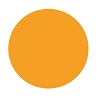 |
| yellow | geel |  |
| green | groen | 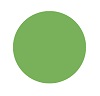 |
| blue | blauw |  |
| white | wit |  |
| black | zwart |  |
| gray | grijs |  |
| brown | bruin | 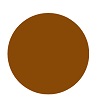 |
| beige | beige |  |
| pink | roze |  |
| purple | purper | 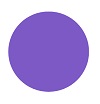 |
| silver | zilver |  |
| gold | goud |  |
| indigo | indigo |  |
| violet | paars |  |
Color Nuances In Dutch
Sometimes it isn’t easy to describe colors. In these instances, nuances of hues are used to describe objects.
Not many people are ‘walking encyclopedias’ of hues, so ‘-ish‘ is added to the end of a color’s name. Below are the nuances of hues in the Dutch language to help you identify or describe objects.
| English | Dutch |
| Reddish | Roodachtig |
| Greenish | Groenachtig |
| Yellowish | Geelachtig |
| Blueish | blauwachtig |
| Purpleish | paarsachtig |
| Brownish | Bruinig |
For most of the colors, you add ‘achtig‘ to the end of the word. The exception to the rule is brown, where you only add ‘ig.’
Shades Of Colors In Dutch
It’s also helpful to distinguish between shades of colors in Dutch. Like many languages, Dutch uses ‘light’ and ‘dark’ to differentiate between hues.
To identify ‘light’ colors, simply add ‘licht‘ in front of the word, and for darker hues, add ‘donker.’
| English | Dutch | Color |
| Light blue | Lichtblauw |  |
| Light green | Licht groen | 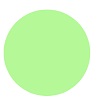 |
| Light brown | Lichtbruin | 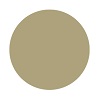 |
| Light grey | Lichtgrijs |  |
| Dark blue | Donkerblauw |  |
| Dark green | Donkergroen | 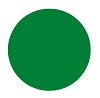 |
| Dark brown | Donker bruin | 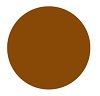 |
| Dark grey | Donker grijs |  |
How To Use Colors In Dutch Sentences
Colors are classified as adjectives in the Dutch language. The adjective almost always goes before the noun, just like with English! Phew! That will make your life much easier. Let’s see some examples and how they are pronounced.
- I like your purple hat – Ik vind je paarse hoed leuk
- Mine is the white car – De mijne is de wit auto
- Look at that orange cat! – Kijk naar die oranje kat!
- That’s a lovely black purse – Dat is een mooie zwarte portemonnee
- Green apples are the tastiest – Groene appels zijn het lekkerst
Fun Facts About Colors In Dutch
You may have noticed how much the Dutch LOVE the color orange. It is due to a noble who became famous in 1544 when he became the Prince of Orange (not the color, but a place in the southern Netherlands that now belongs to France.)
His name was Willem van Oranje, and he led a successful revolt against the Spanish, which led to independence.
He was honored through color (orange, of course!). And so, the national flag for the Netherlands was originally orange, white and blue. Today, it is red, white, and blue and the reasons why are unknown.
The reason for the flag’s change is to debate. Some historians speculate there was a national shortage of orange dye. Some believe the sailors could not see the orange flag from afar, while others say that the color faded to yellow in the sun.
Orange remains the national color in the Netherlands and is worn by nearly everyone at sporting events and on the King’s birthday.
Color Idioms In The Netherlands
Here are some popular idioms in the Dutch language used in the Netherlands that use colors.
| Dutch | Translation/Meaning |
| groentje | someone who has little experience (A noob) |
| achter de oren | green behind the ears |
| en grijze muis | a grey mouse is someone who doesn’t like to stand out |
| rood staan | to be poor or have debt |
| rooie cent | you don’t have any money |
| a roze bril | you see the world with rose-tinted glasses |
| de prins of de prinses op het witte paard | the prince or the princess on the white horse means a knight in shining armor |
| zwartkijker | someone who is a pessimmist |
Other Ways To Practice Colors In Dutch
- Play I Spy With My Little Eye… – You probably know this one, and you can even play this on your own and try to spot as many purple (purper) or blue (blauw) items as you can.
- Opposite Hues – When you spot a color, you must name the contrasting shade.
- Name the Rainbow – Practice naming the colors of the rainbow (red, orange, yellow, green, blue, indigo, violet – ROYGBIV) in Dutch – rood, oranje, geel, groen, blauw, indigo, paars.
- Quiz Yourself on a Language App – Probably the best way to learn colors in Dutch is through a language app such as Ling. Ling will ensure you pronounce all the words correctly while learning a new language, and the app will even teach you to read and write in Dutch!
Try it now!
That’s All For Now!
Now you’ve got a great resource that teaches you all about the names of colors in Dutch! It is an excellent first step to learning the vocabulary of his new language. Have you considered learning more?
Check out Ling, a comprehensive learning app with over 10 million downloads. With our app, you’ll be an expert in a new language in no time at all. We offer over 60 languages to choose from and various learning methods, so you don’t get bored. Learn more here. It’s free to try!
In addition to Ling, you can start your Dutch learning journey by taking the courses created by an experienced Dutch professor who will guide you through this language step-by-step. Don’t worry if you are not familiar with the Dutch language. The courses are easy to follow, and you can do them at your own pace. Try out the free Dutch course today!