



Have you ever made a clicking sound with your tongue to maybe get someone’s attention or to show that you are annoyed? In some parts of Africa, that click sound is actually part of the language. And yes, in these Click Languages Africa, they use click sounds in everyday conversations just like consonant sounds like “b,” “t,” or “k” are used in English.
In this post, we’ll look at the different types of African click languages and where they’re spoken. Let’s dive right in!
Key Takeaways
- African click languages use clicks as regular speech sounds.
- Some click languages are traditional, while others are adopted.
- Click languages are mainly spoken in Southern and Eastern Africa.
- Clicks can be written with Latin letters or specialized symbols.
- Click languages vary in sound complexity.
- Xhosa and Zulu have more learning resources than many other click languages.
I want to learn even more languages with Ling!
Download now!
What Are Click Languages?
Click languages are those that use clicking sounds as part of normal speech. You may have made a clicking sound with your tongue before, probably the “tsk” sound people sometimes make to show disapproval. In English, this is usually just a standalone sound or expression, and it’s not part of any word. In a click language, however, that kind of sound is actually a speech sound. And that sound can appear inside words.
For example, in the word “book,” /b/ is a consonant sound. But in the word “iqanda,” which means “egg,” the /q/ represents a click sound. The same way /b/ is a consonant sound in “book,” /q/ is a click sound in “iqanda.”
What Are The Different Types Of Click Languages Africa?
The different types of African click languages are the traditional African click languages and the adopted click languages.
Traditional click languages used to be grouped under the Khoisan language family. These are languages that have always had clicks as part of their sound systems.
Adopted click languages, on the other hand, are languages that did not originally use click sounds. However, after speakers of these languages came into contact with neighboring communities whose languages use clicks, they began adopting these sounds into their own language. And over time, the click sounds became a regular part of how their language is spoken.
Traditional African Click Languages
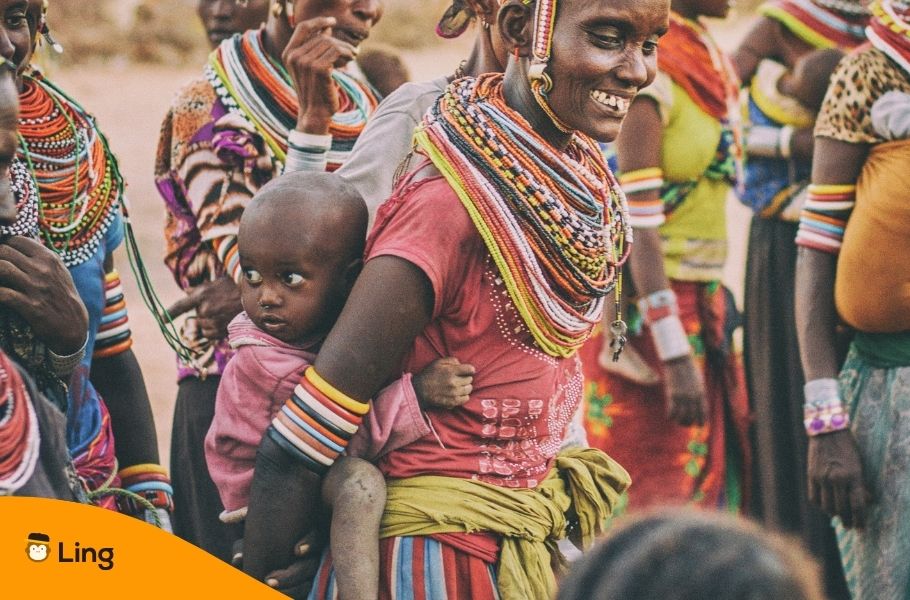
Traditional African click languages are further divided into families. These include:
- Khoe-Kwadi Languages: The Khoe-Kwadi family includes about 10 languages and 29 dialects, most of which use click sounds. The best-known language in this family is Nama. It is spoken by more than 150,000 people in Namibia and used in schools and the media. Other languages include Naro, Gǁana, Gwi, Shua, Tsʼixa, ǀXaise, and Tshwa.
- Kx’a Languages: The Kx’a language family mainly includes a group of languages known as ǃKung, along with ǂʼAmkoe, which is highly endangered. The best-known ǃKung language is the Southeastern ǃKung. Other varieties include Ekoka ǃKung, Northwestern ǃKung, and ǂKxʼauǁʼein.
- Tuu Languages: This language family consists of some of the most complex click languages in the world. The most popular one is ǃXóõ, which has more than 100 consonant sounds, many of which are clicks. Other languages under this family include Nǀuu, ǀXam, and ǁXegwi. Nǀuu is highly endangered, while ǀXam and ǁXegwi are now extinct languages.
- Tanzanian Click Languages: There are two languages in this group: Hadza and Sandawe. Hadza is the more distinctive of the two because linguists generally consider it a language isolate. This means that it has no confirmed relationship with any other known language family.
Adopted Click Languages (Bantu Languages)
As mentioned earlier, Bantu languages do not traditionally have click sounds, but have now incorporated click consonants into their sound systems. The most famous examples are Xhosa and Zulu. Xhosa, or isiXhosa, is spoken by roughly 19 million people, and Zulu has about 27 million speakers worldwide.
Besides Xhosa and Zulu, there are several other African languages that adopted click sounds, including Swati (siSwati), Phuthi, Yeyi, and Gciriku.
Where Are Click Languages Spoken?
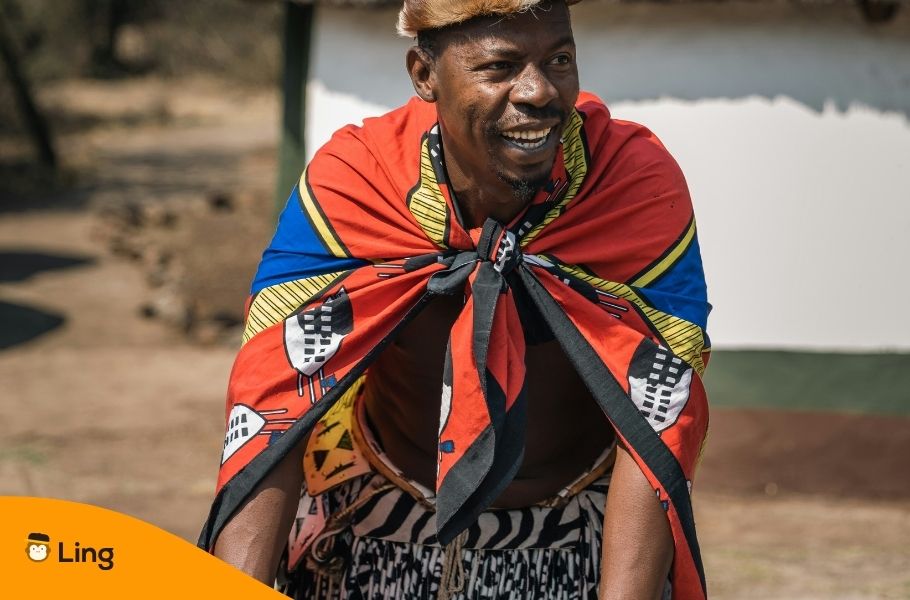
Click languages are spoken mainly in Southern Africa and East Africa. The largest concentration is in Namibia, Botswana, and South Africa, where the Khoe-Kwadi, Kx’a, and Tuu languages are primarily found. Some click languages under these language families are also spoken in Angola, Zambia, and Zimbabwe.
As noted above, there are also Tanzanian click languages: Hadza and Sandawe. Hadza is spoken in northern Tanzania, while Sandawe is spoken in central Tanzania. And of course, there are also the Xhosa and Zulu languages, which are widely spoken in South Africa.
Other Bantu languages spoken with click sounds, including Swati, Phuthi, Yeyi, and Gciriku, are spoken across parts of South Africa, Eswatini, Lesotho, Botswana, Namibia, and neighboring areas.
How Do You Write Clicks?
The way you write clicks in one click language can be different from how they are written in another click language. Bantu languages such as Xhosa and Zulu typically use the Latin alphabet.
For example, the letters C, Q, and X are used to represent the three click types. C represents dental clicks, Q for alveolar clicks, and X for lateral clicks.
Other click languages use symbols such as ǀ, ǃ, ǁ, ǂ, and ʘ, and each of the symbols represents a different type of click.
Click Languages Africa: FAQ
How Many Click Languages Are Spoken In Africa?
Africa has around 24 to 38 living languages that use click consonants, although the exact number varies depending on how languages and dialects are classified.
What Are The Most Widely Spoken Click Languages?
Xhosa and Zulu are the most widely spoken languages in Africa that use click consonants. They have millions of speakers, particularly in South Africa.
Are African Click Languages Difficult To Learn?
Click languages can be challenging for learners who are unfamiliar with click consonants. Pronunciation can take quite a lot of practice, and the lack of available learning resources can be a major obstacle.
Can You Learn African Click Languages?
Yes, you can learn African click languages, although the difficulty and available resources vary depending on the language. Xhosa and Zulu are among the most accessible options because they have millions of speakers and more learning resources, including courses, textbooks, language learning apps, and online materials.
Less widely spoken click languages, such as Juǀʼhoansi and ǃXóõ, can be much harder to learn because fewer teaching resources are available and their sound systems can be considerably more complex. For these languages, learning directly from native speakers and through immersion is usually the easier way.

















































































