



For Croatia, digital nomad opportunities are virtually endless. Croatia has become one of Europe’s most unique and sought-after remote work hotspots for a reason, and you should consider giving it a shot. The combination of the country’s reliable, reasonably fast internet infrastructure, excellent food and culture, coastline (for those so inclined), and other desirable features makes it an obvious choice.
This Croatia digital nomad guide covers the basics of everything remote workers need to know before making the move. It covers residence permit requirements, health insurance, and taxes. Consider this your one-stop shop before relocating to Croatia for remote work.
Croatia Digital Nomad Guide: Essential Facts
Here are some key facts about living and working as a digital nomad in Croatia:
- Non-EU/EEA remote workers can stay in Croatia for up to 18 months with a digital nomad residence permit, which exempts them from Croatian income tax on foreign-sourced income.
- The income threshold for 2026 is EUR 3,622.50 per month, equivalent to 2.5× the average net salary in Croatia. This amount is adjusted annually.
- EU/EEA citizens do not need a digital nomad residence permit; they only need to register their address within 90 days of moving to Croatia.
- Monthly living costs range from under EUR 1,000 in regions such as Zagorje and Slavonia to well over EUR 1,800 in major cities and coastal areas.
- Croatian is the official language of Croatia. A basic understanding of it is recommended, and in many cases highly useful, for digital nomads.
What Is The Croatian Digital Nomad Visa?
The Croatia digital nomad visa is a temporary residence permit. It is not legally considered a visa. It was introduced in early 2021 to allow non-EU/EEA nationals to work remotely for foreign companies or clients while legally residing in Croatia. It was not until the 2025 amendment to Croatia’s Law on Foreigners that the maximum staying time was extended to 18 months at a time.
- EU/EEA citizens do not need to apply for the Croatian digital nomad residence permit.
- Remote workers, freelancers, and self-employed individuals working online can qualify, but they cannot provide services to employers in Croatia.
- The income threshold changes annually: it is 3,622.50 EUR in 2026, up from 2,375 EUR in 2021 when the program was introduced. Savings may also be taken into account, if necessary.
- Foreign-earned income is fully exempt from Croatian income tax. Your home country’s tax obligations still apply.
- The digital nomad residence permit cannot be extended beyond 18 months in total. After expiration, you must leave Croatia and wait at least six months before reapplying.
- It takes about 4–8 weeks for the residence permit to be processed.
Required documentation includes, as per the legislation:
- Valid passport.
- Proof of remote work (i.e., client contracts).
- At least six months’ worth of bank statements or pay slips.
- Long-term health insurance solution*.
- Proof of local accommodation.
*Note: Travel insurance is explicitly not accepted as the designated health insurance option.
How Much Does It Cost To Live In Croatia On A Digital Nomad Visa?
The cost of living in Croatia sits below Western European averages, but with some notable caveats.
Zagreb and the more popular coastal areas, like Split and Dubrovnik, are on the expensive side. Less-populated and less-developed regions, such as the far north and northeast of the country, are much cheaper.
In Zagreb, a comfortable monthly budget for a single person is around 1500–1600 EUR, rent included. One-bedroom apartments in Zagreb range from 500 to 800 EUR per month, depending on proximity to the city center.
Utilities add another 100–150 EUR to expenses, groceries can go up to 200–250 EUR, and basic restaurant meals run around 10 EUR each. In cities with well-developed transit systems, such as Zagreb or Rijeka, a transit pass costs about 50 EUR per month.
Internet costs about 30 EUR per month in Croatia. Major providers include Hrvatski Telekom (T-Com), A1, and Telemach.
What Are The Best Places To Live In Croatia?
Croatia offers plenty of viable long-term basing opportunities for remote work. Big cities are a safe bet, and these are our three major recommendations.
Zagreb: The Obvious Option
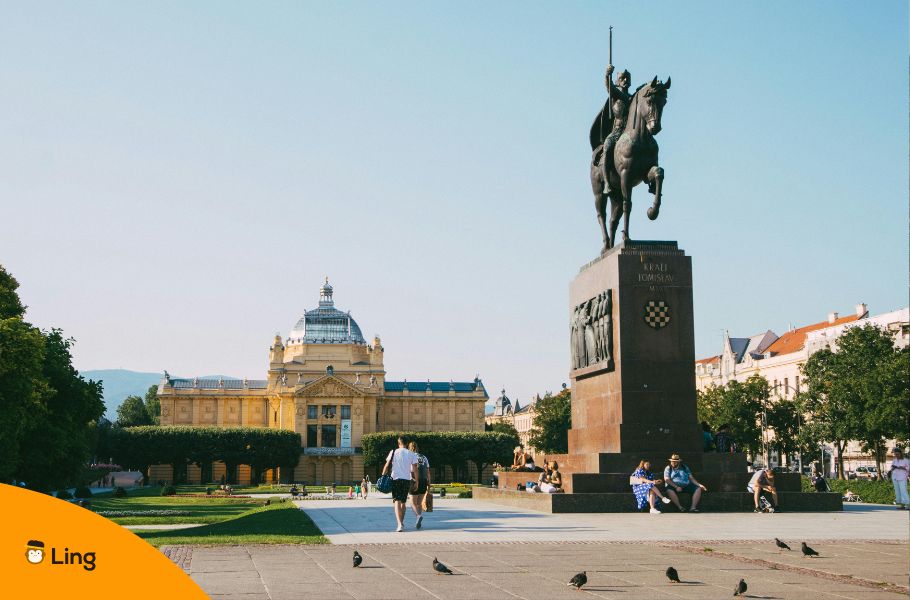
Zagreb is the most practical option in this Croatia digital nomad guide. It has strong infrastructure, a coworking scene, and a café culture that makes it easy to build a routine. Even though it’s more expensive than nearby cities like Varaždin, Zagreb remains cheaper than coastal regions and offers better transport and internet. It is the default option for digital nomads in Croatia. Zagreb also hosts coworking space HUB385, which is popular among digital nomads.
Istria: The Expensive Option
Istria is the premium Croatian destination for digital nomads, and it is priced accordingly. The peninsula attracts a Western European crowd, which has driven up prices. Rent in towns like Poreč or Rovinj reflects this, but in return, you get a high-quality place to work remotely. If budget is not a constraint, or if you’re staying short-term, Istria is worth considering.
Slavonia: The Affordable Option
Slavonia, Croatia’s inland eastern region, is less known for tourism, which is exactly why it can be attractive to nomads. Cities like Osijek offer significantly lower rents and daily costs than the coast or Zagreb, and prices are more stable year-round. There are fewer coworking spaces and a smaller expat community.
Essential Croatian Words And Phrases For Digital Nomads
Croatian is the official language of Croatia. While English is widely spoken in tourist areas, it is often not enough for everyday tasks like dealing with authorities or arranging health insurance, so learning basic Croatian is helpful for digital nomads. Here’s a good starting point:
| English | Croatian | Pronunciation | Audio |
|---|---|---|---|
| Good day / Hello | Dobar dan | DOH-bar dan | |
| Please / You’re welcome | Molim | MOH-leem | |
| Thank you | Hvala | HVAH-lah | |
| Where is … ? | Gdje je … ? | GDYEH yeh | |
| How much? | Koliko? | KOH-lee-koh | |
| Can you help? | Možete li mi pomoći? | MOH-zheh-teh lee mee POH-moh-chee |
Naturally, this is only a small part of the Croatian language you’ll need if you’re planning to stay in Croatia long-term. The Ling app is a good way to continue building on this baseline and better understand the country’s cultural heritage.
We also recommend checking out our guide to learning Croatian for expats to complement this Croatia digital nomad guide.
Tips For Living And Working In Croatia As A Digital Nomad
The needs of digital nomads differ from those of regular tourists or retirees. You’ll need to be savvy to make your stay as simple and straightforward as possible in Croatia. Digital nomad opportunities are many, so here are some we recommend keeping in mind:
- Start your visa application early. Processing can take up to 8 weeks, and summer backlogs are common. Apply well before your 90-day tourist allowance runs out.
- Plan your stay around the tourist season. Coastal regions are more expensive and crowded from June to August.
- You must stick to foreign employer opportunities while staying in Croatia; you cannot work with local clients.
- Keep your home country’s tax rules in mind. Even though you may be exempt from Croatian income tax, your home country’s obligations still apply.
- Find long-term accommodation via Njuškalo. Proof of a Croatian address is a required document, so avoid relying on short-term Airbnb bookings if you plan to stay longer.
- Avoid calling your temporary residence permit a “visa.” Using the wrong term can cause confusion in government offices.
- EU citizens cannot obtain a digital nomad permit in Croatia; it is only for non-EU/EEA nationals.
Consider these the absolute baseline of this Croatia digital nomad guide, and they will get you well on the way to getting a granted temporary stay in short order. An excellent excuse to start learning Croatian, too.
FAQs: Croatia Digital Nomad Guide
Can Freelancers Apply For The Croatia Digital Nomad Visa?
Yes, freelancers can apply for the Croatia digital nomad visa, as long as they work remotely for clients or employers outside of Croatia and meet the eligibility requirements. However, they cannot provide services to clients or companies based in Croatia.
Can I Take My Family With Me On the Croatia Digital Nomad Permit?
Yes, family reunification is allowed. A spouse, children under 18, and unmarried partners (with proof of at least a three-year relationship and/or a shared child) can apply for residence permits after the main applicant is approved. The income requirement increases by an additional 10% for each family member.
Is It Possible To Renew The Croatia Digital Nomad Visa?
Not consecutively. After your permit expires, you must leave Croatia for at least six months before you can reapply. Additionally, this permit does not provide a pathway to permanent residency.
Do I Need To Speak Croatian To Live In Croatia?
It’s not strictly necessary if you live in a metropolitan or tourist area, but it is desirable. Local administration, communication with landlords, day-to-day errands, and other activities will all be much easier if you know some Croatian.
How To Apply For The Digital Nomad Residence Permit In Croatia?
To apply for Croatia’s digital nomad residence permit, submit proof of remote work, income, health insurance, accommodation, and a valid passport through a Croatian embassy or local police administration office. Most permits are issued for up to 12 months. Non-EU citizens typically apply online or after arriving in Croatia legally.
Wrapping Up: Croatia Digital Nomad Guide
In this Croatia digital nomad guide, we’ve seen what it takes to live and work remotely in Croatia. Now, you understand how the digital nomad residence permit works, including who can apply, the income requirements, the application steps, and the key tax benefits.
You’ve also explored what it actually costs to live in Croatia, depending on whether you choose a coastal city, a larger urban hub like Zagreb, or a more affordable inland region. On top of that, you’ve looked at the best places to base yourself, picked up some essential Croatian phrases, and reviewed some practical tips to make your stay smoother.
If you’re seriously considering Croatia, this gives you a clear starting point for planning your move.
Learn Croatian With Ling!
As this Croatia Digital Nomad Guide shows, Croatia offers a lot of value to modern digital nomads. With an 18-month permit, zero local income tax on foreign earnings, reliable infrastructure, plenty of activities, and a safe place to live, it is an excellent choice for remote workers.
That said, it is important to integrate into the local cultural context, even if you do not plan to stay long-term. Croatian is not the easiest language to master, but it is very approachable at the beginner level, and building a working vocabulary goes a long way in daily life.
This is where the Ling app can help. You can start learning Croatian today with a 7-day free trial and start speaking Croatian before you even arrive.


