Are you interested in using words related to moods and emotions in Tagalog? Some essential emotions are joy – kaligayahan, surprise – pagkagulat, and anger – galit. Some moods, on the other hand, are relaxed – nakapahinga, loving – mapagmahal, and cranky – magagalitin.
Wherever you are in the world, you’ll always be in a situation where you must express your nararamdaman (feelings) to be understood and treated the way you would like.
After all, we are humans, and we have many complex feelings that go beyond masaya (happy) or malungkot (sad). Luckily, there are tons of easy words in Tagalog that you can use for your intense feelings, and this is what we are going to dive deep into today.
Learning Tagalog is more than memorizing words
Explore more →
About Moods And Emotions In Tagalog
Like any other language, Tagalog comes with a range of words that will help you describe your current state. You see, we all have “changing” emotions, and all of these can go on for just split seconds, days, to even months!
So, before we discuss all the Tagalog words, let’s first identify the exact differences between emotions, feelings, and moods. This will help us know exactly what we are feeling and improve our knowledge of emotional literacy.
- Emotion: Also known as emosyon in Tagalog. This feeling is more of a response to a specific trigger. This is the first state you will be in when you start developing a feeling, which is why we have the term “emotional state.”
- Feeling: After a few seconds of experiencing a strong emotion associated with something psychological, you will start feeling things in a much larger sense (pakiramdam in Tagalog). You’ll start feeling the emotions physically during this time, which can cause people to punch a wall, get weak in the knees, or throw a fit.
- Mood: Also known as kalagayan in Tagalog. This is where the feeling can last for minutes, hours, days, and months. This is basically a mix of emotions and feelings that are a bit challenging to recover from right away, like when you are grieving the death of a loved one or becoming clinically depressed.
Now that we know the differences between these three, let’s move forward and give you a full list of all the Tagalog words related to these three:
What Are The 8 Primary Human Emotions Called In Tagalog?
The 8 primary human emotions in Tagalog are joy – kaligayahan, sadness – kalungkutan, acceptance – pag-tanggap, disgust – pag-kayamot, fear – pangamba, anger – galit, surprise – pagkagulat, and anticipation – pag-asa.
In reality, humans have over 30,000 emotions, and knowing exactly how we feel can significantly help give a more precise description. That’s why, to make things easier, Dr. Robert Plutchik proposed that we first try to understand our feelings by focusing on the eight primary emotions in his popular emotion wheel.
| Emotions In English | Tagalog | Traditional Tagalog | Tagalog Sound | Traditional Tagalog Sound |
|---|---|---|---|---|
| Joy | Kaligayahan | Kagalakan | ||
| Sadness | Kalungkutan | Lumbay | ||
| Acceptance | Pag-tanggap | Pagsang-ayon | ||
| Disgust | Pag-kayamot | Pag-kasuklam | ||
| Fear | Pangamba | Pagkasindak | ||
| Anger | Galit | Kapootan | ||
| Surprise | Pagkagulat | Pagkamangha | ||
| Anticipation | Pag-asa | Pagkamapangalaga |
Please note that not all common Tagalog words have a traditional-word counterpart. We decided to add these to the list since you might come across some of them when speaking with older locals, reading Tagalog literature, or watching Tagalog movies.

100 Words For Moods And Emotions In Tagalog
To sound like a pro and spare yourself from looking at the definition of each Tagalog vocabulary word in the dictionary, we’ve listed here all the exact translations for mood, emotions, and feelings. For example, if you want to say you are frustrated in Tagalog, you can use nadidismaya.
Let’s learn other terms so that you can express yourself with confidence! While you learn these words, you will also understand more about the culture and language of the Philippines.
What Are Some Angry/Annoyed Moods And Emotions In Tagalog?
These feelings, such as agitated – nabalisa, exasperated – pagkabagot, or moody – sumpungin, express negative emotions.
Ever had one of those days when everything seems to make you clench your fists? You know, that day when even the toaster seems intimidating, and your trusty old smartphone decides to irk you? It turns out we all have these ‘not-so-sunshiny’ days.
Here are some Tagalog words that will help you describe those moods and emotions:
| English | Tagalog | Sound |
|---|---|---|
| Agitated | Nabalisa | |
| Aggravated | Pinalubha / Pinalala | |
| Angry | Bugnot / Galit | |
| Bitterness | Kapaitan | |
| Contempt | Paghamak | |
| Cynical | Mapang-uyam | |
| Disdain | Pang-aaba | |
| Exasperated | Pagkabagot | |
| Frustrated | Nabigo | |
| Furious | Nangangalit | |
| Grouchy | Masungit | |
| Hostile | Pagalit | |
| Impatient | Naiinip | |
| Irritated | Naiirita | |
| Irate | Nagagalit | |
| Moody | Sumpungin | |
| Pissed | Naaasar | |
| Upset | Masama ang loob | |
| Vindictive | Mapaghiganti |
What Are Some Chill Moods And Emotions In Tagalog?
Relaxed – Nakapahinga, Content – Kontento, and Serene – Matahimik are all “chill” moods and emotions in Tagalog.
“Chill” isn’t just a slang term in English. It’s also a feeling we often crave in our busy lives. That sense of calm and contentment signals a state of happiness and satisfaction. It’s a light of positivity amid the storm.
Here are some Tagalog words that show chill and positive emotions:
| English | Tagalog | Sound |
|---|---|---|
| Calm | Kalmado/ Panatag | |
| Content | Kontento | |
| Patient | Matiyaga / Matiisin | |
| Peaceful | Mapayapa / Matiwasay | |
| Relaxed | Nakapahinga | |
| Serene | Matahimik | |
| Trusting | Mapagtiwala |
What Are Joyful Moods And Emotions Called In Tagalog?
The Tagalog word for ‘joy’ or ‘happiness’ itself is saya or kaligayahan. Do you feel that burst of happiness as you say it? Hold onto that feeling!
Because nothing lights up the day quite like a smile, right? The same is true in any language, country, or culture! And the Filipino language is no exception.
Here are a few Tagalog words that express joy and happiness.
| English | Tagalog | Sound |
|---|---|---|
| Awe | Paghanga / Pagkamangha | |
| Bliss | Lubos na kaligayahan | |
| Delighted | Nagagalak | |
| Eager | Sabik | |
| Ecstatic | Tuwang-tuwa | |
| Engaged | Naengganyo | |
| Enthusiastic | Masigasig | |
| Excited | Nasasabik | |
| Free | Malaya | |
| Happy | Masaya | |
| Inspired | May inspirasyon | |
| Lively | Masigla | |
| Passionate | Masintahin / Magiliw | |
| Playful | Mapaglaro | |
| Refreshed | Na-refresh | |
| Satisfied | Nakuntento | |
| Spirited | Masigla |
What Are Some Moods And Emotions In Tagalog Related To Despair/Sadness?
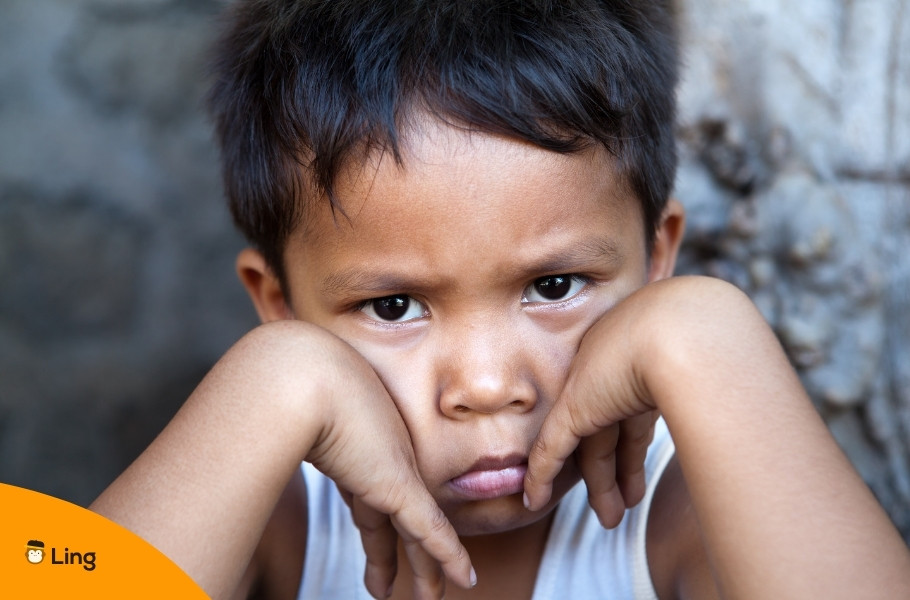
Even in the brightest of journeys, darker days can come. That’s why we have words like depressed – nalulumbay, discouraged – panghinaan ng loob, and lonely – nangungulila.
These emotions are as much a part of life as the joy we discussed earlier, aren’t they? On those somber days, knowing how to express our feelings in Tagalog might just make things a bit easier.
Here are some Tagalog words to express the feeling of not having hope:
| English | Tagalog | Sound |
|---|---|---|
| Anguish / Grief | Dalamhati / Pighati | |
| Depressed | Nalulumbay | |
| Despondent | Nawalan ng pag-asa | |
| Disappointed | Nabigo | |
| Discouraged | Panghinaan ng loob | |
| Forlorn | Malumbay | |
| Gloomy | Mapanglaw | |
| Heartbroken | Nagdadalamhati | |
| Hopeless | Walang pag-asa | |
| Lonely | Nangungulila | |
| Longing | Nananabik | |
| Melancholy | Galimgim | |
| Sorrow | Hinagpis | |
| Teary | Maluha-luha | |
| Tired | Pagod | |
| Yearning | Minimithi |
What Are Shameful/Fearful Moods And Emotions Called In Tagalog?
Sometimes, life throws curveballs at us, leaving us feeling ashamed – nahihiya or frightened – nagulat. It’s natural, and we all experience these emotions at some point, right? So let’s learn how to express them in Tagalog to better navigate such moments.
Here are Tagalog words that reflect uncomfortable psychological and physical sensations:
| English | Tagalog | Sound |
|---|---|---|
| Afraid | Takot | |
| Anxious | Balisa | |
| Apprehensive | Nababahala | |
| Ashamed | Nahihiya | |
| Frightened | Nagulat | |
| Hesitant | Nag-aalangan | |
| Humiliated | Napahiya | |
| Nervous | Kinakabahan | |
| Panic | Nataranta | |
| Scared | Natakot | |
| Self-conscious | May kamalayan sa sarili | |
| Useless | Walang silbi | |
| Weak | Mahina | |
| Worried | Nag-aalala |
What Are Some Tense Moods And Emotions In Tagalog?
Some Tagalog words related to feeling tense are cranky – magagalitin, depleted – naubos, and exhausted – pagod na pagod.
We’ve all had moments where tension creeps in, our palms get a little sweaty, and our hearts beat a little faster, haven’t we? Especially when there’s a pang of guilt involved!
Not the most comfortable feeling in the world, but very human, nonetheless! Here are some more Tagalog words to help you navigate these tense moments.
| English | Tagalog | Sound |
|---|---|---|
| Begging | Nagmamakaawa | |
| Burned out | Napundi | |
| Cranky | Magagalitin | |
| Depleted | Naubos | |
| Edgy | Nerbiyoso | |
| Exhausted | Pagod na pagod | |
| Overwhelm | Mapuspos | |
| Rattled | Tarantahin | |
| Rejecting | Inayawan | |
| Restless | Di mapakali | |
| Tight | Masikip | |
| Weary | Pagod | |
| Worn out | Pagod na pagod | |
| Regret | Panghihinayang | |
| Remorseful | Nagsisisi | |
| Sorry | Kinalulungkot |
How Do You Express Tender Moods And Emotions In Tagalog?
The Tagalog language, known for being expressive and rich, has the perfect vocabulary to articulate feelings such as loving
mapagmahal, caring – mapag-alaga, and serene – mapayapa.
Isn’t it just wonderful to feel loved, cherished, and cared for? It’s like being wrapped up in a warm blanket on a chilly day, right? Here are Tagalog words that are all about spreading tender feelings to those around us:
| English | Tagalog | Sound |
|---|---|---|
| Calm | Mahinahon | |
| Caring | Mapag-alaga | |
| Loving | Mapagmahal | |
| Reflective | Mapanimdim | |
| Self-loving | Mapagmahal sa sarili | |
| Serene | Mapayapa | |
| Vulnerable | Marupok | |
| Warm | Mainit | |
| In love | Umiibig |
What Are Some Moods And Emotions Associated With Sensations In Tagalog?
These words can also be associated with certain bodily sensations. For instance, you will instantly feel clammy (nanlalamig) if you have a presentation in front of a big crowd or feel breathless (humihingal) after a quick jog.
To know some of the associated sensations, check the table below:
| English | Tagalog | Sound |
|---|---|---|
| Cold | Nilalamig | |
| Pain | Kirot | |
| Dizzy | Nahihilo | |
| Hard | Matigas | |
| Hot | Mainit | |
| Icy | Malamig | |
| Itchy | Makati | |
| Jumpy | Magugulatin | |
| Numb | Manhid | |
| Pulsing | Nagpipintig | |
| Sensitive | Sensitibo | |
| Shaky | Nanginginig | |
| Slow | Mabagal | |
| Soft | Malambot | |
| Sweaty | Pawisin |
Understanding and expressing mood and emotions is an essential part of human connection. Conveying your feelings allows you to share a deeper part of who you are. It also allows you to be more genuine and build deeper connections with locals if you’ll be visiting the Philippines.
However, learning to express moods and emotions in a foreign language may sound complicated. But worry not! Language learning apps like the Ling app make the process easier and fun.
How Do You Say “Moods And Emotions” In Tagalog?
The Tagalog word for “mood” is kalooban
Meanwhile, the Tagalog translation for “emotions” is damdamin
Sentences To Practice Moods And Emotions In Tagalog
Did you want a challenge? Here are some Tagalog sentences you can use for practicing these Tagalog moods and emotions.
| English | Tagalog | Sound |
|---|---|---|
| My heart is beating fast because I am nervous | Malakas ang kabog ng puso ko dahil sa kaba | |
| Lora is feeling grief because her classmate died | May pighating nararamdaman si Lora dahil sa pagkamatay ng kaniyang kaklase | |
| The students felt disappointed because they lost the contest | Ang mga estudyante ay nakaramdam ng pagkabigo dahil sa pagkatalo nila sa paligsahan | |
| Karina was in panic as she was taking care of her children | Nataranta si Aling Karina sa pagaasikaso ng kaniyang mga anak | |
| Once the animals were rescued from the cages, the people felt relieved | Nang mailigtas ang mga hayop sa kulungan, naibsan ang kalungkutan ng maraming mga tao |
These sentences may feel too advanced in Tagalog grammar for you. But don’t worry, as you go along your lessons and speak to native Tagalog speakers, you’ll notice the pattern and use of these sentences and phrases.
Do Moods And Emotions Affect The Stress In Tagalog Syllables?
Yes. Even though Tagalog is not a tonal language, there are many ways in which stress in syllables can change the meaning of a Tagalog word. When Filipinos stress certain parts of a syllable, the meaning might be different depending on their moods.
For example, the word baka can have three meanings depending on how someone is trying to get their point across:
If baka has stress on both ba and ka, and the pitch is similar to questioning (a high pitch), then, most likely, this person is being sarcastic. For example:
- Maybe you want to change your life? – Baka gusto mong magbago ng buhay?
On the other hand, if the stress is on the first syllable, the person may be feeling unsure about what they know. For example:
- Maybe there are people at Jollibee even if it’s raining – Baka may mga tao ngayon sa Jollibee kahit umuulan
Lastly, baka with no stress on any syllable can also be a short answer that may signify either yes or no and may end up confusing you about what the other person means. For example:
- Speaker 1: Yohann might bring some food for the feast – May dala raw na pagkain si Yohann sa salo-salo?
- Speaker 2: Maybe – Baka

Tips For Using Words Related To Moods And Emotions In Tagalog
Learning vocabulary isn’t enough by itself; you have to know how and when to use it. Here are a few simple tips to help you use these words naturally when speaking Tagalog:
- Start with common words. Learn everyday vocabulary first, such as “happy” – masaya, “sad” – malungkot, “angry” – galit, and “afraid” – takot.
- Practice in full sentences. Instead of memorizing individual words, say things like Masaya ako (“I am happy”) or Kinakabahan ako (“I am nervous”) to make them easier to remember.
- Pay attention to context. Some words describe emotions, while others describe personality traits or states. Seeing them used in real conversations will help you understand the difference.
- Listen to native speakers. Watch Filipino TV shows, movies, or YouTube videos to hear how emotions are naturally expressed in everyday Tagalog.
- Use your new vocabulary often. The more you use emotion words in conversations, writing, or language apps, the faster they’ll become part of your active vocabulary.
- Find a good app to practice. There’s no Tagalog on Duolingo, and no Tagalog on Babbel either. Luckily, the Ling app doesn’t skip less commonly taught languages, so you’ll find a full Tagalog course in its catalog.
Frequently Asked Questions About Moods And Emotions In Tagalog
What Are Examples Of Moods And Emotions In Tagalog?
Some common moods and emotions in Tagalog include “happy” – masaya, “sad” – malungkot, “angry” – galit, “afraid” – takot, “anxious” – balisa, “loving” – mapagmahal, and “relaxed” – nakapahinga.
What Are Common Gestures Related To Moods And Emotions For Filipinos?
Filipinos have many ways to show their sense of pakikisama (cooperation), respect, or sentimentality.
First, if someone has died, many Filipinos will cry along with them as a sense of sympathy. You will also see Filipinos smile brightly, with their eyebrows raised while doing so.
Another common gesture that Filipinos do when they’re irritated is to say tsk, or ano ba yan, or even both when they are disappointed or highly disapprove of something. Lastly, Filipinos, when in shock, will open their mouths and raise their eyebrows as well, as if to say that they have seen a very appalling situation.
What Are Some Tagalog Slang Words Related To Moods And Emotions?
Have you heard of the word naks! It’s a Tagalog slang term used when someone does a good job or, in general, something good happens to them. Another Tagalog slang is nyay, which is said when something unexpected or bad has happened, but you don’t want to sound rude. It’s even used when someone says an unfunny (corny) Tagalog joke.
What Is “Feeling Emotional” In Tagalog?
A natural way to say “feeling emotional” in Tagalog is emosyonal or emosyonal ang pakiramdam (“feeling emotional”). You can also say madamdamin, which describes someone who is emotional or deeply expressive.
How Do You Say “Sadness” In Tagalog Deeply?
The most common word for “sadness” is kalungkutan. For deeper sorrow or grief, you can also use “deep sadness” – lumbay, “grief” – pighati, or “deep sorrow” – dalamhati.
How Do You Say “Depressed” In Tagalog?
The Tagalog word for “depressed” is nalulumbay, which describes someone feeling deeply sad or downcast. For clinical depression, Filipinos commonly say “has depression” – may depresyon or simply use the borrowed word “depressed” in everyday conversation.
Key Takeaways: Moods And Emotions In Tagalog
In this post, we’ve learned several words for moods and emotions in Tagalog, which will surely help you communicate more naturally in everyday situations.
Whether you’re expressing “happy” – masaya, “angry” – galit, “afraid” – takot, or “sadness” – kalungkutan, having the right words will come in handy if you’re visiting the Philippines or speaking with your Filipino family and friends.
But what we’ve shared is just the beginning. A whole exciting world of Tagalog emotions is out there waiting for you. Learning this is pretty cool because it helps us connect better with each other. So, don’t stop here – let’s keep learning and making those connections!
Start Learning Tagalog With Ling!
If you’re ready to go beyond moods and emotions in Tagalog and start fully learning the language, the Ling app can give you a hand.
The Ling app offers a full Tagalog course that can take you from a complete beginner to a conversational level. It has native-speaker audio, interactive lessons, review features like flashcards and a personal vocabulary bank, points and leaderboards to keep you motivated, and more.
Moreover, Ling has 10M+ downloads and is rated 4.7/5 by learners across the Play Store and the App Store for its gamified approach and intuitive interface.
So don’t wait any longer, download the Ling app and start learning Tagalog today!