

Covering a grammar lesson in a new language might look like a herculean task. But worry not, dear reader, as we have got your back. In this blogpost, we’ll learn all about Croatian pronouns and how to use them in your daily conversations.
You see, you can use Croatian pronouns to talk about individuals, objects, or concepts without directly calling them by their names. These pronouns play a crucial role in the language’s structure, facilitating effective communication and conveying various nuances in conversations. So, let’s get on with the task in hand!
Types Of Croatian Pronouns
Pronouns in Croatian are words that are used to replace nouns, indicating the subject, object, or possession in a sentence. They help avoid repetition and make speech or writing more concise. The choice of pronouns depends on the grammatical case, gender, number, and context of the sentence. It’s important to ensure agreement between the pronouns and the nouns they imply.
I want to learn even more languages with Ling!
Download now!
Personal Pronouns
Personal pronouns in Croatian vary based on gender and grammatical case. For example: “ja” (I), “ti” (you singular), “on” (he), “ona” (she), “mi” (we), “vi” (you plural), “oni” (they masculine), “one” (they feminine), and “ona” (they neuter).
Possessive Pronouns
Possessive pronouns in Croatian agree in gender, number, and case with the nouns they modify. For example, “moj” (my), “tvoj” (your), “njegov” (his), “njezin” (her), “naš” (our), “vaš” (your), and “njihov” (their).
Reflexive Pronouns
Reflexive pronouns indicate that the subject of a sentence or phrase is also the object. In Croatian, they include “sebe” (myself/himself/herself/itself), “sebi” (to myself/to himself/to herself/to itself), and so on.
Relative Pronouns
Relative pronouns introduce relative clauses and agree in gender, number, and case with the verb or noun they imply. Common relative pronouns in Croatian are “koji” (who/which), “koja” (who/which), “koje” (who/which), and their inflected forms.
Formal And Informal Pronouns
Croatian uses two forms of formal and informal pronouns to address individuals. The informal singular “ti” is used for friends, family, and people of similar age, while the formal singular “vi” is used for strangers, superiors, and as a sign of respect.
Demonstrative Pronouns
Demonstrative pronouns point out specific nouns and agree in gender, number, and case. Examples include “ovaj” (this), “ovaj” (this), “ovo” (this), “onaj” (that), “onaj” (that), “ono” (that).
Interrogative pronouns are used to ask questions. Common examples in Croatian are “tko” (who), “što” (what), “kako” (how), “kada” (when), “gdje” (where), and “zašto” (why).
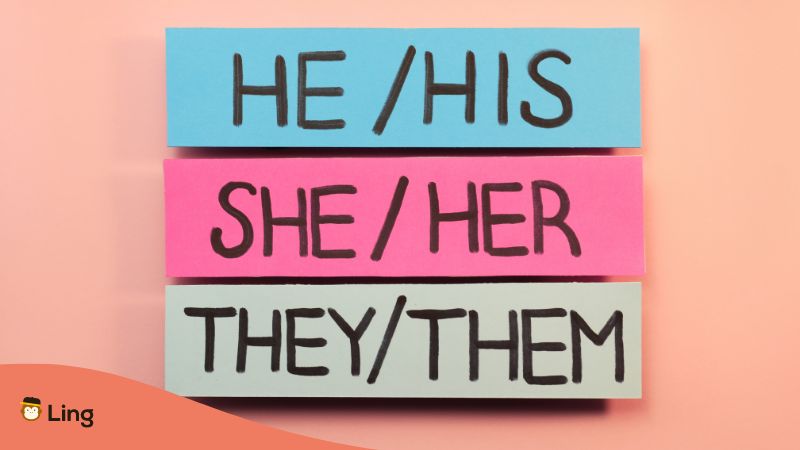
Importance Of Croatian Pronouns
Pronouns serve several crucial functions in communication. Let’s look at some of these functions below:
1. Clarity and Precision: Pronouns help avoid repetitive use of nouns in speech and writing. Without pronouns, sentences would become lengthy and cumbersome. They allow for clearer and more concise expression.
2. Gender and Agreement: Croatian is a language with grammatical gender, and pronouns must agree in gender, number, and case with the nouns or words being discussed.
3. Personalization and Politeness: A personal pronoun can convey information about the relationship between the person, the speaker, and the listener. Croatian, like many languages, distinguishes between formal and informal pronouns, which can affect the level of politeness and familiarity in a conversation.
4. Expressing Ownership: Possessive pronouns indicate ownership or possession of a specific person, allowing speakers to convey relationships between individuals and their belongings or attributes.
5. Relative Clauses: Relative pronouns introduce relative clauses that provide additional information about a few feminine nouns used. They help build more complex sentence structures and provide context to the main clause.
Major Differences Between Croatian & English Pronouns
Croatian and English pronouns differ in several significant ways due to differences in grammar, gender agreement subject pronoun used, and formal vs. informal language. Here are some major differences between Croatian and English pronouns:
1. Grammatical Gender & Agreement
Croatian pronouns change based on gender, number, and case, whereas English pronouns generally only change for case (e.g., “I” vs. “me”).
2. Formal Vs Informal Language
Croatian distinguishes between formal and informal pronouns for addressing individuals. The singular “ti” is informal, while “vi” is formal. In English, there is only one form of “you” for both formal and informal situations.
3. Possessive Pronouns
Croatian possessive pronouns agree in gender, number, and case with the possessed noun. In English, possessive pronouns are not gendered and have consistent forms (e.g., “my,” “your,” “his,” “her,” “its,” “our,” “their”).
4. Interrogative Pronouns
Interrogative pronouns that are used to ask questions differ in both languages. For example, Croatian uses “tko” (who), “što” (what), and “kako” (how), while English uses “who,” “what,” and “how.”
5. Relative Pronouns
They agree in gender, number, and case with the noun they refer to, while English relative pronouns (who, whom, which, that) have fewer forms.
List of Croatian Pronouns
Here’s a table comparing English pronouns with their Croatian equivalents
| English Pronouns | Croatian Pronouns | Pronunciation |
|---|---|---|
| I | Ja | |
| You (singular, informal) | Ti | |
| He | On | |
| She | Ona | |
| It | Ono | |
| We | Mi | |
| They (masculine) | Oni | |
| They (feminine) | One | |
| They (neuter) | Ona | |
| Me | Mene, me | |
| Him | Njega, ga | |
| Her | Nju, je | |
| It (object) | Njega, ga / nju, je / njega, ga | |
| You (object, singular, informal) | Tebe, te | |
| Us | Nas | |
| You (object, plural, formal or informal) | Vas | |
| Your (plural, formal or informal) | Vaš |
In the Croatian language, you will understand personal pronouns and all other pronouns like “nas vas njih” and “ona ono” as given above best if you see them in sentences.
Here are 15 sentences with their Croatian equivalents.
| English Sentences | Croatian Sentences | Pronunciation |
|---|---|---|
| I am going to the store. | Idem u dućan. | |
| I love you. | Volim te. | |
| You are my friend. | Ti si moj prijatelj. | |
| He likes to read books. | On voli čitati knjige. | |
| She is a doctor. | Ona je doktorica. | |
| We are having dinner. | Mi večeramo. | |
| They are coming to the party. | Oni dolaze na zabavu. | |
| Whose book is this? | Čija je ovo knjiga? | |
| What are you doing? | Što radiš? |
Learn The Croatian Language With Ling
To know more about Croatia, how about hiring a virtual teacher? The Ling app proves to be an excellent teaching aid that significantly improves the process of learning Croatian. It provides learners of all skill levels with an immersive and engaging experience because of its user-friendly UI and thorough lessons.
The Ling app offers a flexible platform that fits your needs and learning style. As you explore the rich history and heritage of this alluring language here, embrace the experience of learning Croatian with the Ling app and watch your language abilities develop.
Try the Ling app by downloading it on your iOS or Android devices not only to learn Croatian personal pronouns, word order, present tense, or verbs but to understand a new language easily. There are different forms a lesson can take but if the teacher is entertaining, encouraging, and engaging like Ling, language learning becomes a piece of cake! Start today!