

Do you want to start your Spanish learning journey but don’t know where to begin? You are on the right path if you’ve learned how to say ‘hola‘ (Hello) and ‘gracias’ (thank you). Learning the basics of everyday life conversations is exactly where you should start.
Imagine you are happily traveling in Mexico, Argentina, Spain, or any other Hispanic country. You want to buy souvenirs from a local who can’t understand you in English. With prepared essential phrases, your conversation with the merchant will flow. Besides, your daily life experiences will be more fulfilling as no language barrier will get in between you and the locals.
In this article, you’ll learn about all the basic Spanish words and phrases for everyday life and how to form intelligible sentences to achieve excellent communication with Spanish speakers.
I want to learn even more languages with Ling!
Download now!
No more barriers for language learners!
Basic Spanish Everyday Words + Examples
Basic Spanish Words
Personas (People)
Hay muchas personas en la playa. (There are many people at the beach)
Persona (Person)
Una persona te está buscando. (Literal English translation: A person is looking for you. — Someone is looking for you.)
Venir (Come)
¿Quieres venir a mi casa? (Do you want to come over to my house?)
Ir (Go)
Hoy vamos a ir al museo. (Today we are going to the museum.)

Día (Day)
Siempre salgo a tomar el sol durante el día. (I always go out to sunbathe during the day.)
Noche (Night)
La fiesta empieza a las 9 de la noche. (The party starts at 9 p.m.)
Mes (Month)
Mayo es el mes de la madre. (May is the mother’s month.)
Fecha (Date)
¿Qué fecha es hoy? (What date is it today?)
Mirar (Look)
Mientras manejas, debes mirar hacia adelante. (While driving, you should look ahead.)
Ciudad (City)
Vamos a pasear por la ciudad. (Let’s go for a walk around the city.)
Amigo (Friend)
Te quiero presentar a un buen amigo mío. (I want to introduce you to a good friend of mine.)
Viaje (Travel)
Mi viaje es el próximo mes. (My trip is next month.)
Mapa (Map)
El mapa me ayudará a orientarme aquí. (The map will help me orient myself here.)
Ubicación (Location)
Te enviaré mi ubicación actual.
Comida(Food)
Yo si puedo comer comida picante. (I can eat spicy food.)
Restaurante (Restaurant)
Vamos a ese restaurante. (Let’s go to that restaurant.)
Dirección (Address)
No recuerdo la dirección de mi hotel. (I don’t remember my hotel’s address.)
Estación (Station)
Necesito ir a la estación de trenes. (I need to go to the train station.)
Aeropuerto (Airport)
Lléveme al aeropuerto, por favor. (Take me to the airport, please)
Felicidad (Happiness)
Siento mucha felicidad por verte de nuevo. (I feel very happy to see you again.)
Tristeza (Sadness)
Mis vacaciones se terminaron muy rápido. ¡Qué tristeza! (My vacation was over so quickly. How sad!)
Spanish Conversational Words For Beginners

Adiós (Goodbye – Formal)
Adiós. Espero vernos de nuevo. (Goodbye, I hope to see you again.)
Hasta luego (Bye)
Note: Say it in formal settings if you will most likely see the person later again.
Entonces, nos vemos de nuevo en la fiesta. ¡Hasta luego! (Then see you again at the party. Bye!)
Chao (Goodbye – Informal)
Me voy, ¡chao! (I’m leaving, bye!)
Hola (Hello)
¡Hola! Mucho gusto en conocerte. (Hello! Nice to meet you.)
Disculpe (Excuse me – Formal)
Disculpe sabe dónde está el centro comercial? (Excuse me, do you know where the mall is?)
Gracias (Thank you)
Gracias por su ayuda. (Thank you for your help. – Formal)
Gracias por tu ayuda. (Thank you for your help. – Informal)
Por favor (Please)
La cuenta, por favor. (The bill, please.)
Perdón (Lo siento)
Lo siento, no me di cuenta. (Sorry, I did not realize.)
Perdone (Sorry – Formal)
Perdone, me equivoqué. (Sorry, I made a mistake.)
Si (Yes)
Si, quiero comprar ésta camiseta. (Yes, I want to buy this shirt.)
No (No)
No tomo alcohol. (I do not drink alcohol.)
Tal vez (Maybe)
Tal vez vayamos a la discoteca hoy. (Maybe we’ll go to the club/disco today)
Cuídate/Cuídese (Take care/Be careful- Informal/Formal)
/
Este sitio es peligroso por la noche, cuídate. (This place is dangerous at night, be careful.)
Adiós, cuídate. (Bye, take care.)
If You Need To Make Questions, Use:
¿Cuál? ( Which?)
¿Cuál camino debo seguir? (Which path should I follow?)
¿Cuándo…? (When?)
¿Cuándo quieres viajar? (When would you like to travel?)
¿Cómo…? (How?)
¿Cómo vas a vestirte para la fiesta? (How are you going to dress for the party?)
¿Dónde…? (Where?)
Dónde está el baño? (Where is the bathroom?)
¿Por qué…? (Why?)
¿Por qué me cobró tanto? (Why did you charge me so much?)
¿Qué…? (What?)
¿Qué platillo debo probar en esta zona? (What dish should I try in this area?)
¿Quién…? (Who?)
Quién viene con nosotros a la excursión? (Who comes with us to the excursion?)
Basic Spanish Everyday Phrases + Examples
Conversational Basic Spanish Phrases For Beginners
The following common Spanish phrases will be helpful during conversations with a native Spanish speaker. You can even go one step further and learn slang to sound more like a local.
Sí, por favor (Yes, please)
A: Quisiera que le llevemos su desayuno a la habitación? (Would you like us to bring your breakfast to your room?)
B: Si, por favor. (Yes, please)
No, gracias (No, thank you)
A: Le gustaría comprar una joya? (Would you like to buy a jewel?)
B: No, gracias. (No, thank you.)
¡De nada! (You’re welcome!)
A: Muchas gracias por su ayuda. (Thank you so much for your help.)
B: ¡De nada! (You are welcome!)
¡Buen provecho! (Enjoy your meal!)
¡Aquí tiene su orden, buen provecho! (Here is your order, enjoy your meal!)
Perdone, pero no le entiendo (I’m sorry, but I don’t understand you – Formal)
Perdone, pero no le entiendo. No hablo español muy bien. (Excuse me, but I don’t understand you. I do not speak Spanish very well.)
No entiendo. (I don’t understand)
No entiendo esa señalización. (I don’t understand that signage.)
Buenos días (Good morning)
Muy buenos días. (Good morning)
Buenas tardes (Good afternoon)
Muy buenas tardes. (Good afternoon)
Buenas noches (Good evening / Good night)
Que tenga buenas noches. (Have a good night.)
Me gusta… (I like…)
Me gusta viajar en avión. (I like to travel by plane.)
No me gusta… (I don’t like)
No me gusta montar en bicicleta. (I don’t like riding a bike..)
Quiero… (I want…)
Quiero ir a escalar. (I want to go climbing.)
Yo no quiero… (I don’t want…)
Yo no quiero viajar de noche. (I don’t want to travel at night.)
Mi nombre es… (My name is…)
Mucho gusto, mi nombre es…., e hice una reservación en este hotel. (Nice to meet you, my name is…., and I made a reservation at this hotel.)
Useful Questions You Will Definitely Use:
¿Cómo te llamas? (What is your name?)
Hola, ¿cómo te llamas? (Hello, what is your name?)
¿Cuál es tu nombre? (What is your name?)
Disculpa, cuál es tu nombre? (Excuse me, what is your name?)
Mucho gusto (Nice to meet you)
Mucho gusto en conocerte. (Nice to meet you.)
¿Cómo estás?/¿Cómo está? (How are you? – Informal/Formal)
¿Cómo estás hoy? (How are you today? – Informal)
¿Cómo está usted? (How are you? – Formal)
¿Qué tal? (What’s up?)
¿Qué tal? ¿Que haz hecho hoy? (How are you? What have you done today?)
¿Cómo te va? (How’s it going?)
Hola, ¿Cómo te va hoy? (Hello, how are you doing today?)
¿De dónde eres? (Where are you from? — Informal)
Hola, de dónde eres? (Hi, where are you from?)
¿De qué país vienes? (What country do you come from — Informal)
¿Y tú, de qué país vienes? (And you? Where do you come from?)
¿Qué hora es? (What time is it?)
¿Qué hora es en tu país? (What time is it in your country?)
¿Cuánto cuesta esto? (How much does it cost?)
¿Cuánto cuesta este reloj? (How much does this watch cost?)
¿Podría ayudarme, por favor? (Could you help me, please?)
Me perdí. Podría ayudarme, por favor? (I lost myself Can you help me please?)
Learn How To Ask For Things Abroad

Querría… (I’d like…)
Me gustaría… (I’d like…)
Me gustaría pedir un café. (I would like to order a coffee.)
Fuimos al restaurante y me pregunté que querría comer ahí. (We went to the restaurant and I asked myself what I’d like to eat there.)
¿Quieres…? (Do you want to…?)
¿Quieres ir de compras hoy? (Do you want to go shopping today?)
¿Quisieras… (Would you like…?)
¿Quisieras salir conmigo? (Would you like to go out with me?)
¿Me podría dar…? (Could I have…)
A: ¿Me podría dar sus datos personales, por favor? (Could you give me your personal data, please?)
B: Preferíria no hacerlo. (I’d rather not.)
Note: What if it’s a scam! Be extra cautious of who you provide your confidential information to while traveling.
¿Qué significa…? (What does this…?)
¿Qué significa ésta palabra? (What does this word mean?)
Note: This last phrase will become helpful if you encounter someone telling you new vocabulary. You can ask them to please tell you the meaning of the word you just heard. In that case, instead of ‘ésta palabra,’ add the specific word you want them to explain. That is the fastest way to retain vocabulary in your mind!
Now Go Out To Practice These Basic Spanish Words & Phrases!
After learning how to pronounce and adequately use these basic Spanish words and phrases, you should feel confident going on the streets.
But if you don’t live in a Hispanic country, what is holding you back from finding a Spanish buddy to help you increase your conversational skills?
You will only achieve everyday life vocabulary once you start practicing. Or, as we usually say in Spanish: ‘cuando comiences a soltar la lengua‘ (When you begin to loosen your tongue).
If you don’t go to have real-life conversations with native speakers, everything you learn here, at school, or with any other resource will fade with time. So, get out of your comfort zone and speak Spanish with native speakers!
If you intend to learn Spanish for a vacation or work experience or perhaps speak with your Hispanic friend, your desire to express yourself in this language is quite urgent.
But everything takes time. With enough and constant practice, you will master all the essential phrases to use with the locals!
You Are A Step Away From Increasing Your Spanish Level!
What comes next after mastering these essential Spanish words and phrases? You can continue with learning the most common Spanish verbs. It will be helpful for you to begin creating your first sentences and express action. Then you should read this in-depth guide on introducing yourself in Spanish to be ready to start a conversation with Spanish native speakers.
You can also visit the post about emergency phrases, which is especially useful if you are about to travel to a Spanish-speaking country.
All those resources will help you get familiar with the Spanish language and learn new Spanish words and phrases. But the real hero here is our Ling App. Backed by professional linguistic experts, Ling can help you achieve an advanced level of fluency with fun, entertaining, and engaging lessons.
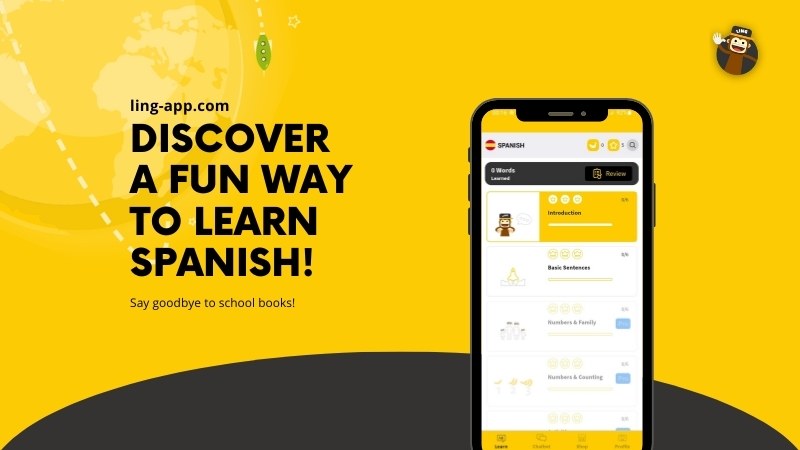
There is no other trouble-free way to learn this language than with Ling! Ling will become your trusted friend accompanying you along the way. Download it and have it ready for you anytime and everywhere you are.
Save time, learn more efficiently, and have speedy results. Click to download this cost-effective app today.