

So, the other day I was trying to impress my Tamil friend by showing off my language skills. I thought I had it all figured out until I realized that the Tamil alphabet has 247 letters! That’s right! These letters are a combination of vowels, consonants, vowel markers, and whatnot!
But let me tell you, once you get past the shock of the sheer number of letters, you’ll find that the Tamil alphabet or Tamil Varnamala is actually pretty fascinating. Each letter has its own unique sound and meaning, making it a language with great depth and complexity. Plus, if you’re a fan of tongue twisters, Tamil is the language for you. Try saying thaayilla thamizh uyirukku (tāyillā tamiḻ uyirukku) three times fast!
In this article, we’ll dive into the history and structure of the Tamil alphabet and why it’s considered one of the most ancient and beautiful alphabets in the world. So, buckle up and get ready to learn about the language that has been baffling foreigners, and maybe even some natives, for centuries.
Learning Tamil is more than memorizing words
Explore more →
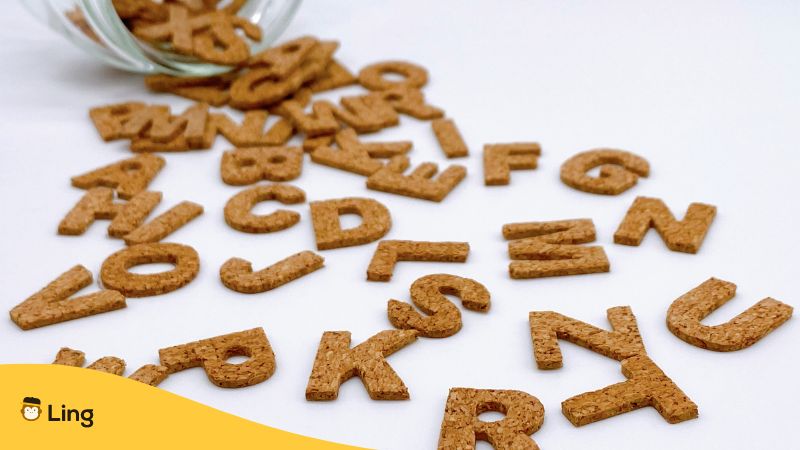
The Tamil Alphabet
The Tamil alphabet is one of the oldest and most well-preserved writing systems in the world. It is composed of 12 vowels and 18 consonants, each with its own distinct sound and character. The letters are arranged in a specific order, with vowels coming first, followed by consonants. Each letter also has its own unique name, which is used to help children learn the alphabet. Today, the Tamil alphabet is used primarily to write the Tamil language, but it has also been used for other Dravidian languages in the past.
Tamil Vowels
Pronouncing Tamil vowels may seem daunting at first, but they are not that different from English vowels. While Tamil has 12 vowels in total, the pronunciation of most of them is similar to their English counterparts. Check it out below!
| Vowel | Sound | Pronunciation |
|---|---|---|
| அ | a | Pronounced like ‘u’ in cup |
| ஆ | aa | Pronounced like ‘a’ in father |
| இ | i | Pronounced like ‘i’ in hit |
| ஈ | ii | Pronounced like ‘ee’ in feet |
| உ | u | Pronounced like ‘u’ in put |
| ஊ | uu | Pronounced like ‘oo’ in boot |
| எ | e | Pronounced like ‘e’ in set |
| ஏ | ee | Pronounced like ‘ay’ in day |
| ஐ | ai | Pronounced like ‘i’ in mine |
| ஒ | o | Pronounced like ‘o’ in hot |
| ஓ | oo | Pronounced like ‘oa’ in boat |
| ஔ | au | Pronounced like ‘ou’ in ouch |
Tamil Consonants
While Tamil vowels can be pronounced quite similarly to English vowels, Tamil consonants may be a bit more challenging to master. Tamil consonants include a variety of unique sounds that may be unfamiliar to English speakers, such as retroflex consonants and voiced aspirated consonants. To help with this, we’ve provided examples of Tamil words with difficult-to-pronounce consonants, so you can practice and improve your pronunciation skills.
| Consonants | Sound | Pronunciation | Tamil Example | English Meaning | Sound |
|---|---|---|---|---|---|
| க | ka | Pronounced like ‘k’ in kite | கடல்/ Kadhal | Ocean | |
| ச | cha | Pronounced like ‘ch’ in chat | சாய்/ Chaay | Tea | |
| ட | ṭa | Pronounced like ‘t’ in top | டெல்லி/ ṭelli | Train station | |
| த | tha | Pronounced like ‘th’ in thanks | தாழ்/ Thaal | Palm tree | |
| ப | pa | Pronounced like ‘p’ in pan | பால்/ Paal | Milk | |
| ற | ṟa | Pronounced like ‘r’ in red | பறவை/ Paṟavai | Bird | |
| க் | k | Pronounced like ‘k’ in skirt | குடி/ Kudi | Pot | |
| ச் | ch | Pronounced like ‘ch’ in chance | செங்கல்/ Chengal | Stone | |
| ட் | ṭ | Pronounced like ‘t’ in stare | பட்டாச்/ Paṭṭaas | Drum | |
| த் | th | Pronounced like ‘th’ in bath | தனி/ Thani | Alone | |
| ப் | p | Pronounced like ‘p’ in spin | புத்தகம்/ Puthakam | Book | |
| ற் | ṟ | Pronounced like ‘r’ in earth | பெற்றி/ Peṟṟi | Victory | |
| ம | ma | Pronounced like ‘m’ in man | மலை/ Malai | Mountain | |
| ந | na | Pronounced like ‘n’ in no | நாடு/ Naadu | Country | |
| ய | ya | Pronounced like ‘y’ in yes | யார்/ Yaar | Who | |
| ல | la | Pronounced like ‘l’ in lip | லட்சம்/ Latcham | Wealth | |
| வ | va | Pronounced like ‘v’ in vet | வாழ்/ Vaal | Live | |
| ழ | ḻa | Pronounced like ‘l’ in hall | பழமை/ Pazhamai | Fruitfulness | |
| ஸ | sa | Pronounced like ‘s’ in sing | ஸ்கூல்/ School | School | |
| ச | sa | Pronounced like ‘s’ in sea | சாம்பல்/ Sāmpal | Bread | |
| ஷ | ṣa | Pronounced like ‘sh’ in shirt | ஷர்ட்/ ṣaṟṭ | Shirt | |
| ஹ | ha | Pronounced like ‘h’ in heat | ஹட்ச்/ Hatch | Hatch | |
| ங | ṅa | Pronounced like ‘ng’ in sing | பங்கு/ Paṅku | Share | |
| ஞ | ña | Pronounced like ‘ny’ in canyon | ஞாயிறு/ ñāyiṟu | Sunday | |
| ண | ṇa | Pronounced like ‘n’ in net | மணி/ Maṇi | Gem |
The Evolution Of The Tamil Script
The Tamil language is one of the oldest in the world and has a rich history that spans over 2,000 years. It is believed to have originated in the southern part of India and is spoken by millions of people across the world today. According to history, the earliest Tamil literature can be traced back to the Sangam period, which lasted from 300 BCE to 300 CE. During this time, Tamil literature flourished, and many important works were written. The language continued to evolve over the centuries, with different dialects emerging in various parts of South India.
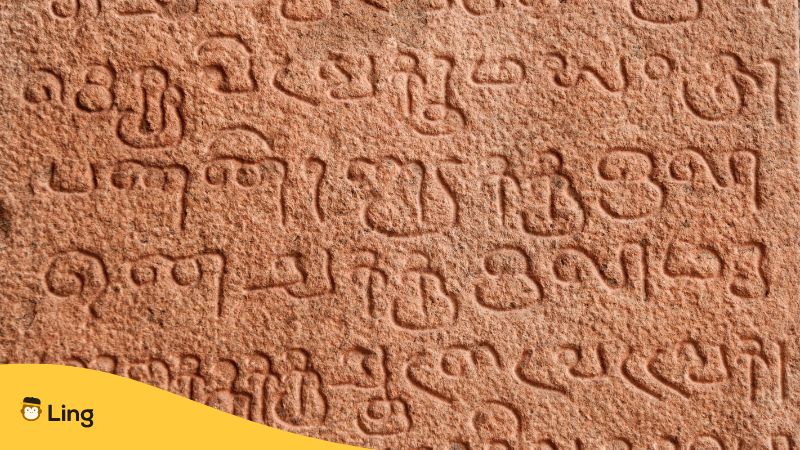
Just like the Khmer script, the Tamil script also has a long history that can be traced back to the Brahmi script, which was used in India around the 3rd century BCE. The Brahmi script was the precursor to many of the writing systems used in the country today, including the Tamil script. Over time, it evolved into its current form, called modern Tamil script, with several modifications and additions to the original script.
One of the most important developments in its evolution was the creation of the Grantha script. The Grantha script was developed in the 5th century CE and was used to write Sanskrit and other Indian languages. It was later adapted for use in writing Tamil and became the standard script for Tamil until the 19th century.
In the 19th century, with the advent of printing technology, a new script called the Tamil script was developed. The new script was easier to print and was widely adopted. Today, it is used to write not only Tamil but also other languages of South India, such as Kannada, Telugu, and Malayalam.
Features Of The Tamil Script
#1 The Writing System
It is an Abugida writing system used to write the Tamil language. It is one of the oldest and most sophisticated scripts in the world.
#2 The Tamil Alphabets
Tamil letters have 247 characters, including 12 vowels and 18 consonants. Each character represents a syllable, which is made up of a consonant and a vowel.
#3 Consonants And Vowels
The script is read from left to right, and vowels are placed on top or below consonants, depending on their pronunciation.
#4 Ligatures
There are several ligatures (combinations of two or more characters) in the Tamil script, which are used to represent certain sounds that do not have their own character. The Tamil script also has a special character called the pulli which is used to modify the sound of a consonant. For example, the letter ka with pulli becomes kha.
#5 Voiced And Unvoiced Consonants
The script is unique in that it has two letters that represent a single sound: one for voiced consonants and another for unvoiced consonants.

Binge Learn Tamil With Ling!
Did you have fun learning the Tamil alphabet? You can discover much more to satiate your love and curiosity for learning new languages. The Ling app has your back! Trust us, it’s unlike any other platform! With its gamified interface, interactive exercises, and fun quizzes, you are bound to make quick progress in your language-learning journey. So, what are you waiting for? Visit Google Play Store or App Store and download the Ling app for free!